A row of dark-sided single-story houses with brown shingled roofs behind a tall trimmed hedge, surrounded by large leafy trees and mown grass under an overcast sky.

Heat Pump Repair in Crawfordsville, IN

Tell us about the job

Takes about a minute. No obligation.

RepairHeat PumpMontgomery County, IN
Step 1 of 2

What ZIP code is the job in?

Winter is the hard part, not summer

Montgomery County sits in zone 5A, where heating carries the bigger load and nights average 21°F in December, January and February. A heat pump here works harder keeping you warm than it ever does keeping you cool.

That still beats what some places put a system through

There's no brutal summer heat load stacking on top of the winter demand, and no coastal salt air or constant extreme swings wearing down the outdoor unit year round. A heat pump here can rack up real hours without being pushed past what it was built for, which is why a repair is usually the right call.

8 months
October through May, your system heats
3 months
June through August, it cools
21°F
the average winter night it heats against
83°F
the average summer afternoon it cools against
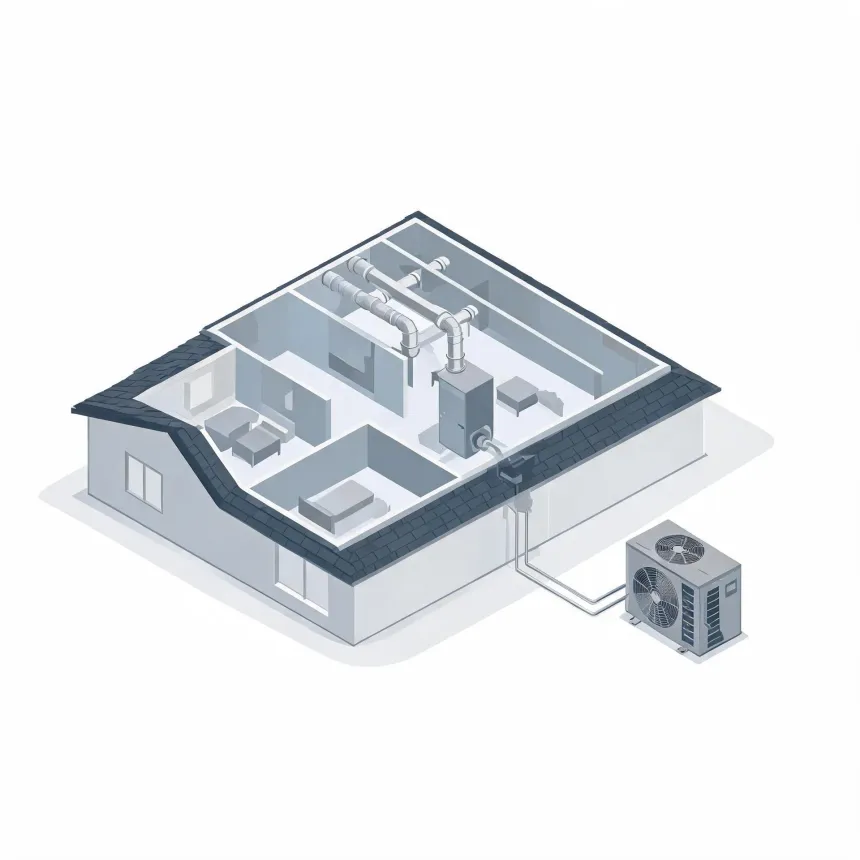
Isometric cutaway illustration of a single-story house showing interior rooms with ductwork, a furnace or air handler, and refrigerant lines running outside to a condenser unit on a pad.
Your system heats October through May and cools June through August.

NOAA nClimDiv, 1991–2020 normals

A heat pump rarely fails all at once. A bad capacitor, a stuck reversing valve, a worn contactor, each one shows up as a specific problem with a specific fix.

Replacing the failed part is usually what brings a heat pump back, not replacing the whole system.

Half the homes here were built by 1967, and that's often what's on the other end of your heat pump

Half the homes here were built by 1967
Climate zone 5A
Power costs 14.77 cents a kWh statewide

Indiana electricity ran 14.77 cents per kilowatthour in 2024, and a heat pump that's struggling pulls more of it than one running right. A failing capacitor, a low charge, a defrost cycle that won't stop, any of these make the unit work longer and harder for the same heat. That shows up on your bill before it shows up as a breakdown. Left alone through a Crawfordsville winter, that adds up to real money. Getting it diagnosed now costs you a lot less than letting it run wrong all winter.

This heat pump has had a fair winter, not a hard life. Fix what's wrong with it.

Your heat pump isn't fighting salt air, coastal swings or a brutal summer load here. Winter nights averaging 21°F are the hardest part of its job, and that's a known, steady demand, not something wearing it down from every direction. A unit in that position is usually a good candidate for repair instead of replacement. Get it looked at and find out what's actually wrong.

Find a contractor
A white mini-split heat pump outdoor unit mounted on a concrete pad beside a gray-sided house, surrounded by gravel and green shrubs.

Ask what's actually on the other end before you fix it

A heat pump doesn't know how old the house around it is. But if yours hasn't been swapped out since the place was built, age is worth asking about before paying for another repair. A contractor can check the age and condition of the unit itself and say plainly whether this is a repair or whether you're close to paying for this fix and then a new system not long after.

A refrigerant leak doesn't stay small

A heat pump low on charge will still run and still put out some heat, so it's easy to leave alone. But the compressor is built to move a specific amount of refrigerant, and running it low makes it work harder just to move heat at all. Keep running it that way and the compressor wears faster than it should, and that's the part a tech works hardest to protect.

A bad defrost cycle freezes the coil solid

If the defrost control or a sensor fails, the outdoor coil can ice over and stay that way. Once that happens, the unit can't pull heat from the outside air no matter how long it runs, so it leans harder on backup heat or just stops keeping up. Left running in that state, the ice can block airflow enough to strain the fan motor too.

Before calling anyone, check the thermostat first. If it's set to emergency heat by mistake, the heat pump is locked out and backup heat is doing all the work by itself. Switch it back to normal heat and see if the unit kicks on outside. Next, look at the outdoor unit. Ice built up on the coil or snow packed against the cabinet blocks the airflow it needs to pull heat from the air, and it won't catch up until that's cleared. Make sure nothing is stacked close to it and that air can move freely around it. Inside, pull the filter and hold it to a light. If light barely gets through, replace it, because a clogged filter starves the system of airflow and makes it work harder for less heat. None of this fixes a bad capacitor or a failing defrost control, but it rules out the simple stuff before anyone comes out to look.

A diagnostic starts outside, with the unit running if it can run at all. A tech checks refrigerant pressure first. That one reading points toward a leak, a bad metering device, or a compressor that isn't pulling its weight. Next comes the electrical side. The capacitor, the contactor, the wiring to the outdoor fan motor, checked for anything scorched, swollen, or loose. Inside, they'll look at the coil, check airflow through the ducts, and pull the filter if nobody's checked it lately. The reversing valve gets tested too. A valve stuck in one position will have the system blowing cold when it should blow warm, or the other way around. Whatever they find, a good tech shows it to you before doing anything about it, so you know what's being repaired and why.