September is when a weak heat pump shows itself
Heat in Elkhart County runs October through May. When the system switches over in September and starts working harder, a part that was already marginal tends to fail right then, not before.
Takes about a minute. No obligation.
Heat in Elkhart County runs October through May. When the system switches over in September and starts working harder, a part that was already marginal tends to fail right then, not before.
A repair done before October means a working heat pump when the cold settles in. Wait until the first cold snap and you're calling after the strain already found the weak part.

NOAA nClimDiv, 1991–2020 normals
Elkhart County sees its share of wind and hail and winter storms, same as the rest of northern Indiana.
None of that is what's wearing on your heat pump. The usual cause is a worn part or a refrigerant problem, same as anywhere else.

Half the homes in Elkhart County were built in 1977 or earlier, half in 1977 or later. That split doesn't point to one likely cause over another. An older house can have a heat pump installed last year. A newer house can still have the original unit from when it was built. What matters is the system itself, not the age of the house around it. If yours came with the house, that's worth checking, since it tells you how many years of wear are on the compressor and the coils.
A worn part doesn't just risk a breakdown. It makes the system work harder to do the same job, and at 14.77 cents per kilowatthour, that shows up on the bill long before anything quits outright.
Find a contractorA heat pump runs both sides of the year, so it wears in more ways than a furnace ever does. The reversing valve is the part unique to it, and it's often the first to stick or leak, since it switches every time the system changes between heat and cooling. Low refrigerant charge from a slow leak makes the compressor run hotter than it should for a long stretch before it finally quits. A dirty outdoor coil forces the same strain, since it can't shed heat properly and the compressor works harder to make up for it. Weak capacitors and failing contactors cause harder starts, and harder starts wear the compressor down faster over time. A failing defrost control board either leaves frost built up on the coil or runs defrost cycles when none are needed, and either way the system is working wrong without shutting off to show it. None of these start as emergencies. They start as a system that runs longer than it used to, or blows air that isn't quite warm enough, and they get worse on a schedule of their own.
Look at the outdoor unit and clear away leaves or anything blocking the sides. Check the air filter and swap it if it is dirty, since restricted airflow makes the whole system work harder. Go around the house and make sure no vents are closed or blocked by furniture. Check the thermostat batteries and settings before assuming the system itself is at fault.
Do not open the outdoor unit's cabinet or touch the wiring inside it. Do not try to clear ice off the coil with a tool or hot water, since that can bend the fins or crack the coil. If the system is tripping a breaker repeatedly, stop resetting it and get it looked at, since that usually means a short or a failing compressor drawing too much current.
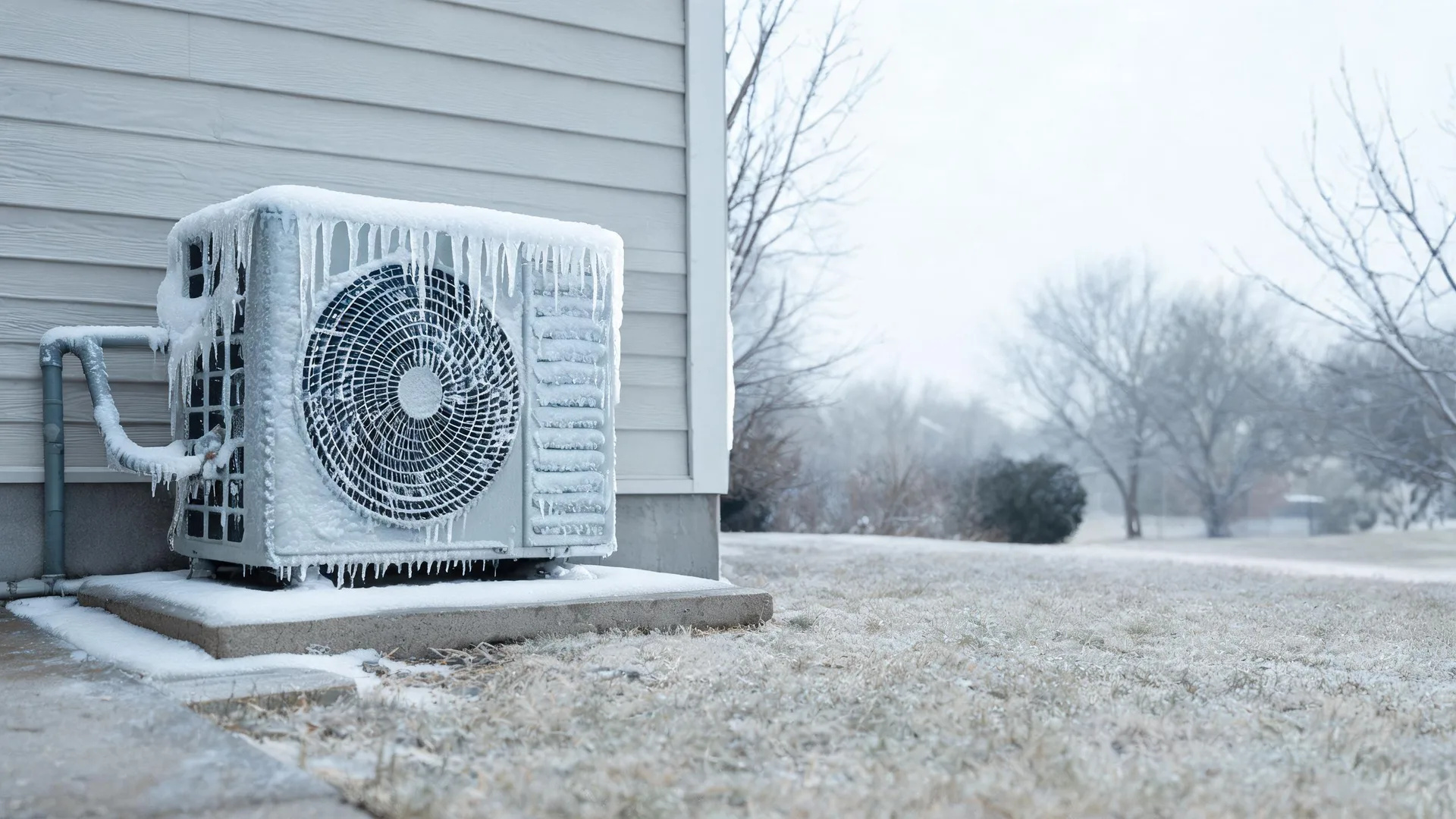
Most heat pump trouble shows up as a change you can feel, not a system that quits outright. Air coming from the vents that feels cool rather than warm is one of the first signs, especially if the system runs long stretches to make up for it. Short cycling, where it turns on and off every few minutes instead of running a normal cycle, points to a different problem but it's just as hard on the compressor. Ice building up on the outdoor unit during a heating cycle means the defrost cycle isn't doing its job. A hissing sound near the lines or a hum from the outdoor unit that wasn't there before are both worth paying attention to. None of these mean the system is done for, but none of them fix themselves either.
A diagnostic visit starts outside, at the unit itself. A tech checks refrigerant pressure, since that number says a lot about whether the charge is right or there's a slow leak somewhere in the lines. They'll check the amp draw on the compressor, because a motor pulling more current than it should is a motor wearing out. Electrical connections get checked too, the contactor and capacitor especially, since those cause a lot of hard starts before they fail outright. Inside, they're looking at airflow across the coil and checking that the reversing valve is actually switching when it's told to. None of this takes guesswork. The readings either match what a healthy system looks like or they don't, and that's what points to the part that needs replacing.