A lit residential street at dusk featuring large two-story brick houses with glowing windows, mature trees, and a street lamp.

Heat Pump Repair in Greenfield, IN

Tell us about the job

Takes about a minute. No obligation.

RepairHeat PumpHancock County, IN
Step 1 of 2

What ZIP code is the job in?

Half the homes in Hancock County were built in 1991 or later

Greenfield sits in Hancock County, where half the homes were built in 1991 or later. A heat pump installed with a house that age has had less time to log hours than one in a much older house.

That changes the math on a repair

If your system came with a house built in 1991 or later, there's a good chance it still has life left. Fixing what's wrong is usually the call worth making first.

8 months
October through May, your system heats
3 months
June through August, it cools
23°F
the average winter night it heats against
83°F
the average summer afternoon it cools against
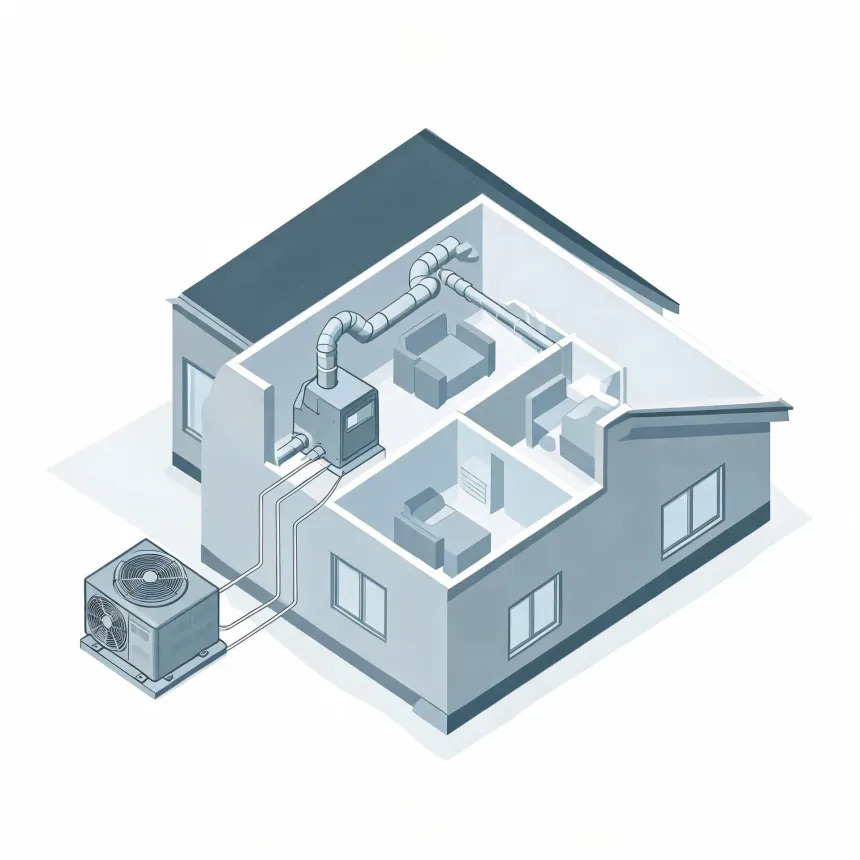
Isometric cutaway illustration of a two-room house showing an indoor air handler with ductwork connected by lines to an outdoor condenser unit on a pad.
Your system heats October through May and cools June through August.

NOAA nClimDiv, 1991–2020 normals

Hancock County is zone 5A, a cool climate where heating is the bigger job and winter lows average 23°F.

A heat pump here isn't fighting extreme summer heat for months on end, so it runs an easier load than in a hot climate.

A heat pump that's struggling still runs on Indiana's 14.77 cent power. Fix it before another bill proves it.

Power costs 14.77 cents a kWh statewide
53 damaging wind events from 2015 to 2024
24 hail events from 2015 to 2024
Call before October asks too much of itHeat pumps here switch over in September and start heating in October.

That easier load shows up as less wear on the compressor over the years, which is exactly what a tech is checking when something acts up now. A heat pump that's short on refrigerant or losing a sensor isn't usually a sign the unit is worn out, not with winters like this one. At 23°F overnight, the system is working, but it isn't being pushed the way it would be in a harder climate. That's the case for calling someone out to look at it rather than planning to replace it.

Get it repaired. The house is on its side.

If your heat pump came with a house built in 1991 or later, get the repair looked at before deciding anything else. A system that age has had fewer hours put on it, and fixing what's wrong now is the call that usually makes sense.

Find a contractor
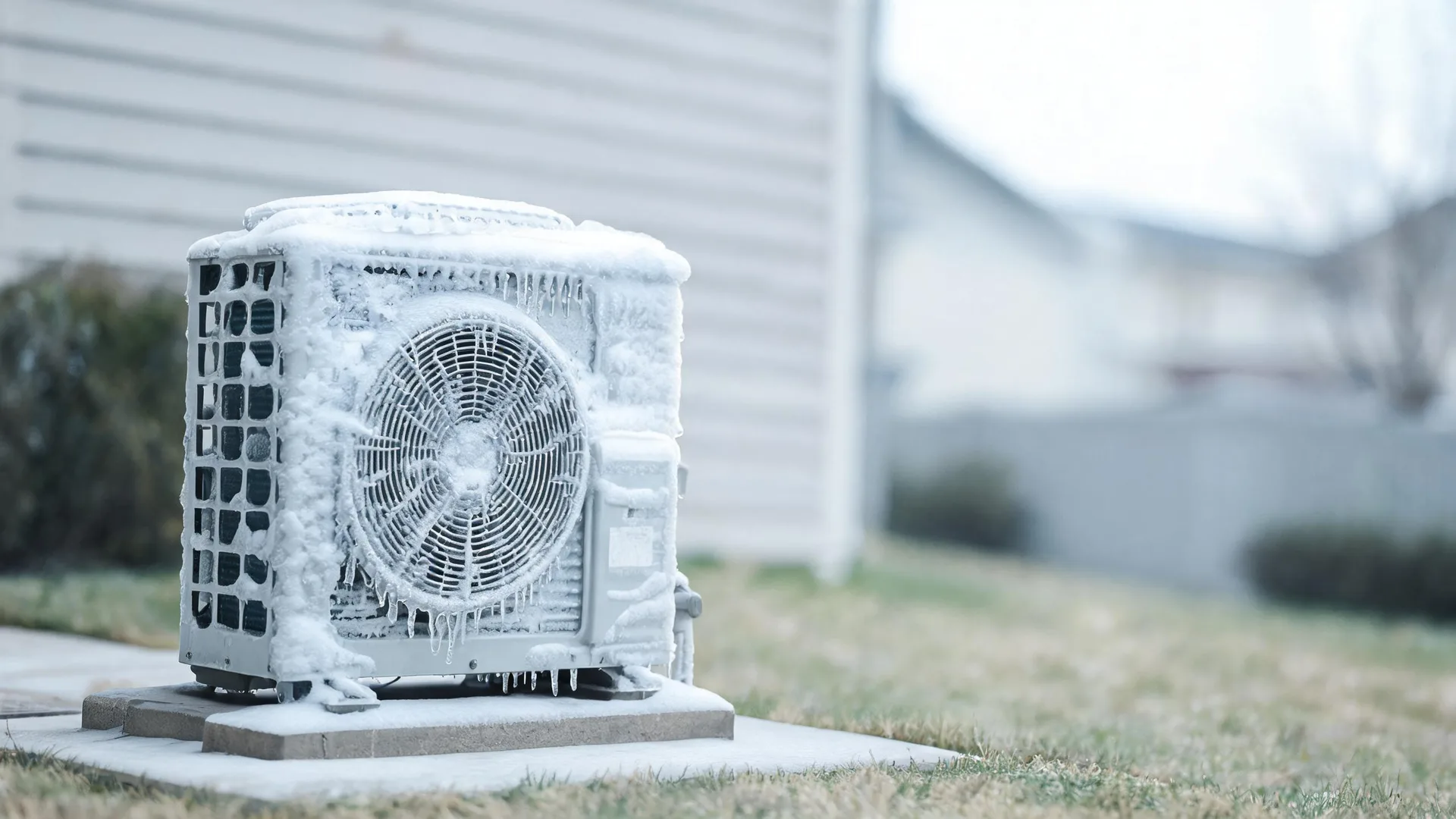
A residential heat pump outdoor unit mounted on a concrete pad next to a house with gray vinyl siding.

It runs year round, so trouble shows up as a change, not a stop

A heat pump doesn't shut down for the season like a furnace does. It runs in summer moving heat out of the house, and it runs again in winter pulling heat in from outside air, so most failures show up as a change in how it runs rather than a sudden stop. Ice on the outdoor coil that doesn't clear during the defrost cycle is one. Air from the vents that's cooler than it should be with the system set to heat is another. Short cycling, where it kicks on, runs a few minutes, and shuts off again instead of finishing a full cycle, is a sign something's making the system work harder than it needs to. A reversing valve that's stuck will blow warm air when you asked for cool, or the other way around. None of these mean the unit is worn out. They usually mean a refrigerant leak, a failing sensor, or a valve that needs attention, and catching it early is what keeps a small problem from turning into a bigger repair.

The reversing valve is the part unique to a heat pump

A furnace or straight AC doesn't have one. It's what switches the system between heating and cooling, and the switch itself is what wears it out over time. When it sticks, the system can get stuck heating or cooling no matter what the thermostat is set to.

Outdoor coil problems come from the defrost cycle, not the weather

The outdoor unit pulls heat from outside air even when it's cold out, and that makes frost build up on the coil. A working system clears that frost on its own with a defrost cycle. When the defrost board, the sensor that tells it ice is there, or the reversing valve that briefly flips the system into cooling to melt it stops working right, frost keeps building instead of clearing, and the coil ices over.

A refrigerant leak doesn't hold steady. The charge keeps dropping a little at a time, and the compressor has to work harder to move the same amount of heat with less refrigerant to carry it. Run it long enough in that state and the compressor is what pays for it, not just the comfort in the house. A sensor that's drifted or a defrost board that's not triggering right works the same way. The system keeps running because nothing has told it to stop, so it just does the job badly instead of not doing it at all. Catching it early is usually a part. Catching it late is usually the compressor.

Repair or replace usually comes down to what's actually failed. A capacitor, a contactor, a sensor, a defrost board, these are parts that fail on their own schedule and have nothing to do with how old the rest of the system is. Swapping one out brings the unit back to where it was before it failed. The compressor is different. It's the one part that isn't really a repair so much as a replacement of the most expensive piece of the system, and a tech will usually walk you through what that means before doing the work. So the question isn't just what's wrong, it's which part is wrong. A stuck reversing valve or a bad sensor is a Tuesday. A failing compressor is a different conversation.