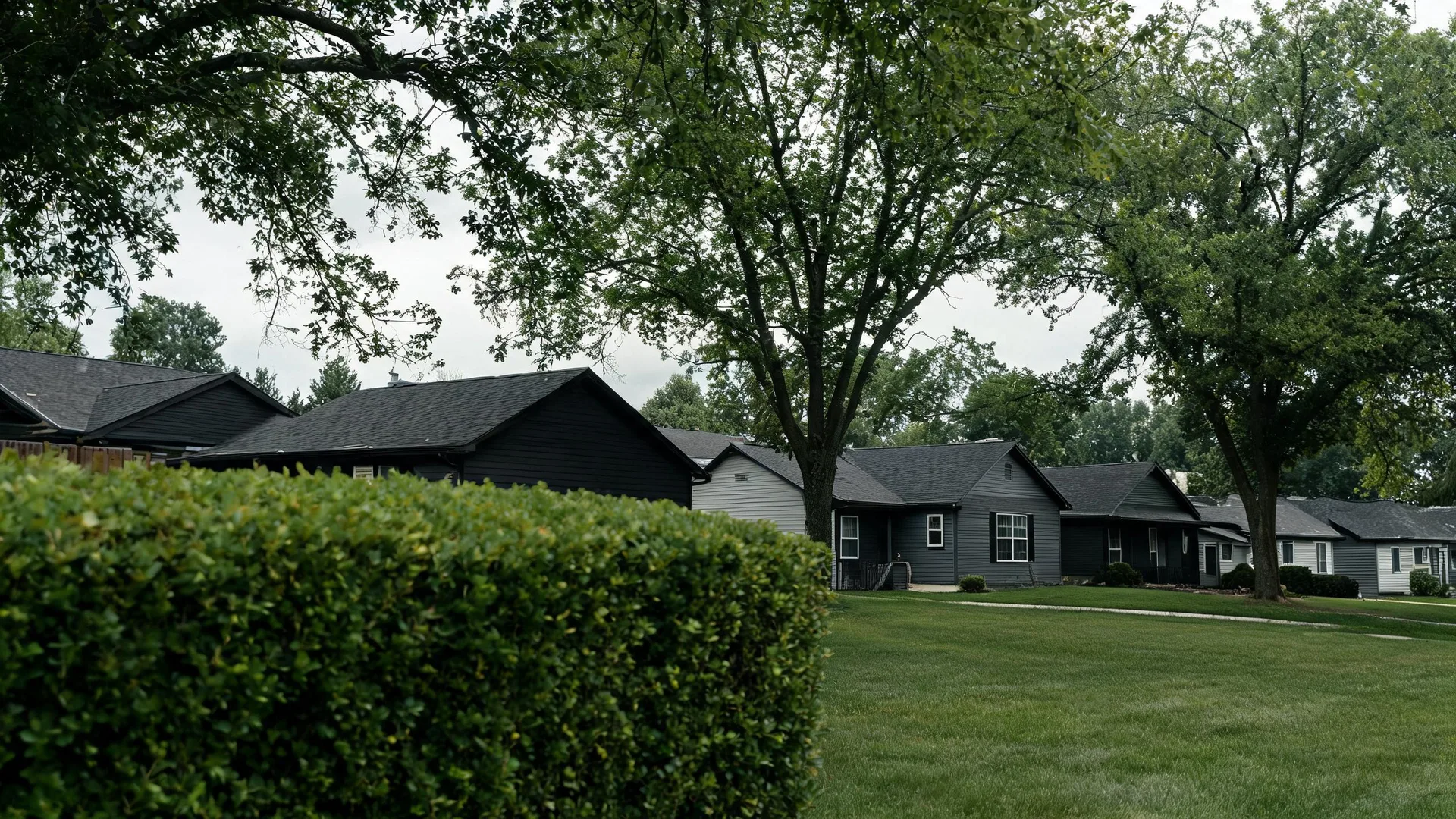
A row of single-story houses with dark siding and gray shingled roofs behind large deciduous trees, with a trimmed hedge in the left foreground and a mown lawn under an overcast sky.

Heat Pump Repair in Greenwood, IN

Tell us about the job

Takes about a minute. No obligation.

RepairHeat PumpJohnson County, IN
Step 1 of 2

What ZIP code is the job in?

What the age of the system tells you

A heat pump that's never given trouble until now and still runs fine the rest of the time is usually worth repairing. One that's needed a tech out for something different every season is telling you the compressor or the reversing valve is on its way out. Repeated repairs on the same system usually cost more over time than one replacement.


Why the compressor changes the math

Most parts on a heat pump, the capacitor, the contactor, a fan motor, are straightforward to replace and don't call the whole system into question. A failing compressor is different. It's the most expensive part in the unit, and a tech will often tell you straight that putting a new one into an old system isn't worth it. Ask what part failed before deciding anything.

8 months
October through May, your system heats
4 months
June through September, it cools
23°F
the average winter night it heats against
83°F
the average summer afternoon it cools against
Isometric illustration of a cutaway single-family house showing interior ductwork and an air handler, with an outdoor condenser unit connected by lines along the exterior wall.
Your system heats October through May and cools June through September.

NOAA nClimDiv, 1991–2020 normals

Greenwood winters average 23°F at night, nothing like the deep cold some regions force a heat pump through.

A heat pump that isn't straining against extreme cold every winter holds up longer, so fixing one here is usually the right call.

September and May are when a weak part gets found out

Cooling runs June through September
Heat runs October through May
39 damaging wind events from 2015 to 2024
Power here isn't cheapIndiana homes paid 14.77 cents per kilowatthour in 2024, so a heat pump running badly keeps costing you until it's fixed.

Half the houses in Johnson County were built in 1993 or later. If yours is one of them, your heat pump likely isn't the original equipment from back then. It's probably in from a remodel or a replacement done more recently, which means it still has most of its working life ahead of it. That changes the math on a repair. Fixing a unit that still has years left in it is a different decision than patching up something near the end. Worth checking the install date on the unit itself if you're not sure when it went in.

That's one more reason this repair is worth making

Get a tech out to find out what's actually wrong. With winters this mild, a repair here has a good chance of holding for years.

Find a contractor
A man in a cap, dark t-shirt and work trousers carries a canvas tool bag up porch steps toward a blue front door, with a tall planter and shrub beside the entry.
A dark gray heat pump unit mounted on a concrete pad next to a house with gray siding and a stone veneer wall.

What a heat pump tells you before it fails

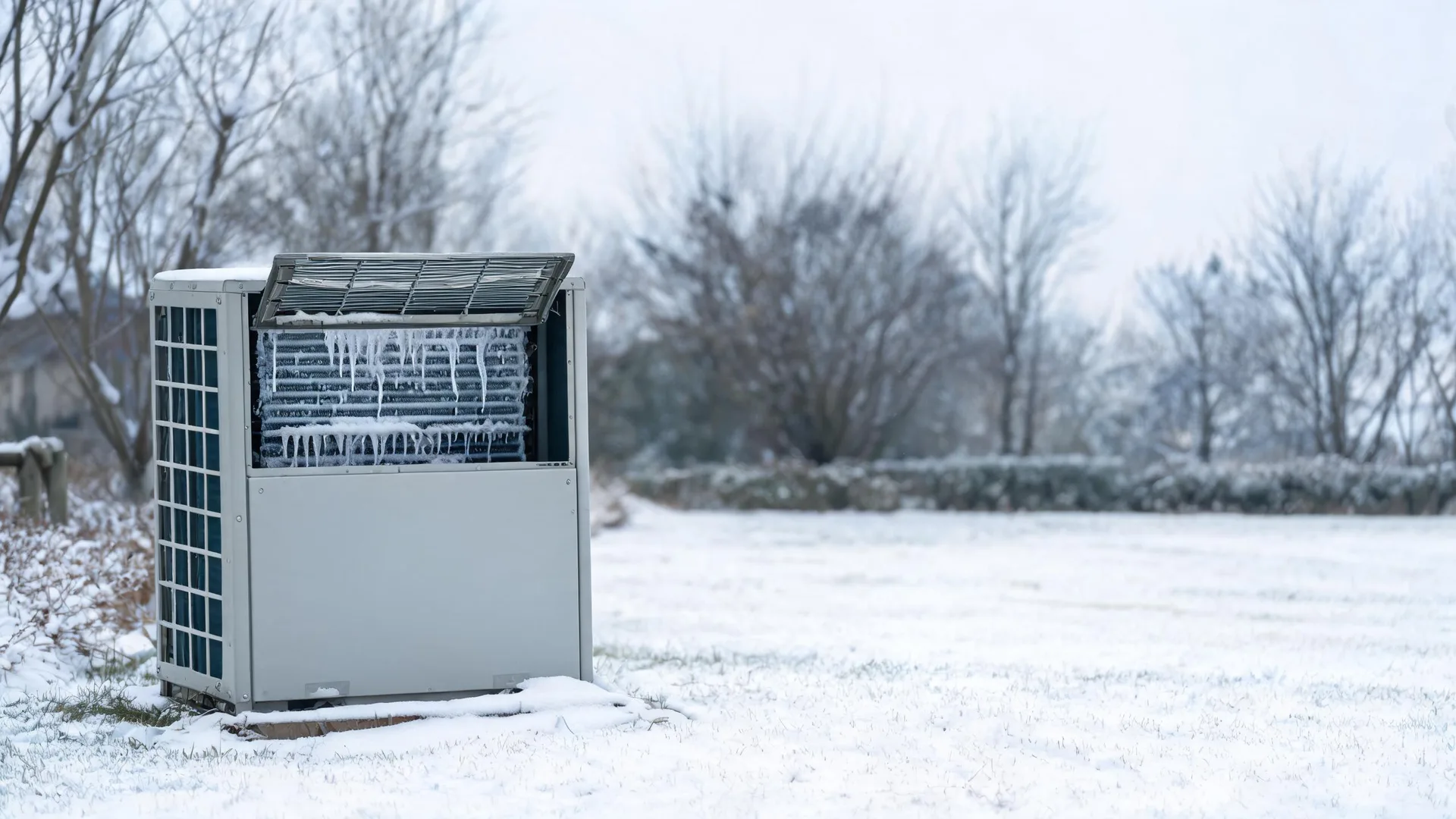
A heat pump runs in both directions, so it wears in both directions too. Watch for ice building up on the outdoor unit that the defrost cycle isn't clearing. Watch for air coming out of the vents that's barely warm when it should be hot. Short cycling, where the system kicks on and off every few minutes instead of running a full cycle, points to a failing sensor or a refrigerant problem. A reversing valve that's starting to stick will often show up as cold air during heating mode, or the system not switching over cleanly. A hard clunk when the system changes modes, or a grinding sound from the outdoor fan, is worth a tech's attention before it turns into a bigger repair.

Check the thermostat first

Make sure it's set to heat and the temperature is actually set above room temperature. Check the batteries if it has a screen that looks dim or blank. A heat pump that seems dead sometimes just has a thermostat that lost its settings or its power.

Look at the outdoor unit

Walk outside and check that the outdoor unit isn't buried in leaves, covered by a tarp, or blocked by something stacked against it. Heat pumps need air moving through the coil to work in either direction, and anything pressed against the cabinet can make the system struggle or shut off on its own.

A refrigerant leak is a good example of a problem that only goes one way. A system low on charge starts working harder to move the same amount of heat, and the compressor runs longer to make up for it. Run it like that for weeks and you're not just losing efficiency, you're asking the compressor to do work it wasn't built to sustain. Ice on the outdoor coil behaves the same way. A little bit that clears in the defrost cycle is normal. Ice that keeps building blocks airflow across the coil, and the system keeps trying to push through it rather than shutting down, which stresses parts that were fine a week earlier. A failing part rarely stays a single failing part if the system keeps running past the point where it's struggling.

A diagnostic visit starts with the tech asking what you've noticed, when it started, and whether it happens in both heating and cooling. Then they'll check the thermostat call, the outdoor unit, and the indoor coil, usually with gauges on the refrigerant lines and a meter on the electrical components. They're checking refrigerant pressure, checking that the compressor is drawing the right amount of current, and checking that the reversing valve is actually switching when it's told to. A lot of this is process of elimination. A weak capacitor shows up on a meter in a few seconds. A refrigerant leak takes longer to find, since the tech has to track down where it's leaking before adding anything back into the system. By the end, you should hear which part failed, why it failed, and what it would take to fix it, not just that something's wrong.