





A grey residential air-conditioning condenser unit mounted on a concrete pad beside a house, photographed at sunset.

Heat Pump Repair in Jasper, IN

Tell us about the job

Takes about a minute. No obligation.

RepairHeat PumpDubois County, IN
Step 1 of 2

What ZIP code is the job in?

A heat pump switches jobs twice a year, and September is when it switches to heat. If a part was already weak, that is when it gives out, not in the easy middle of the season. October through April is seven months of real work for this system here, longer than the five months it spends cooling. Overnight lows average 25°F through December and January, and a heat pump leaning on a bad component has to work through all of it. If yours is acting up right as the weather turns, that is not bad luck. That is the usual pattern, and it points to a specific cause worth tracking down rather than guessing at.

7 months
October through April, your system heats
5 months
May through September, it cools
25°F
the average winter night it heats against
86°F
the average summer afternoon it cools against
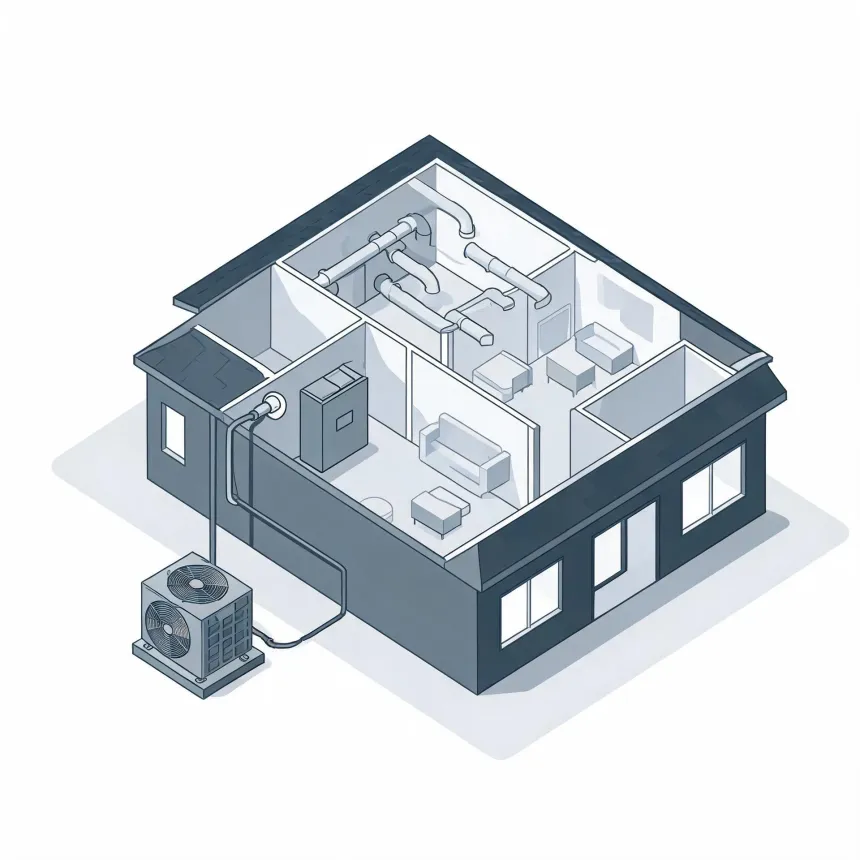
Isometric line illustration of a cutaway single-story house showing interior rooms, ceiling ductwork and an indoor air handler, connected by a line to an outdoor condenser unit on a pad beside the building.
Your system heats October through April and cools May through September.

NOAA nClimDiv, 1991–2020 normals

Dubois County summers run humid, with the dew point averaging 66°F through June, July and August.

A heat pump here works a muggy stretch every summer and a cold one every winter, same as the rest of this region, so a breakdown points to a worn part, not a hard climate.

Half the homes here were built in 1980 or later

Half the homes here were built by 1980
96 damaging wind events from 2015 to 2024
Winter nights average 25°F

Power here runs cheap, 12.96 cents per kilowatt-hour on average in 2025. That matters because a heat pump leans on electricity harder than a gas furnace does, and a system that is struggling, short cycling, running constantly, blowing air that is not quite warm enough, shows up on the bill before it shows up as a breakdown. A cheap rate does not mean a failing part costs less to ignore. It means the jump is easier to spot if you know to look for it. If your bill climbed and the heat pump has been running longer to hit the same temperature, that is the system telling you something specific is wrong, not just old age catching up with it.

The cause is almost always inside the unit

Dubois County sees its share of wind and the occasional hail or tornado, and a power blip can knock a heat pump out of its cycle. None of that is what usually breaks one. Most of the time it's a part inside the unit that wore out doing its normal job. That's worth finding and fixing, not working around.

Find a contractor
A man in a cap, gray T-shirt and tan work pants climbs porch steps toward a blue front door, carrying a canvas tool bag filled with tools, beside a blue planter with a shrub.
A residential heat pump outdoor unit mounted on a concrete pad next to a house with gray vinyl siding.

A newer house usually means a newer unit worth fixing

If your house went up in 1980 or later, the heat pump in it hasn't been fighting this climate for decades. Even a system installed partway through the time you've owned the place still has working life ahead of it. A repair on a unit like that is usually straightforward, because the rest of the equipment around the failed part hasn't had the years to wear down with it. Worth asking whoever comes out whether yours was original to the house or added later, since that tells you more than the house's age alone does.

The signs are easy to miss at first

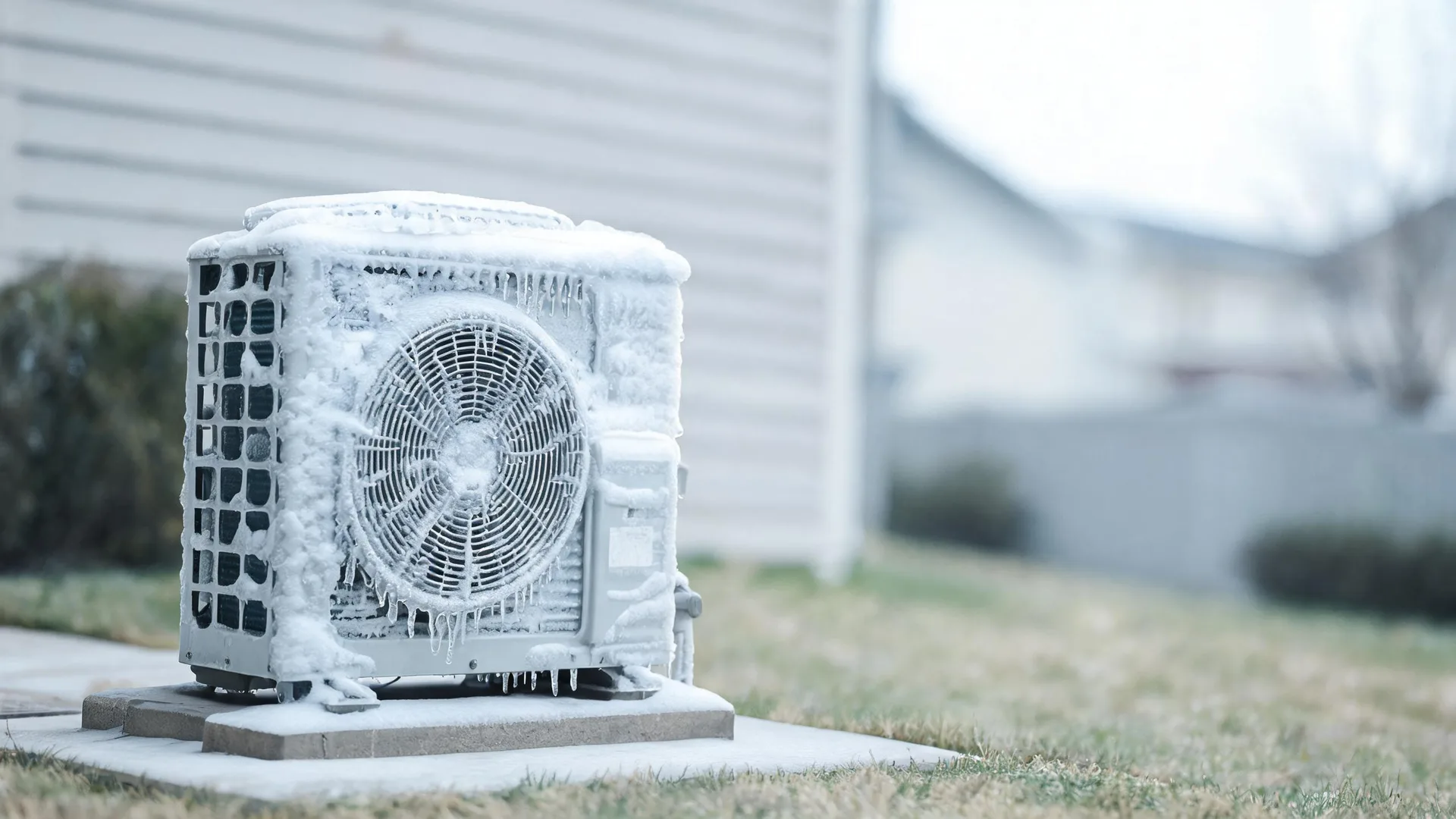
A heat pump that's failing rarely just quits. It runs longer to hit the same setpoint. It blows air that feels cool instead of warm, even though it's working. It short cycles, kicking on and off in quick bursts instead of settling into a steady run. Outside, the unit might frost over when it shouldn't, or you'll hear a clicking, buzzing, or grinding that wasn't there before. Any one of these is the system telling you a specific part is struggling, not just background noise to live with.
Catching it early is the whole job

Once you notice one of these signs, the fix is usually smaller than if you wait. A failing capacitor or a weak contactor still does its job, badly, right up until it doesn't, and whatever it was straining to support can fail right alongside it. A tech who gets called at the first sign of trouble is chasing one bad part. Wait through a few more weeks of strain and there may be two.

Before you call anyone, there are a few things worth checking yourself. Look at the thermostat first. Make sure it's set to heat, not cooling or fan only, and that the setpoint is actually above room temperature. Check your circuit breaker panel for a tripped breaker, since a heat pump that won't start at all is sometimes that simple. Go outside and look at the outdoor unit. If it's buried in leaves, covered by a snow drift, or boxed in by something you stacked against it, airflow is choked off and the system can't do its job. A layer of frost in winter is normal, but thick ice building up and staying there is not. Check your air filter too. A filter clogged with dust restricts airflow on the indoor side just as much as a blocked outdoor unit does on the other end. None of this replaces a real diagnosis, but it rules out the easy stuff before someone has to come out and look at the actual components.

A heat pump rarely fails outright. Most of the time something inside it is wearing down while it keeps running, and the question is whether to fix that part or replace the whole unit. Age against the rest of the system is the real test. A compressor or reversing valve going bad on an old unit is a different conversation than a capacitor or contactor failing on one with years left in it, because the parts around the failure matter as much as the failure itself. Repeat trouble is the other flag. One failed part is a repair. The same symptom coming back every season, or a string of different parts failing one after another, means the system as a whole is tired, not just unlucky. A tech who can look at the unit and tell you which situation you're in is worth more than a guess based on how old the thing looks from outside.