A large outdoor air-conditioning unit mounted beside a vinyl-sided house, surrounded by mulched garden beds and green shrubs.

Heat Pump Repair in Logansport, IN

Tell us about the job

Takes about a minute. No obligation.

RepairHeat PumpCass County, IN
Step 1 of 2

What ZIP code is the job in?

Winter is the real work here

Cass County sits in zone 5A, a cool climate where heating carries the bigger load. Overnight lows average 21°F through December, January and February, so your heat pump spends most of its effort keeping the house warm, not cold.

That makes repair a good bet

A heat pump that isn't fighting extreme heat all summer tends to hold up well mechanically. When one here is acting up, it's usually a specific part or a control issue, not a system worn out from strain. That's almost always worth fixing rather than replacing.

8 months
October through May, your system heats
3 months
June through August, it cools
21°F
the average winter night it heats against
82°F
the average summer afternoon it cools against
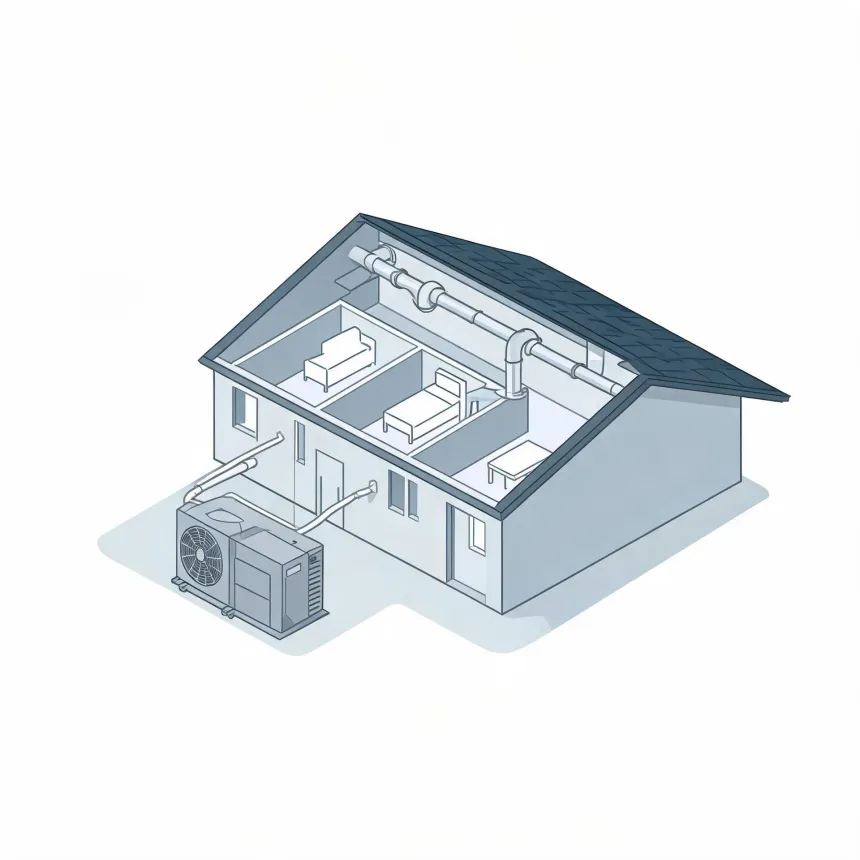
Isometric line illustration of a cutaway single-story house showing interior rooms with furniture and attic ductwork connected to an outdoor condenser unit beside the building.
Your system heats October through May and cools June through August.

NOAA nClimDiv, 1991–2020 normals

Heat here starts up in October, right after September cools off.

If your heat pump is going to show a weak part, it usually shows up in that first cold stretch.

A broken heat pump costs more to ignore here

Power costs 14.77 cents a kWh statewide
58 damaging wind events from 2015 to 2024
10 hail events from 2015 to 2024

Half the homes in Cass County were built in 1956 or earlier. The house doesn't tell you how old the heat pump is, since the unit has likely been swapped out at least once since then. What matters is the equipment itself, not the walls around it. If yours came with the house, or you're not sure when it went in, that's worth finding out before paying for a repair. A unit with a few good years left is worth fixing. One near the end of its run is a different conversation. Ask the contractor straight out how much life they think is left in it.

Get the part found, then decide

A heat pump that spends its effort on heating, not extreme cold, holds up well mechanically. When yours is acting up, get the actual cause found before deciding anything else about it.

Find a contractor
A man in a dark jacket and tan pants, seen from behind, carries a canvas tool bag up concrete steps toward a blue front door of a house with light horizontal siding and a potted shrub in a blue planter.
A white mini-split heat pump outdoor unit mounted on a concrete pad beside a gray-sided house, surrounded by gravel and green shrubs.

Check the data plate, not the house

A contractor can read the age of the unit straight off the data plate, no digging through paperwork needed. If it's never been swapped out, that number matters more than when the house was built. Get it before agreeing to any repair, so the decision is about the unit in front of you and not a guess.

A failing part rarely fails alone

A heat pump that's struggling still tries to meet the thermostat setting, so it runs longer and harder to make up for whatever isn't working right. That extra runtime puts strain on the parts that were fine to begin with, like the compressor. What started as one bad component can turn into a compressor problem if the system keeps pushing through it.

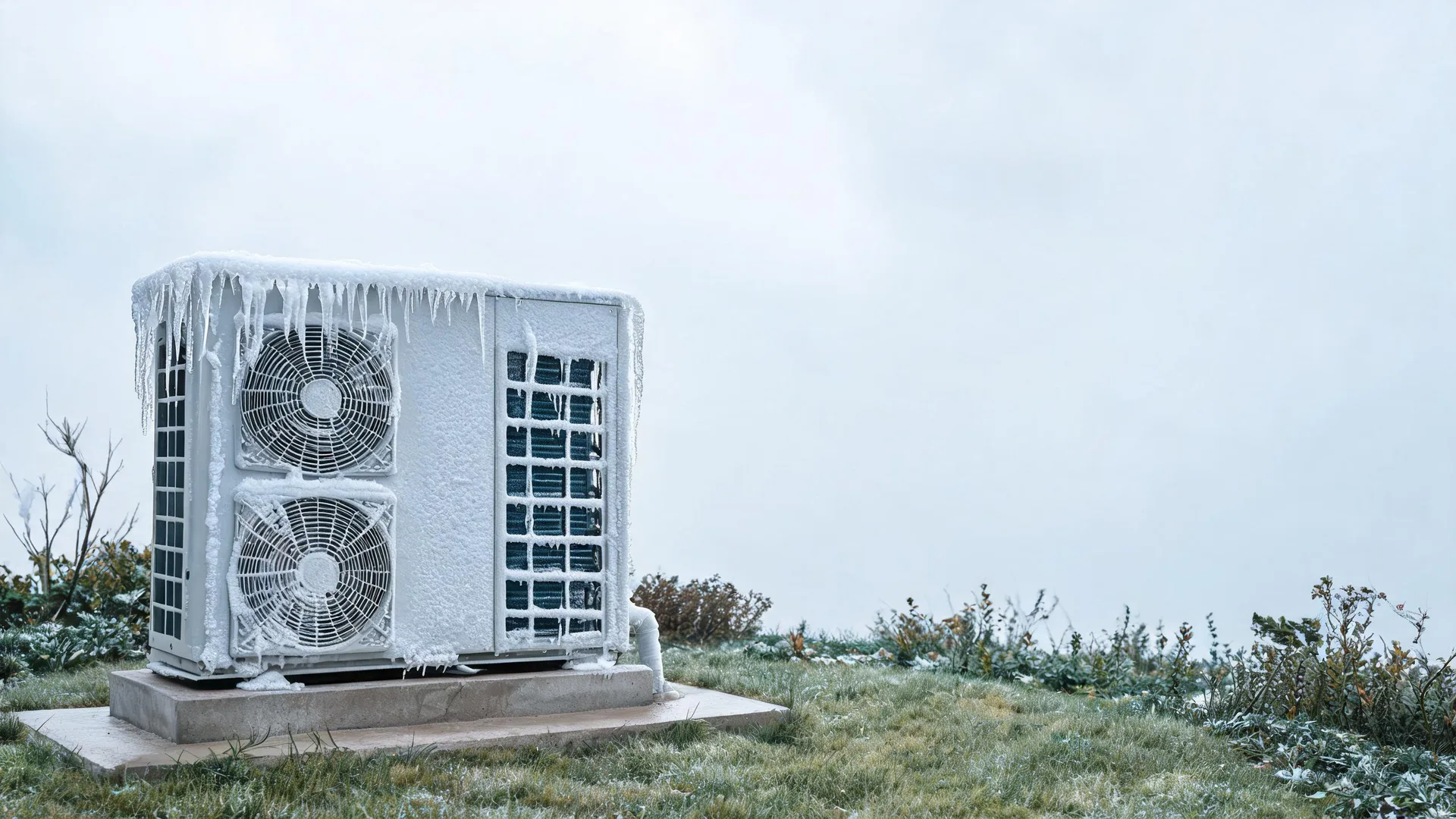
Ice is a sign, not the problem

Frost building up on the outdoor coil usually means the defrost cycle isn't kicking in when it should, or airflow across the coil is blocked. Running the unit with a frozen coil forces the compressor to work against restricted airflow. Left alone, that's how a simple defrost control issue turns into a compressor replacement.

A heat pump that needs attention usually tells you in a few ways. It runs longer than it used to without the house feeling any warmer, or the air from the vents feels barely warm instead of hot. Some units start making a new sound, a clicking at startup that doesn't settle into the usual hum, or a hiss that wasn't there before. Short cycling is another sign. The unit kicks on, runs a short while, shuts off, then starts again soon after, never settling into a normal run. Ice on the outdoor unit that isn't melting off on its own is also worth noticing. Any one of these is worth a call. More than one happening together means don't wait on it.

A diagnostic visit starts outside, at the unit itself, before anyone touches the thermostat. The contractor checks refrigerant pressures, looks at the reversing valve, and runs the system in both heating and cooling to see where it stops behaving the way it should. Electrical readings on the compressor and the fan motor come next, since a part can draw the wrong amperage well before it fails outright. Airflow gets checked too, because a coil that isn't getting enough air across it will mimic a refrigerant problem even when the charge is fine. None of this is guesswork. Each reading either falls in range or it doesn't, and that's what points to the actual failed part instead of just the symptom it's causing.