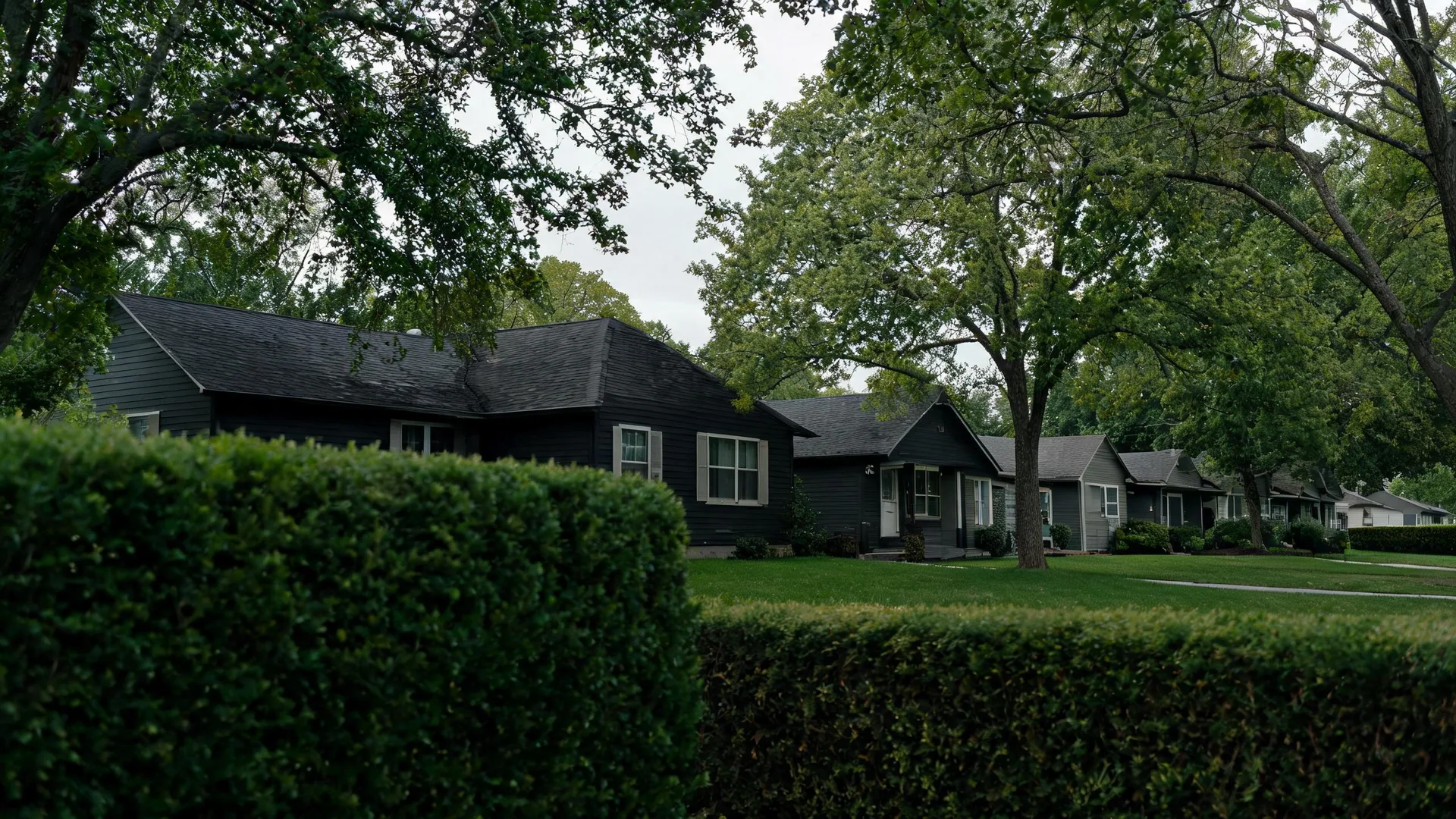
A row of dark-painted single-story houses with lawns and large deciduous trees, seen behind a tall trimmed hedge.

Heat Pump Repair in Plymouth, IN

Tell us about the job

Takes about a minute. No obligation.

RepairHeat PumpMarshall County, IN
Step 1 of 2

What ZIP code is the job in?

Built for a cold job, not a hard one

Winters here average 20°F overnight through December, January and February, and heating carries most of the load. A heat pump in Plymouth is sized and run for steady cold, not for extremes, and that is a predictable job, not a punishing one.

So age explains more than wear

When a heat pump in this area is acting up, the cause is rarely a system that got run into the ground. More often it is a part that failed on its own schedule, or a system that was never serviced the way it should have been. That usually means a repair is still worth doing.

8 months
October through May, your system heats
3 months
June through August, it cools
20°F
the average winter night it heats against
82°F
the average summer afternoon it cools against
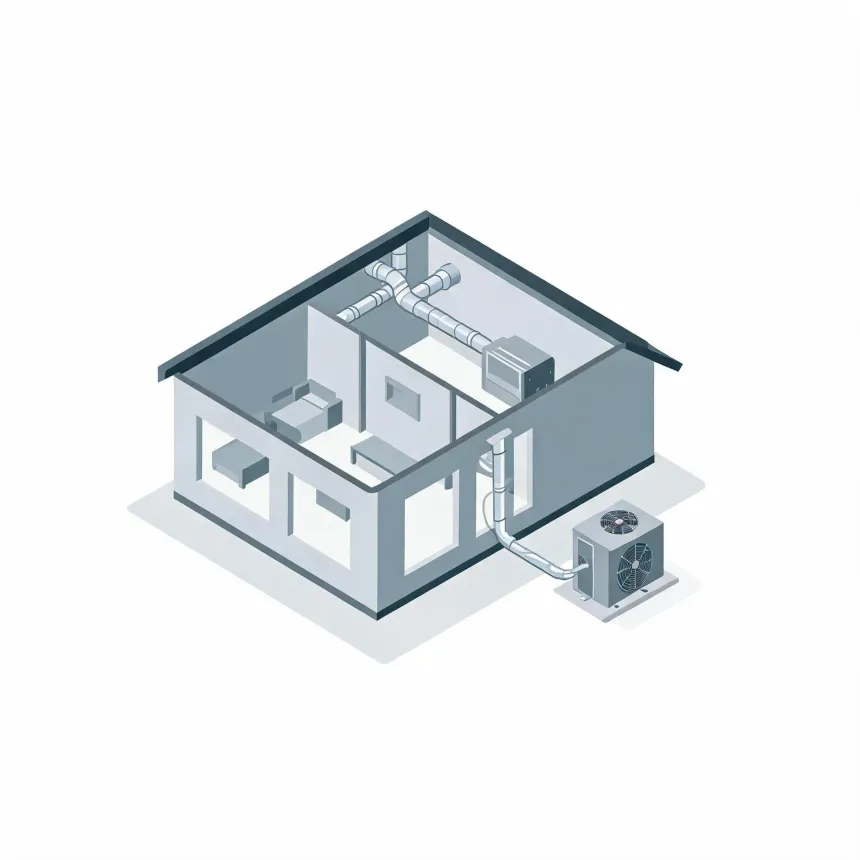
Isometric illustration of a cutaway house showing interior rooms, ceiling ductwork and an air handler, connected by lines to an outdoor condenser unit on a pad beside the building.
Your system heats October through May and cools June through August.

NOAA nClimDiv, 1991–2020 normals

Heat in Marshall County runs October through May, eight months of the year.

A heat pump that struggled last season usually shows it again in the first cold week, not partway through.

Half the homes here were built in 1973 or earlier, old enough that the heat pump is not the original equipment

Half the homes here were built by 1973
Climate zone 5A
Power costs 14.77 cents a kWh statewide
Running costs add up fast when it's not working rightIndiana homes paid 14.77 cents per kilowatthour in 2024, and a struggling heat pump burns through more of it.

If your heat pump is acting up, the weather here is not why. Marshall County sees damaging wind and a handful of hail events most years, and winter storms roll through most winters too, but none of that reaches the unit the way a straight diagnosis would. Wind and hail can nick a cabinet or bend a fin, so it is worth a look if a storm came through right before the trouble started. Otherwise a tech is looking at a failed part or skipped maintenance, not a system beaten down by the weather. That is the kind of problem a repair fixes for good.

Find out how much life it has left before you pay for a repair

A heat pump that came with an older house is worth a straight answer, not a guess. Before paying for a repair, ask the tech how much life is left in the system. That tells you whether this is worth fixing or worth planning around.

Find a contractor
A gray air-source heat pump mounted on a concrete pad next to a house with gray vinyl siding, surrounded by gravel and flanked by green shrubs and white hydrangea flowers.

What to check before the tech shows up

Check the thermostat first. Make sure it is set to heat, not auto, and that the setpoint is actually above room temperature. Go look at the outdoor unit. Ice built up across the coil or the unit buried in snow tells a tech something different than a unit that is clear and just not putting out warm air, so that is worth noting before anyone shows up. Make sure nothing is stacked against the outdoor unit and the cover is off if one went on last spring. Pull the air filter and hold it to a light. If you cannot see through it, that alone can make a heat pump struggle, and it is worth replacing before anyone diagnoses anything further. Check that vents inside are open and not blocked by furniture. Look at the breaker panel too. A heat pump that will not start at all sometimes comes down to a tripped breaker and nothing more. If the system is running but the air feels cool at the vent, that is normal for a heat pump and does not mean the house is not warming up. None of this takes tools, and none of it can make things worse. If the system still is not working after that, it needs a tech.

Warm air that isn't warm enough

A heat pump in defrost will blow cool air for a few minutes at a time, and that's normal. What's not normal is air that stays lukewarm all the time, or a system that runs constantly and never quite catches up to the thermostat. That points to a refrigerant charge that's low, a reversing valve stuck partway, or a compressor that's losing its grip.

Short cycling and strange noises

A unit that kicks on, runs a couple minutes, then shuts off and starts again is short cycling, and it wears the compressor every time it does it. A hard bang on startup, a hum with no fan movement, or a grinding sound from the outdoor unit all mean a part is failing, not settling in. Waiting usually turns a repair into a bigger one.

A heat pump fails the same handful of ways most of the time. The reversing valve sticks, so it keeps blowing cold air even though it's calling for heat. The defrost board or sensor goes bad, and the outdoor coil ices over and stays iced because the system never gets the signal to clear it. A capacitor weakens and the outdoor fan or compressor struggles to start, which shows up as humming with no fan movement or a hard bang on startup. Low refrigerant charge, usually from a slow leak, makes the system run long and never quite catch up. None of these come from the unit working hard. They come from a part reaching the end of what it was built to do, or from a system that never got looked at between seasons.

A diagnostic visit starts outside at the unit, not inside with the thermostat. A tech checks the coil for ice, reads the pressures on the refrigerant lines, and watches whether the outdoor fan and compressor actually start or just hum. From there it moves to the electrical side. The capacitor gets tested under load, not just looked at, since a weak one can still look fine sitting still. Inside, the tech checks the air handler, the filter, and the reversing valve. A valve stuck partway can mimic other problems, so it gets ruled in or out early rather than guessed at. Most of this takes longer to explain than to do. By the time the panels go back on, the tech usually knows which part failed and whether it's a quick swap or something that points to a bigger problem underneath.