






An outdoor heat pump unit mounted on a concrete pad in front of a two-story suburban house.

Heat Pump Repair in Portage, IN

Tell us about the job

Takes about a minute. No obligation.

RepairHeat PumpPorter County, IN
Step 1 of 2

What ZIP code is the job in?

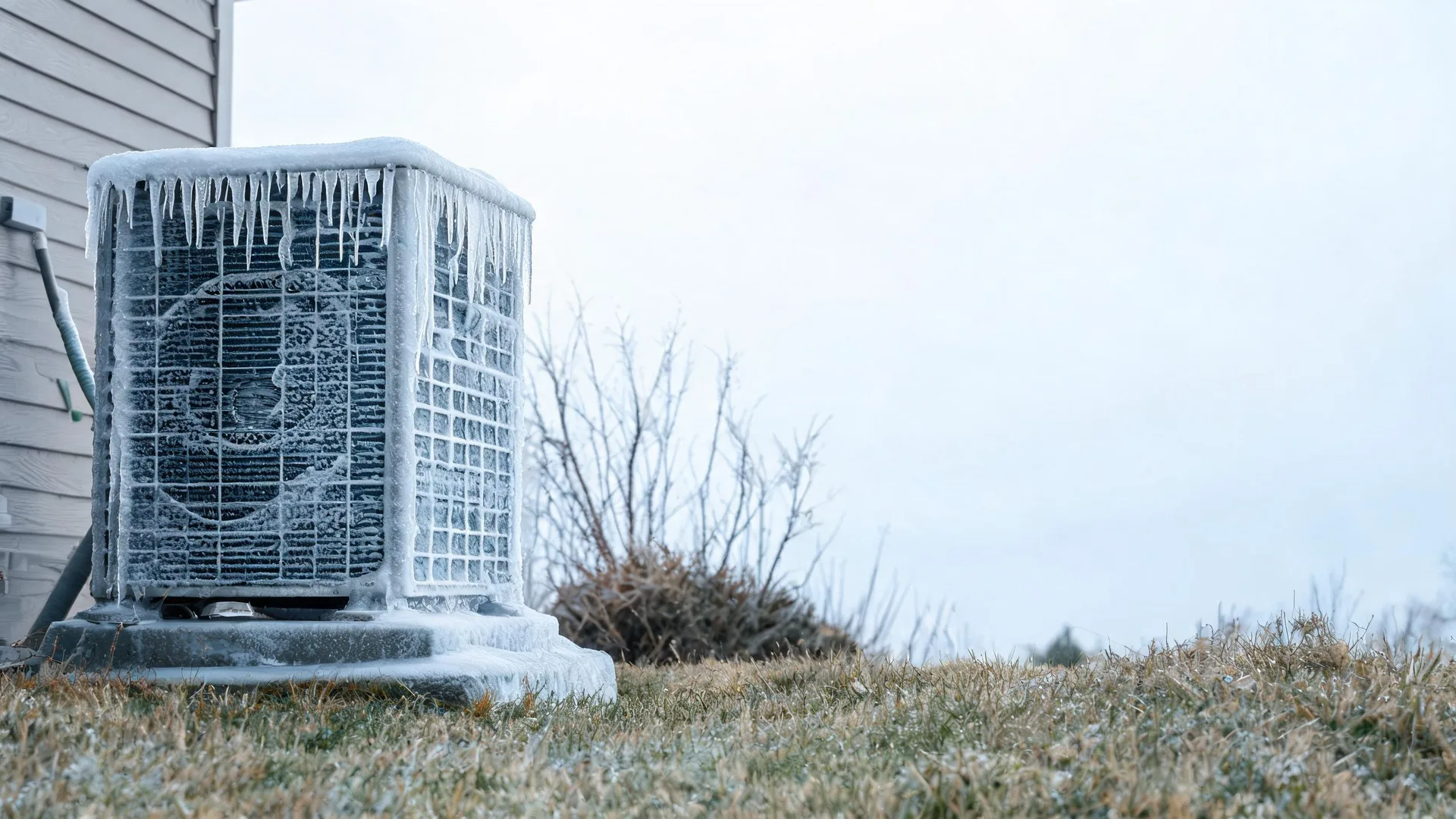
A heat pump that's struggling shows itself in small ways before it quits outright. It might blow air that doesn't feel warm enough, or run long stretches without shutting off. Ice on the outdoor unit that doesn't clear during the defrost cycle is another sign something's wrong. A clanking, buzzing, or grinding sound from the outdoor unit that wasn't there before is worth paying attention to. If the system switches between heating and cooling on its own, or won't switch when you need it to, the reversing valve is a likely suspect. Any of these are worth a call before the unit stops working altogether.

8 months
October through May, your system heats
3 months
June through August, it cools
20°F
the average winter night it heats against
82°F
the average summer afternoon it cools against
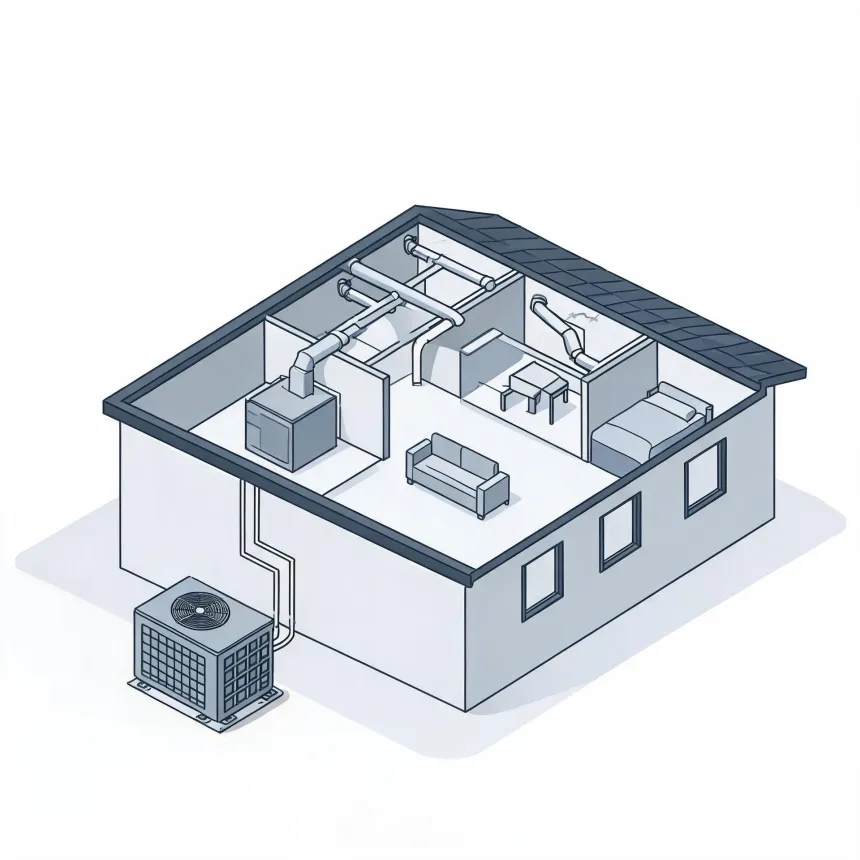
Isometric line illustration of a cutaway single-story house showing interior rooms with ducted air distribution, an indoor air handler, furniture, and an outdoor condenser unit connected by lines outside the wall.
Your system heats October through May and cools June through August.

NOAA nClimDiv, 1991–2020 normals

Winter nights in Portage average 20°F, nothing extreme for a heat pump built to handle cold.

So when yours is struggling, look for a worn part or a low charge before blaming the weather.

Half the homes in Porter County were built in 1982 or later

Half the homes here were built by 1982
101 damaging wind events from 2015 to 2024
26 hail events from 2015 to 2024
Every month it runs rough, it runs up your billIndiana power ran 14.77 cents a kilowatt-hour in 2024, and a struggling heat pump burns more of it

Heat pumps run here from October through May, eight months out of the year. September is worth a look before that starts. A system that was low on charge or working with a weak capacitor through last spring and summer usually holds on through mild days. It's the first cold push in October, when the pump has to work harder and often defrost more, that finds the weak spot. Catching it in September means a repair instead of a system down on the first cold morning.

A system with life left is a system worth repairing

If your heat pump came with a newer house here, it's likely still within its working life. That's a reason to get it repaired, not replaced.

Find a contractor
A man in a cap, navy T-shirt and brown work pants walks up concrete steps toward a blue front door, carrying a worn canvas tool bag with a hammer inside, beside a potted shrub in a blue planter.
A gray outdoor HVAC unit mounted on a concrete pad beside a house with gray lap siding and a stone foundation.

The part that's struggling now is the part that fails later

A heat pump that's low on refrigerant doesn't just heat poorly, it damages itself doing it. The compressor relies on refrigerant coming back to it as a gas. Run the system short on charge and some of that refrigerant comes back as liquid instead, which the compressor isn't built to handle. Keep running it that way and you go from a repair to a compressor replacement. A weak capacitor follows the same pattern. It makes the motor it serves draw more current than it should to start and run. That extra draw heats the motor's windings. Stop it early and you replace a capacitor. Let it ride and you're replacing a motor. Ice on the outdoor coil works the same way in reverse. A little bit, cleared by the normal defrost cycle, is nothing. Ice that doesn't clear blocks airflow across the coil, so the system pulls less heat from the outside air, runs longer to make up for it, and builds more ice doing it. None of these fail the system outright on day one. They just make every hour it runs afterward a little harder on the part that's already weak.

What you can check yourself

Look at the outdoor unit first. Clear away leaves, mulch or anything stacked against it. Blocked airflow around the coil shows up as poor heating even when every part inside is fine. Check the air filter and swap it if it's dirty, because a clogged filter starves the system of airflow the same way a blocked outdoor coil does. Inside, make sure no vents are closed or blocked by furniture. Check that the thermostat is set to heat and the batteries aren't low. These take a few minutes and rule out the simplest causes before you call anyone.
What to leave alone

Don't open the outdoor unit's cabinet or touch anything inside it. Refrigerant lines, capacitors and the compressor carry charge or pressure that isn't safe to work around without training. If there's ice on the coil, don't chip or pry it off. Let the defrost cycle handle it, and call someone if it isn't clearing on its own. A reversing valve that's stuck or a compressor that's short on charge needs gauges and a trained eye to diagnose. Checking the simple stuff is worth your time. Diagnosing the rest isn't a homeowner job.

A lot of heat pump failures trace back to the reversing valve or the capacitor, and both fail in predictable ways. The reversing valve has a coil that energizes to slide the valve one way and de-energizes to slide it back. Dirt, corrosion or a weak coil leaves it stuck halfway, and the system runs in one mode when you need the other. Capacitors fail from age and heat. They lose their charge slowly, so the motor they serve starts harder and runs weaker long before it quits outright. The outdoor fan motor and compressor both depend on a capacitor working at full strength, so a weak one shows up as poor heating before anyone suspects the capacitor itself. Refrigerant loss is the other common thread. A slow leak at a fitting or coil doesn't show up as a sudden failure. It shows up as weaker heat, longer run times and a compressor working harder than it should, month after month, until something it's connected to gives out.

A diagnostic visit starts outside, at the unit itself. A tech checks refrigerant pressure with gauges, because that number tells you things airflow and sound never will. Electrical readings come next. That means the capacitor's output, the current draw on the fan motor and compressor, and whether the reversing valve's coil is getting the voltage it needs to switch. Inside, the tech checks the temperature of the air coming off the coil against what it should be for the system's charge and mode. None of this is guesswork. Every reading points to a part that's either within spec or isn't, and that's what tells you whether you're looking at a capacitor, a valve, or a charge that's dropped below where it should be.