






A gas furnace with sheet-metal ductwork and PVC pipes installed in an unfinished basement.

Furnace Installation in Angola, IN

Tell us about the job

Takes about a minute. No obligation.

New system or replacementFurnace or heatingSteuben County, IN
Step 1 of 2

What ZIP code is the job in?

Gas furnaces heat almost six in ten homes in Steuben County, and that number is why most furnace installations here are straightforward swaps. If gas already runs to your house, a new furnace ties into the same line and the same vent. The other common setup is LP gas, which covers better than a fifth of homes in the county and works much the same way, with a tank on the property instead of a utility line. Electric furnaces are the least common option here. Whatever is already feeding your current furnace is almost always the simplest fuel to replace it with.

8 months
October through May, your furnace is on duty
19°F
the average winter night it heats against
60%
of homes here heat with gas, so most furnaces here burn gas
80% AFUE
the federal minimum any new unit must meet
Isometric cutaway illustration of a small gabled house showing a furnace with flue pipe and ductwork connecting to interior rooms containing a sofa, bed, and cabinets.
Your furnace works hardest from November through March.

NOAA nClimDiv, 1991–2020 normals

Furnaces in Steuben County start running in October and go through May.

Install before September ends and the job happens on your schedule, not during the first cold week.

Eight months of heat and nights near 19°F mean this furnace doesn't get much of a break

Heat runs October through May
Winter nights average 19°F
Climate zone 5A

Half the homes in Steuben County were built in 1981 or earlier, half since. That split doesn't change what furnace goes in. The contractor sizes the unit to the house, old or new, and a standard efficiency rating fits either one. Mobile homes make up 13.5% of the county's housing, and those need a furnace built for that setup. Outside of that, there's no case here for oversizing a unit or paying for efficiency past what the house calls for.

Install before the efficiency floor rises

Steuben County sits in zone 5A, a cold enough climate that heating is the bigger job for any system here. Furnaces built now only need to hit 80 percent AFUE, and that minimum holds until December 2028. After that the floor jumps to 95 percent, which rules out standard efficiency units. Installing before then still gives you the wider range to choose from, including the lower cost models that won't be an option later.

Find a contractor
A man in a cap, dark shirt and cargo pants, seen from behind, carries a canvas tool bag up wooden porch steps toward a blue front door.
A gray high-efficiency gas furnace installed in an unfinished basement, surrounded by gas lines, a condensate drain, and sheet-metal ductwork.

Size it for eight months of work, not the old unit's number

Eight months of run time a year is the number to size against, not square footage alone. A furnace sized right for this load holds a steady temperature without short cycling. One sized wrong, in either direction, wears its parts out sooner and still leaves rooms uneven. Ask the contractor to run a load calculation on your house rather than matching the old unit's rating. The number stamped on what's coming out isn't necessarily the right one for what's going in.

A bigger furnace is not a safer bet

An oversized furnace heats the house fast, then shuts off, then fires up again a few minutes later. That short cycling puts more wear on the igniter and the blower motor than steady runtime does. Rooms far from the furnace still end up cold because the system never runs long enough to push air all the way through the ducts.

The load calculation looks at the house, not the old furnace

A contractor doing this right measures the walls, the windows, the ceiling height, and how the rooms connect, then works out how much heat escapes on the coldest days. That number drives the size, not whatever the furnace being replaced happened to carry. Houses the same size on paper can call for different furnaces depending on windows and insulation alone.

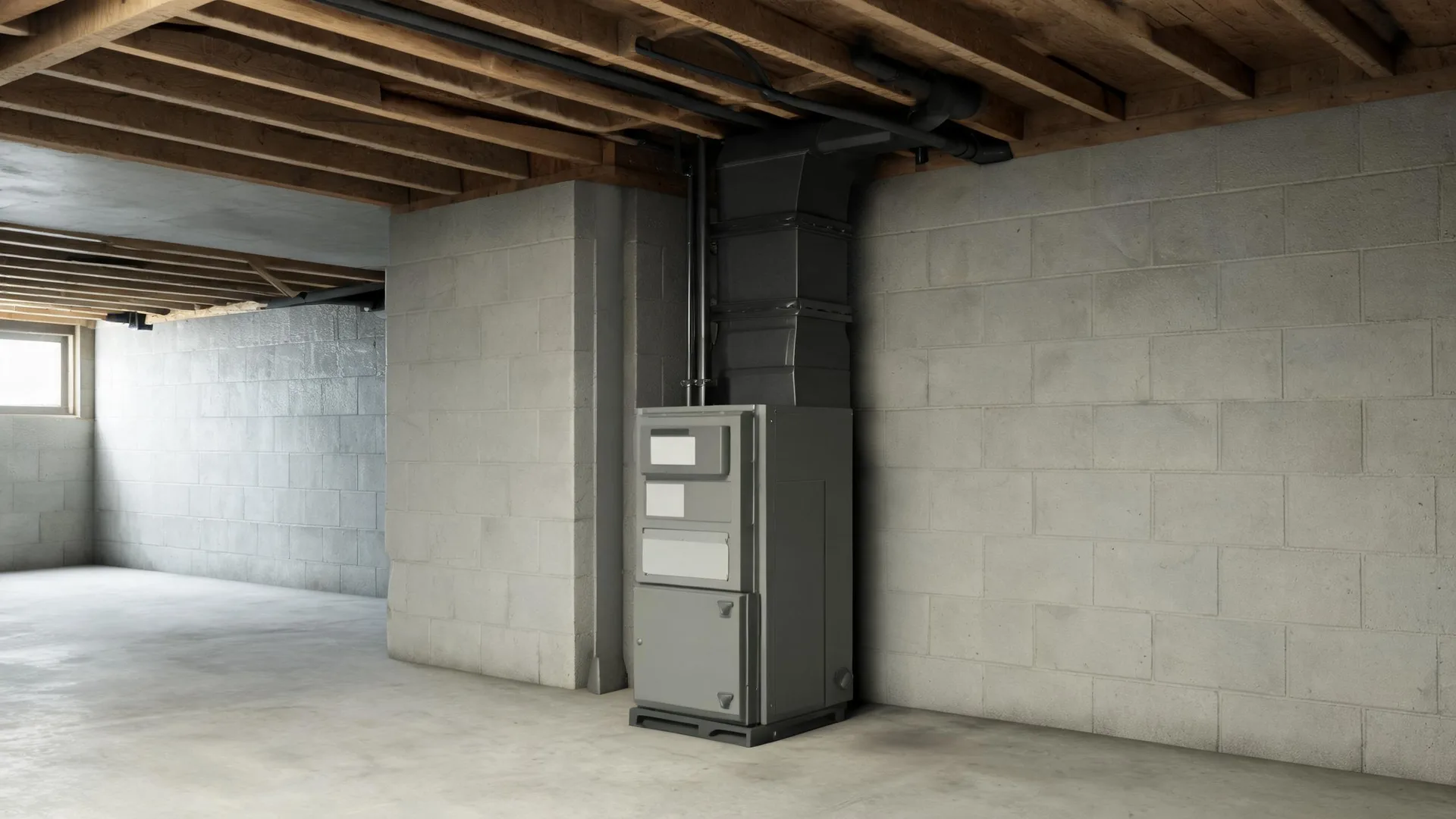
A bare concrete basement containing a gray gas furnace with metal ductwork and a vertical flue pipe, lit by a single hanging bulb.

A high-efficiency gas furnace would save about $110 a year to run in Steuben County compared with a gas furnace.

  • A high-efficiency gas furnace$490 a year
  • A gas furnace$600 a year

Estimates for a typical Steuben County home, from EIA household energy data, Indiana fuel prices and NOAA climate normals. Your home will differ.

Installation day starts with the old furnace coming out, not the new one going in. The contractor disconnects the gas line, the vent, the duct collar, and the electrical, then pulls the unit out of the cabinet or closet it sits in. That's when problems the old furnace was hiding sometimes show up, like a cracked heat exchanger or a vent pipe that was never sized right to begin with. Setting the new furnace is the fast part. Most of the day goes to connecting the gas line and testing it for leaks, sealing the duct connections so air isn't leaking out before it reaches the rooms, and wiring the thermostat. Before anyone leaves, the furnace gets run through a full cycle and checked for correct gas pressure, proper venting, and a clean flame, because a furnace that looks installed and one that's actually set up right aren't the same thing.