A illuminated two-story red brick house on a quiet residential street at dusk, flanked by mature trees under a deep blue evening sky.

Furnace Installation in Auburn, IN

Tell us about the job

Takes about a minute. No obligation.

New system or replacementFurnace or heatingDeKalb County, IN
Step 1 of 2

What ZIP code is the job in?

Most furnaces here run on gas

Utility gas heats 55.2% of occupied homes in DeKalb County, more than any other fuel. Electricity is next at 23.9%, with LP gas making up most of the rest. A gas furnace is the system most installers here work on week to week.


What that means for your installation

If gas already heats your home, replacing the furnace with another gas model keeps the same vent and gas line setup. If you're adding gas where there wasn't one before, that's a bigger job, and worth asking about up front.

8 months
October through May, your furnace is on duty
20°F
the average winter night it heats against
55%
of homes here heat with gas, so most furnaces here burn gas
80% AFUE
the federal minimum any new unit must meet
Isometric line illustration of a cutaway single-story house showing interior rooms with furniture, ceiling ductwork, a chimney flue, and a furnace unit outside the exterior wall.
Your furnace works hardest from November through March.

NOAA nClimDiv, 1991–2020 normals

Furnaces in DeKalb County start running in October and go through May.

September is the month to put in a new one, before the cold asks anything of it.

Gas runs $8.99 per million Btu here, so a basic furnace earns its keep about as well as a premium one

Climate zone 5A
Heat runs October through May
Winter nights average 20°F

DeKalb County sits in zone 5A, a cool climate where heating carries more of the load than cooling. Any furnace installed here has to meet that zone's minimum under the 2021 energy code. Right now that means 80.0 percent AFUE for a non-weatherized gas furnace. That floor is set to rise, with a much higher minimum taking effect for furnaces built in a few years. A furnace bought today still only has to clear the current standard, but it's worth asking an installer where a given model falls before deciding.

A standard furnace is the right furnace here

Half the homes in DeKalb County were built in 1975 or earlier, half in 1975 or later. Older or newer, a furnace sized to the house and built to the current efficiency standard is what fits. Nothing about the homes here calls for going bigger or paying more for a higher tier.

Find a contractor
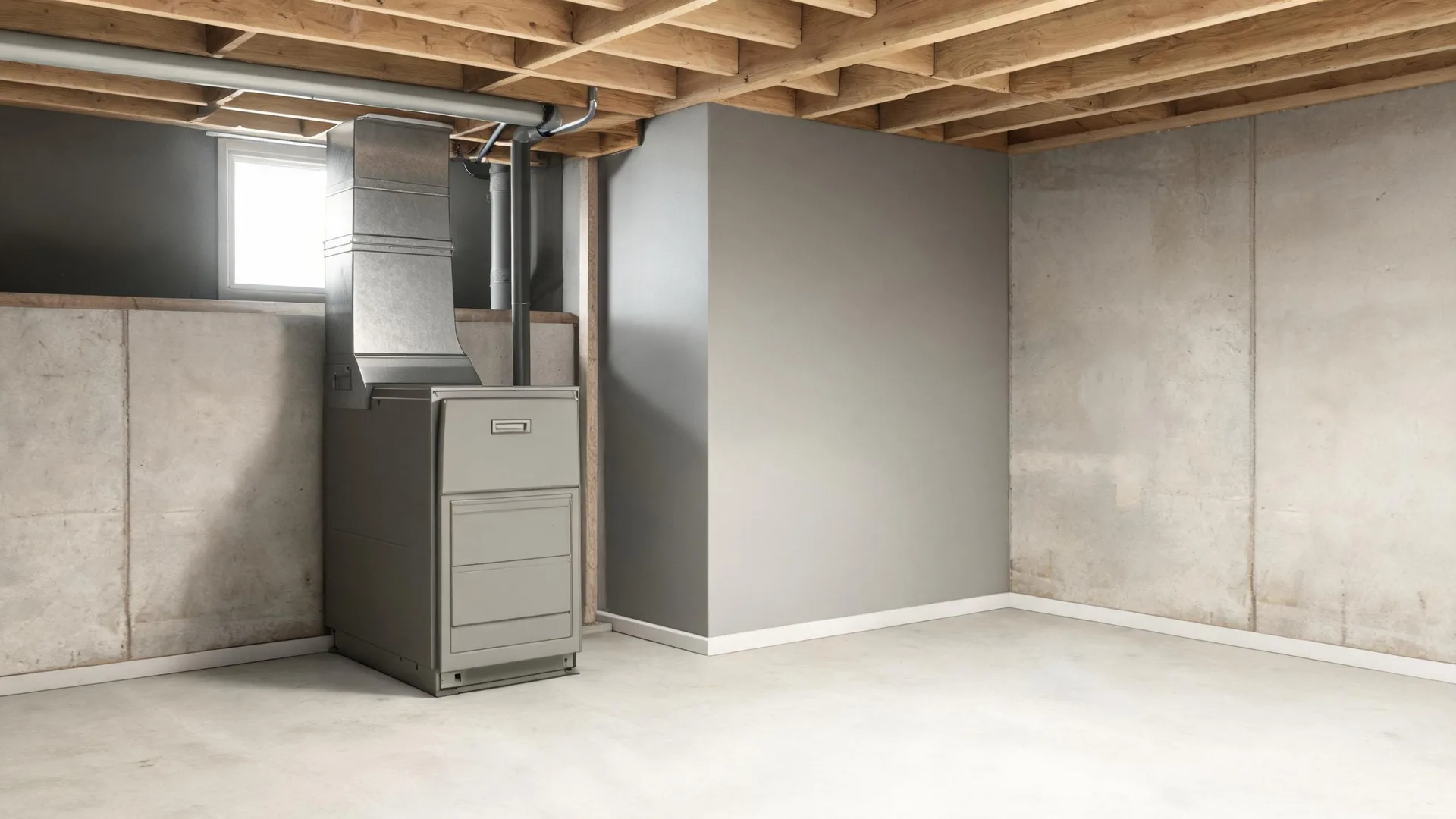
A gray residential gas furnace installed in an unfinished basement, connected to sheet-metal ductwork and PVC pipes.

Eight months a year, this furnace works

Heat runs here from October through May, about eight months a year. Overnight lows average 20°F across December, January and February. That's a long stretch of cold air pulling heat out of the house, and the furnace is what stands between that air and a warm room. A furnace sized wrong for the house shows it fastest in a season this long. Too big and it cycles on and off without settling in. Too small and it runs and runs without catching up. Getting the size right matters more here than it would somewhere with a shorter winter.

Ask how they size it

A furnace should be sized off a load calculation. That means the installer looks at the house itself. Square footage, insulation, window count, ceiling height all factor in. It's not just a swap for whatever size is already in the basement. If an installer quotes a number without asking about the house first, ask why.

Ask what happens to the vent

A furnace needs somewhere for exhaust to go. The venting has to match what the new unit requires, and some models vent differently than what's already in place. Ask whether the existing vent works as is or needs changing. Get that answer before the price is final, not after.

A gas furnace and sheet-metal air handler unit installed in an unfinished concrete basement.

A high-efficiency gas furnace would save about $100 a year to run in DeKalb County compared with a gas furnace.

  • A high-efficiency gas furnace$480 a year
  • A gas furnace$580 a year

Estimates for a typical DeKalb County home, from EIA household energy data, Indiana fuel prices and NOAA climate normals. Your home will differ.

The old furnace comes out before the new one goes in. The installer shuts off the gas, disconnects the vent, pulls the ductwork loose and hauls the unit out. That's usually when the real work shows up. Maybe the duct trunk doesn't quite match the new unit's dimensions. Maybe the gas line or the electrical isn't sitting where the new furnace expects it. Setting the new unit in place is often the fastest part of the whole day. After that comes hooking up gas, vent and ducts, then wiring the thermostat. Before anyone leaves, the furnace gets fired up and checked. Gas pressure gets measured. Temperature rise across the heat exchanger gets checked against what the manufacturer calls for. Someone looks at the flue to confirm exhaust is actually leaving the house and not backing up anywhere. A furnace installed right should run through a full heating cycle on its own, with nothing left to adjust afterward.