






A lit residential street at dusk featuring large two-story brick houses with glowing windows, mature trees, and a street lamp.

Furnace Installation in Bloomington, IN

Tell us about the job

Takes about a minute. No obligation.

New system or replacementFurnace or heatingMonroe County, IN
Step 1 of 2

What ZIP code is the job in?

Most houses around Bloomington heat with electricity, and electricity in Indiana ran $43.28 per million Btu in 2024. That price applies no matter whose furnace is running, old or new. A furnace that wastes heat still pulls that same power to make it. Winters here are cold enough that the furnace runs for months at a stretch, so a system that turns more of that power into heat, rather than losing it, shows up as a real difference on the bill.

7 months
October through April, your furnace is on duty
24°F
the average winter night it heats against
80% AFUE
the federal minimum any new unit must meet
Isometric cutaway illustration of a single-story house in gray tones, showing interior rooms with furniture, ceiling ductwork, and an exterior furnace unit with a tall flue pipe.
Your furnace works hardest from November through March.

NOAA nClimDiv, 1991–2020 normals

Close to half the homes in Monroe County run on electric heat.

Most furnace replacements here swap in another electric furnace, so sizing it right matters more than picking a fuel.

Seven months of heat gives you a long runway. Use it before October.

Heat runs October through April
Climate zone 4A
Winter nights average 24°F

Monroe County falls under climate zone 4A, a mixed zone that asks real work of both heating and cooling. That rating sets a floor on what furnace can go into a home here. Any gas furnace built from November 2015 on has to turn at least 80 percent of the gas it burns into heat over the winter. That's the baseline, not a special feature, and it's what you'll find in anything sold new today. The number moves again in 2028, when newly built units have to hit 95 percent. If you're installing now, the 80 percent minimum is what applies.

Get this right once, and it pays you back every winter

A new furnace draws power at the same Indiana rate as the one it replaces. What changes is how much of that power turns into heat in your house instead of getting lost. Get the install sized and set up right, and that difference holds for as long as the furnace runs.

Find a contractor
A man in a cap, gray T-shirt and tan work pants climbs porch steps toward a blue front door, carrying a canvas tool bag filled with tools, beside a blue planter with a shrub.
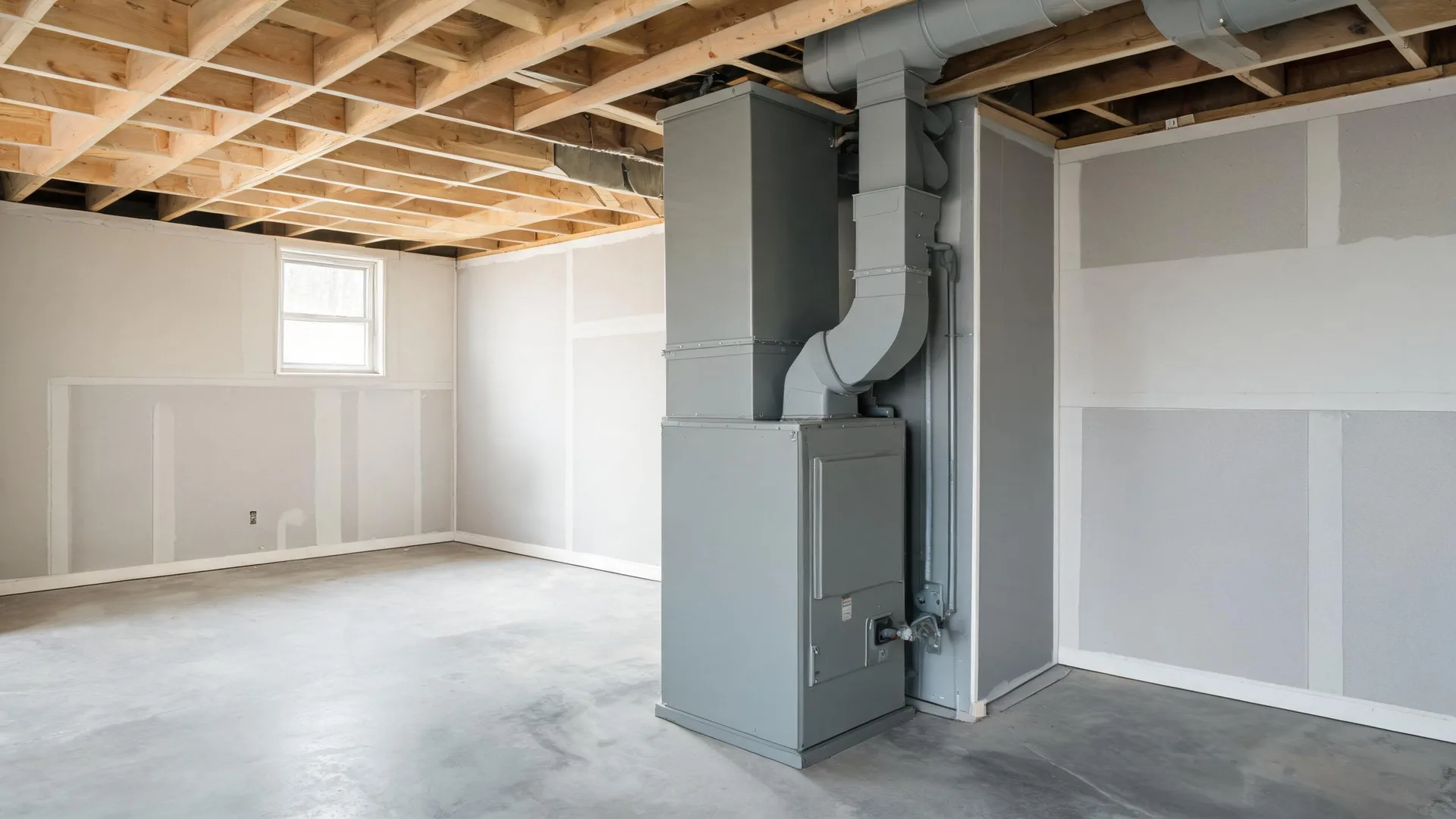
A gray residential gas furnace installed in an unfinished basement, connected to sheet-metal ductwork and PVC pipes.

The box it comes in isn't what decides how it runs

Two installs with the same furnace in the box can end up running differently for years. Size drives most of it. A furnace too big for the house cycles on, blasts heat, shuts off, and sits idle while the house coasts back down, so the air near the thermostat never matches the air in the far bedroom. One too small runs flat out and still can't keep up on the coldest nights. Either way the unit wears faster, because the heat exchanger goes through more stress cycles over its life. Ductwork matters just as much as the furnace. A system pushing air through ducts that are too narrow, crushed, or leaking at the joints works harder to move the same air, and some of the heat it makes never reaches a room at all. The blower has to be set to move the right amount of air across the heat exchanger. Too little airflow and the exchanger runs hotter than it should, which shortens its life. Too much and the air feels cool coming out of the vents even though the furnace is doing its job. None of this shows up on the furnace's rating plate. It shows up in how the person installing it measures the house, checks the ducts, and sets the blower once the unit is in.

Sizing comes from a heat loss calculation, not the old unit

A furnace gets sized by figuring out how fast the house loses heat through its walls, windows, and roof, room by room, not by matching whatever was pulled out. Swapping in the same size as the last furnace just repeats whatever mistake was already there. The calculation accounts for insulation, window area, and square footage to land on the actual output the house needs.
Oversized costs you more than undersized

A furnace that's too small is obvious, the house doesn't warm up on the coldest days. One that's too big hides the problem better. It heats the house fast, shuts off, and leaves the heat exchanger starting and stopping far more often than it should over its life. Short cycling like that is harder on the equipment than running a little longer each time would be.

Whoever installs the new furnace still has to deal with the old one, and that part isn't optional. A furnace runs on gas, electricity, or both, so it has to be disconnected from the gas line, the power, and the vent before it comes out. If it vents through a chimney or a flue, that connection has to be capped or reworked, since a vent sized for the old unit usually isn't right for the new one. The cabinet itself is heavy, mostly steel, and it has to come out through whatever doorway or crawlspace it went in through years earlier, which sometimes means more disassembly than putting the new one in takes. None of this is hard to do right, but skipping a step, leaving a gas line loose or a vent half connected, is how a straightforward swap turns into a safety problem.

The crew that shows up has a sequence to get through, and most of the day is prep, not the parts people expect. The old furnace has to come out first, which means the gas, the power, and the vent all get disconnected before anyone touches the new unit. Once it's clear, they check the ductwork at the plenum, the main trunk coming off the furnace, since that connection has to match the new unit's size and airflow, not just bolt onto whatever was there. The gas line gets pressure tested after the new furnace is connected, not assumed to be fine because the old one ran on it for years. Electrical runs to the blower and the control board, and the venting gets set up to match what this furnace actually needs. Only after all of that does anyone get to the part where the furnace fires up and the technician checks the flame, the temperature rise, and the airflow against what the unit is rated for.