




A lit residential street at dusk featuring large two-story brick houses with glowing windows, mature trees, and a street lamp.

Furnace Installation in Greencastle, IN

Tell us about the job

Takes about a minute. No obligation.

New system or replacementFurnace or heatingPutnam County, IN
Step 1 of 2

What ZIP code is the job in?

Electricity in Indiana runs $43.28 per million Btu, and most homes in Putnam County heat with it. That rate is on the bill every month the furnace runs, all winter long. A furnace that wastes heat wastes it at that rate, not a cheaper one. Two furnaces can heat the same house and use a different amount of electricity doing it, and that gap shows up winter after winter. Where most places can lean on cheaper gas to cover for an inefficient unit, electric heat here does not leave that room.

8 months
October through May, your furnace is on duty
22°F
the average winter night it heats against
80% AFUE
the federal minimum any new unit must meet
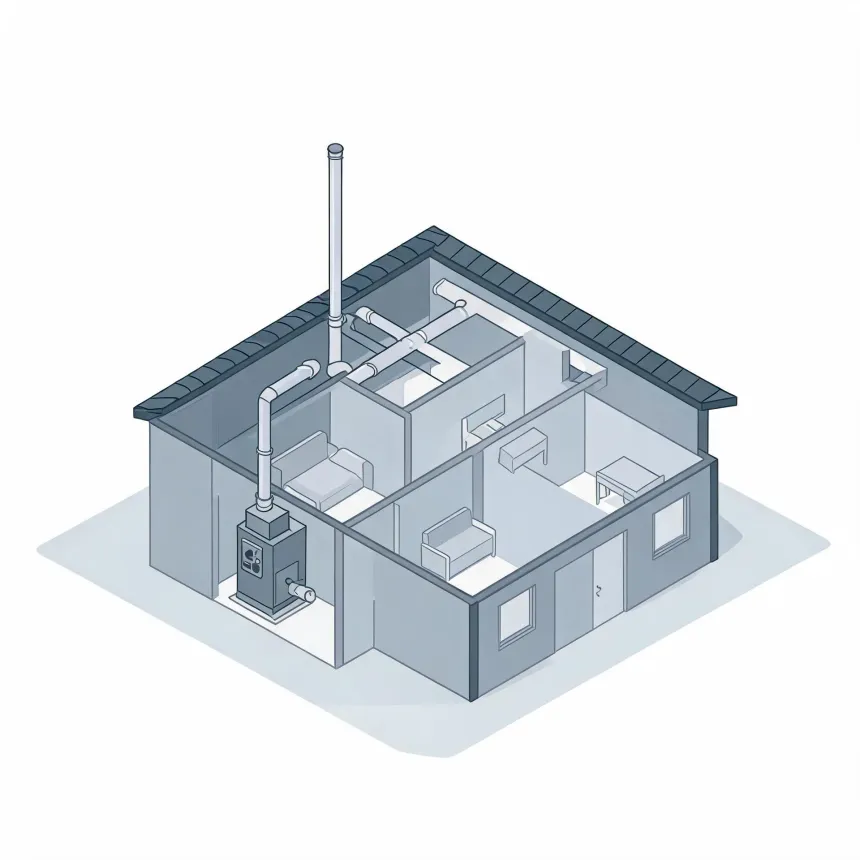
Isometric grayscale illustration of a cutaway single-story house showing interior rooms with furniture, a furnace unit connected to ductwork and a tall vertical flue pipe extending above the roof.
Your furnace works hardest from November through March.

NOAA nClimDiv, 1991–2020 normals

Furnaces here start working in October.

A new one put in before September ends has the winter to settle in, not a cold snap to answer to.

Most homes near Greencastle heat with electricity, and a new furnace should match that

41.5% of homes heat with electricity
Climate zone 4A
Heat runs October through May

Putnam County falls under zone 4A, a mixed climate code that expects a furnace to carry real heating load and still answer to summer humidity. Any furnace installed here has to clear a federal efficiency floor to be sold at all. Units built from November 2015 on have to turn at least 80 percent of the gas they burn into heat over the winter, and that floor rises to 95 percent for furnaces built from December 2028 on. That cuts out the low-efficiency models some other regions still allow. A federal tax credit is available for qualifying high-efficiency equipment, on top of that minimum.

A more efficient furnace earns that difference back on every bill

Electricity here runs $43.28 per million Btu, and that meter keeps turning every month the furnace does. When you're comparing units, put the efficiency rating next to the price tag. A furnace that heats this house using less electricity is the one that costs less to live with, winter after winter.

Find a contractor
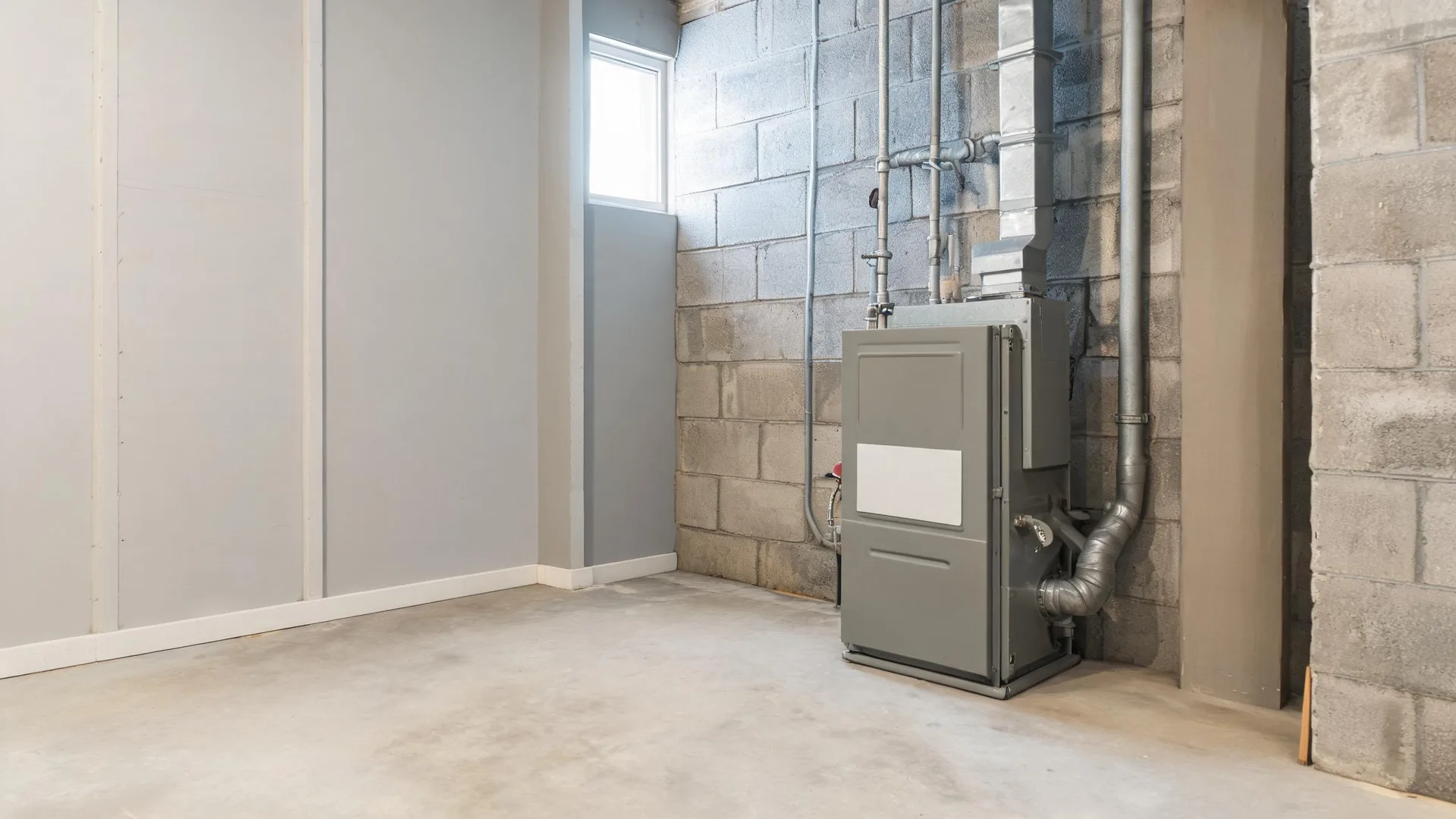
A gray high-efficiency gas furnace installed in an unfinished basement, surrounded by gas lines, a condensate drain, and sheet-metal ductwork.

The old furnace doesn't stay behind

The old furnace does not get reused or passed on. It gets disconnected from the gas line and the vent, pulled out, and scrapped. Whoever installs the new one handles that as part of the job. If the old unit is a natural draft model with a standing pilot, the vent connector and chimney liner often need a second look, since a smaller, more efficient furnace venting into an old flue sized for a bigger one can leave that flue oversized for the job. Inside, the old thermostat usually comes out too, especially if the new furnace runs a variable-speed blower the old thermostat was never built to control. None of that shortens the work. It just means what comes out has to come out clean before anything new goes in.

Size drives most of the cost

A furnace is sized to the heat loss of the house, not picked off a shelf. That means a contractor has to work out how fast the house loses heat before quoting a price. Go bigger than the house needs and the furnace short cycles, wearing out its parts faster. Go smaller and it runs long stretches without catching up. The load calculation is what decides the unit size, and the unit size is most of what you're paying for.
The venting has to match the furnace

A high-efficiency furnace pulls combustion air from outside and vents through plastic pipe, not a chimney. That pipe has to run a certain way, with a certain slope, to a spot outside clear of windows and doors. Where that run is short and simple, the install goes faster. Where it has to travel through framing or around obstacles to reach an outside wall, that adds labor the furnace itself has nothing to do with.

Two furnaces can carry the same efficiency rating and still perform differently once they're running the actual house. Ask what the rating was measured against, and ask whether the contractor ran a load calculation for this house or quoted off the size of the unit being replaced. Ask what stage the burner runs, since a single-stage furnace fires at full output every time while a two-stage or modulating furnace adjusts to smaller loads and runs longer, gentler cycles. Ask what blower motor it carries, because a variable-speed blower draws less power than a fixed-speed one and holds temperature steadier through the house. Ask about the warranty on the heat exchanger specifically, not just the unit as a whole, since that part is the most expensive thing to fail. A contractor who answers these without hesitation has done the math already.

Installation day starts with the gas and power shut off to the old unit before anyone touches a tool. The contractor disconnects the vent, the gas line and the ductwork, then pulls the old furnace out of the closet or basement space it's sat in. Once that's clear, the new furnace gets set and leveled, because a unit sitting even slightly off can affect how the blower and drain perform later. Gas line, vent pipe and ductwork get connected to the new furnace one at a time, each joint checked as it's made rather than all at once at the end. The electrical and thermostat wiring come next, then the contractor fires the unit, checks the flame, and tests it through a full cycle. Before anyone leaves, the system gets checked for gas leaks and the airflow gets checked room by room, since a furnace that heats the house on paper still has to prove it in every register.