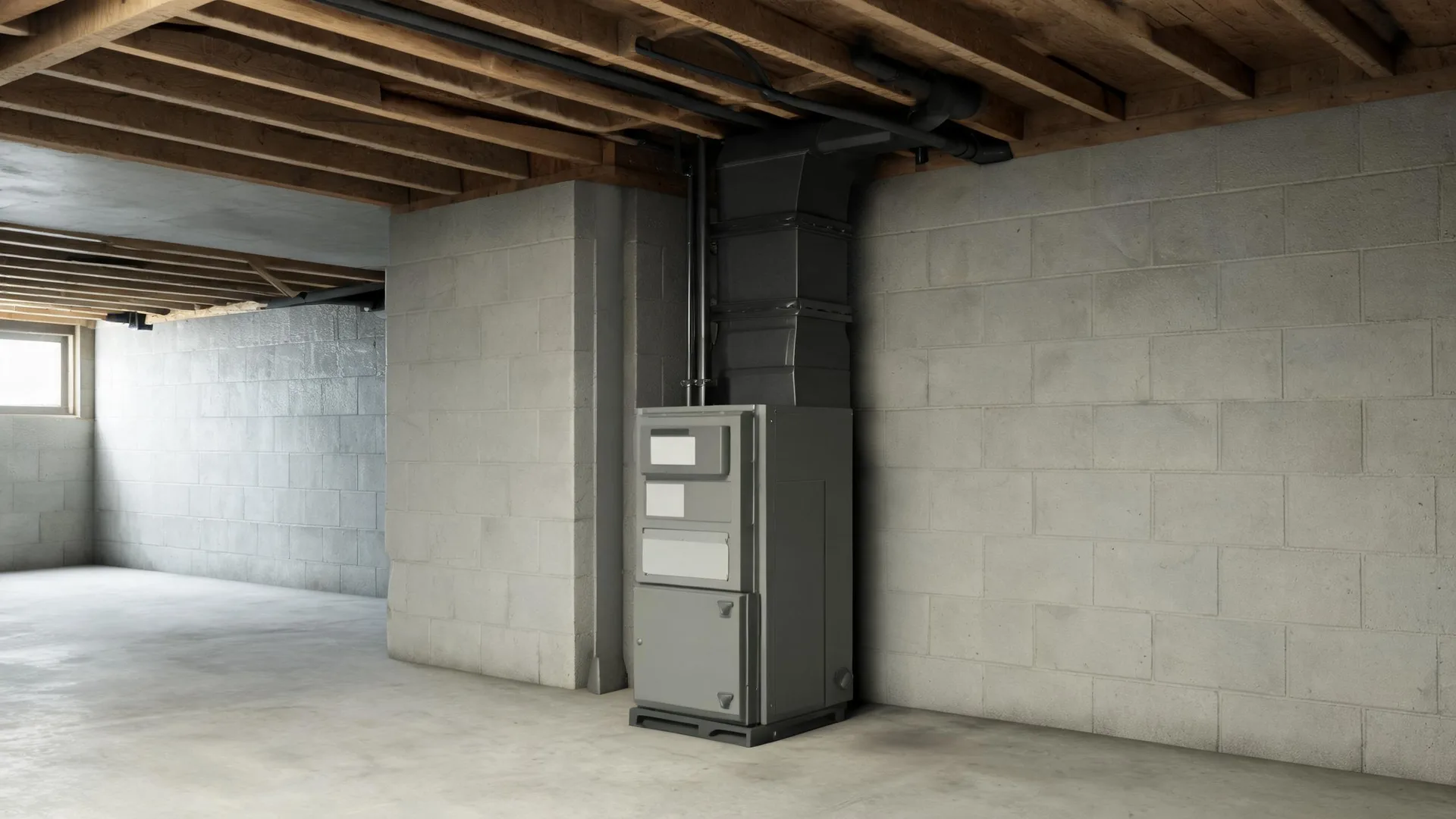
Gas is the common fuel here
Utility gas heats 45.7% of occupied homes in Dubois County, more than any other fuel. Electricity comes next at 33.3%, and LP gas heats another 16.1%.
Takes about a minute. No obligation.
Utility gas heats 45.7% of occupied homes in Dubois County, more than any other fuel. Electricity comes next at 33.3%, and LP gas heats another 16.1%.
If your home already has a gas line run to a furnace, putting in a new gas furnace means the vent and gas connection are already there. That keeps the job straightforward compared to switching fuels.
NOAA nClimDiv, 1991–2020 normals
The AFUE number on the label tells you how much fuel becomes heat and how much goes out the flue.
A furnace that runs most days all winter earns back a high AFUE faster than one that only kicks on a few weeks a year.



Natural gas ran $8.99 per million Btu in Indiana in 2024, cheaper than in most states. That changes the math on a high-efficiency furnace. The more efficient model still burns less gas every time it runs, but at this price the fuel it saves is worth less per year, so the higher sticker price takes longer to earn back. That doesn't make the efficient model a bad choice. It means the case for one here rests more on how long it lasts and how well it's sized to your house than on what it saves on the gas bill.
Heat goes on in October and stays on through April, about seven months straight. A furnace that's replaced in September gets sized, ordered and installed before it has to work, instead of getting picked in a hurry on the first cold night.
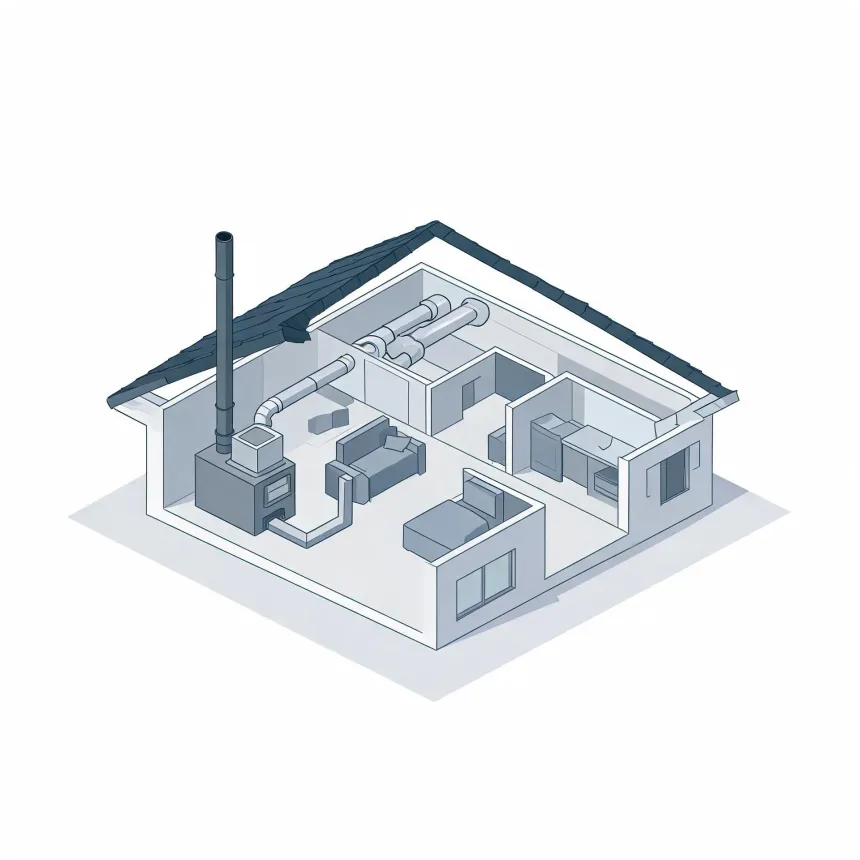
Find a contractorSize drives most of what you pay. A furnace too big for the house cycles on and off instead of running a long, steady stretch, and that short cycling wears the heat exchanger faster than steady running does. The right size comes from a load calculation on the house, not just a swap for whatever size was there before. Ductwork is the other piece. If the existing ducts are the right shape and size for the new furnace, the installer connects to what's there. If they're undersized or leaky, bringing them up to what the new furnace needs adds to the job. Venting matters too. A high-efficiency furnace vents through PVC pipe out a sidewall, while a standard-efficiency model uses the existing metal flue. Switching from one venting type to the other means new pipe, not just a new furnace bolted into the old setup.
A furnace sized above what the house needs still only runs as long as the house calls for heat, so it shuts off sooner. Short bursts like that mean the blower and heat exchanger are starting and stopping constantly instead of settling into a steady run, and starting is what wears a system down. An undersized furnace has the opposite problem. It runs long stretches just to keep up and never gets ahead of the house on the coldest days.
A contractor works out the right size by checking the square footage, the windows, the insulation and the ceiling height room by room, then adding it up into a number the house actually needs. That number has nothing to do with what the last furnace was rated for. Houses get additions, attics get insulated, windows get replaced, and a furnace put in years ago may have been sized for a house that doesn't match what's standing now.
Estimates for a typical Dubois County home, from EIA household energy data, Indiana fuel prices and NOAA climate normals. Your home will differ.
Installation day starts with the old furnace coming out, and that's often the slowest part if the venting has to change too. Once it's out, the new furnace gets set in place and leveled, because a furnace that sits even a little off level can affect how the burner and heat exchanger perform over time. The gas line gets connected and checked for leaks before anything else happens. The duct connections get sealed, not just pushed together, since loose joints there leak conditioned air into the attic or crawlspace. The vent pipe gets run and sloped correctly so condensation or exhaust moves the right direction. Once everything's connected, the installer fires it up, checks the gas pressure, checks the temperature rise across the heat exchanger, and watches it run a full cycle before calling it done.