





Three illuminated two-story brick houses on a tree-lined residential street photographed at twilight, with warm window light and landscape uplighting visible against a deep blue evening sky.

Furnace Installation in Michigan City, IN

Tell us about the job

Takes about a minute. No obligation.

New system or replacementFurnace or heatingLaPorte County, IN
Step 1 of 2

What ZIP code is the job in?

A furnace in Michigan City runs from October through May, about eight months of the year. Overnight lows average 20°F through December, January and February, and the furnace is what keeps the house livable through those nights. That long a season asks a lot of the igniter, the blower motor, and every other part that cycles on and off to keep up. Size matters more here than in places where the furnace gets an easy winter. A unit that's too small will run nearly all day trying to keep pace with the cold, and one that's too big will cycle on and off more than it should, wearing itself out faster either way. Worth asking the contractor how they're sizing it for your house, not just what brand they're selling.

8 months
October through May, your furnace is on duty
20°F
the average winter night it heats against
83%
of homes here heat with gas, so most furnaces here burn gas
80% AFUE
the federal minimum any new unit must meet
Isometric cutaway illustration of a single-story house showing interior rooms with a dark furnace unit, connected ductwork, a vertical flue pipe through the roof, and simple furniture, on a white background.
Your furnace works hardest from November through March.

NOAA nClimDiv, 1991–2020 normals

Half the homes in LaPorte County went up in 1969 or earlier.

A furnace going into a house that old has to be sized for the place, not just swapped in.

Gas here runs $8.99 per million Btu, so a high-efficiency furnace isn't the whole decision

Heat runs October through May
Winter nights average 20°F
Climate zone 5A

Gas heats 83.2% of the homes in LaPorte County, more than electric and propane combined. That's why gas furnaces are what most contractors here install and service, day in and day out. If the house already has a gas line run to it, replacing the old furnace with another gas unit is usually the straightforward path. It's worth asking the contractor what they'd recommend if you were starting from scratch, since that answer tells you whether they're matching your house or just matching what you already have.

Get it installed before October, not after

Furnace season here starts in October. September is the month to have the new one in, while you've still got time to deal with sizing and scheduling instead of doing it on the coldest week of the year.

Find a contractor
A gray high-efficiency gas furnace installed in an unfinished basement, surrounded by gas lines, a condensate drain, and sheet-metal ductwork.

The furnace has to match the house, not the year it was built

Half the homes here went up in 1969 or earlier, and a house that age wasn't built around the furnace going into it now. Rooms get finished, additions go up, ductwork gets extended to reach them, and none of that shows up on a spec sheet. A contractor sizing your furnace should be running a load calculation on the house as it stands, not matching the square footage or just matching the old unit's number. That's the only way the size matches the place instead of the year it was built.

The load calculation is the sizing method

A contractor works out furnace size with a room by room load calculation, not a chart matched to square footage. It accounts for window area, ceiling height, insulation, and how the rooms connect, then adds up how much heat the house actually loses on a cold night. That number, not the old unit's rating, is what the new furnace should match.

Oversized wears out a furnace faster than undersized

A furnace that's too big heats the house quickly, shuts off, then has to start again soon after. Each start cycles the igniter and runs the blower motor through another on and off, and that short cycling adds wear over the life of the unit. A correctly sized furnace runs longer stretches at a steadier pace, which is easier on every part that has to cycle.

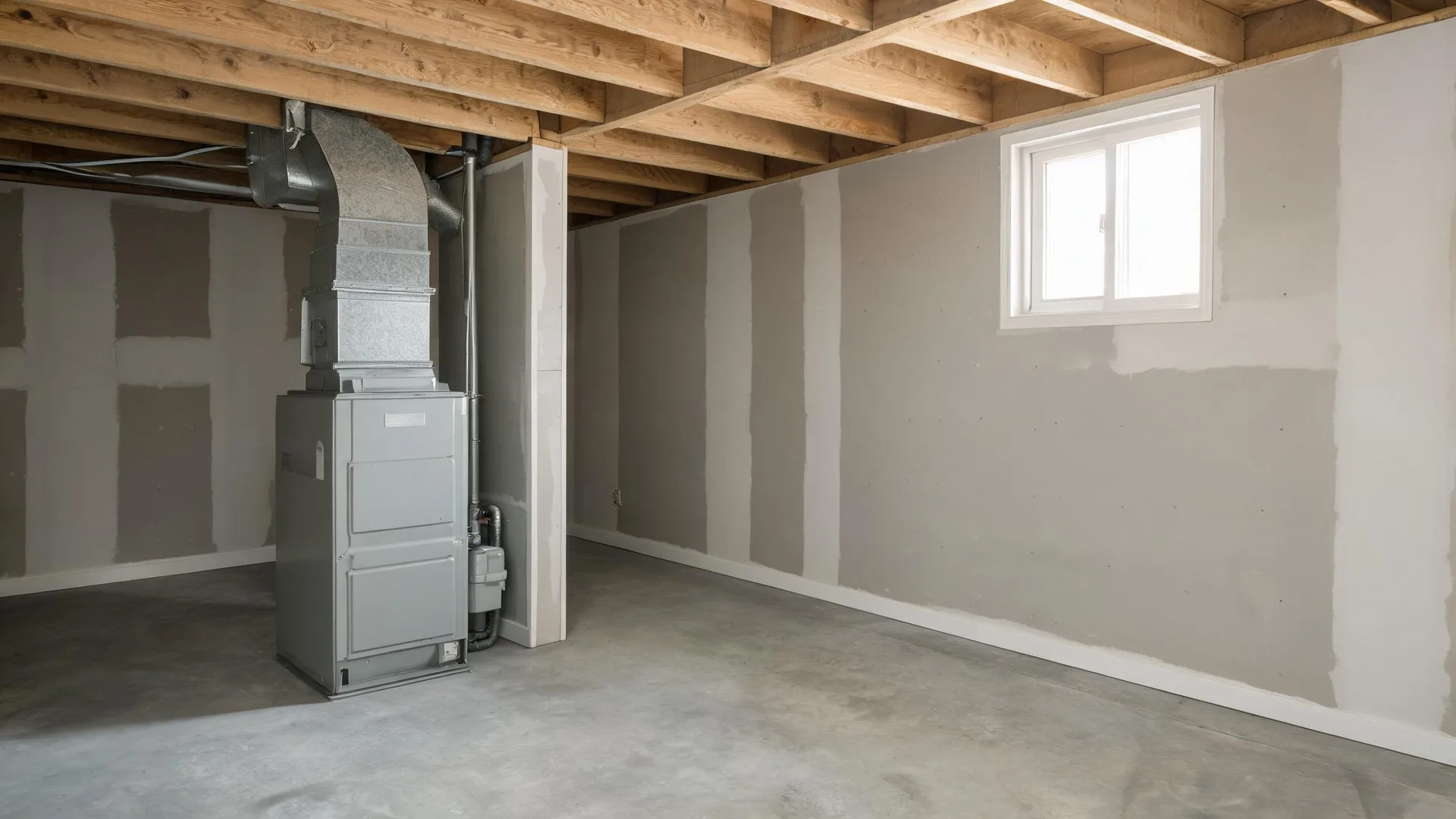
An empty unfinished basement containing a forced-air furnace with overhead ductwork, exposed ceiling joists, and a single hanging light bulb.

A high-efficiency gas furnace would save about $100 a year to run in LaPorte County compared with a gas furnace.

  • A high-efficiency gas furnace$480 a year
  • A gas furnace$580 a year

Estimates for a typical LaPorte County home, from EIA household energy data, Indiana fuel prices and NOAA climate normals. Your home will differ.

Installation day starts with the old furnace coming out, and that's when a contractor can see things the sales visit didn't show, like a flue that needs resizing or a return duct that's smaller than it should be. The gas line gets connected and pressure tested before anything is fired up. Ductwork gets tied in next, and any new run or adjustment to the plenum happens here, not after the furnace is already bolted down. Once it's set, the contractor fires it up and checks the flame, the temperature rise through the furnace, and the airflow at the registers, because a furnace that runs doesn't mean it's running right. The last step is usually a walk through the thermostat settings and the filter location, since that's the one thing the homeowner has to keep up with after everyone leaves.