







A lit residential street at dusk featuring large two-story brick houses with glowing windows, mature trees, and a street lamp.

Furnace Installation in South Bend, IN

Tell us about the job

Takes about a minute. No obligation.

New system or replacementFurnace or heatingSt. Joseph County, IN
Step 1 of 2

What ZIP code is the job in?

Half the homes in St. Joseph County were built in 1968 or earlier. If yours is one of them, the furnace going in now may not be original, but the ductwork probably is. A new furnace has to work with that duct system, not against it, and an installer should size the unit to what's already there rather than just swap in something bigger. Old and new don't always match up on the first try. Ask what the installer checked in your ducts before they quote a size.

8 months
October through May, your furnace is on duty
20°F
the average winter night it heats against
81%
of homes here heat with gas, so most furnaces here burn gas
80% AFUE
the federal minimum any new unit must meet
Isometric cutaway illustration of a small gabled house showing a furnace with flue pipe and ductwork connecting to interior rooms containing a sofa, bed, and cabinets.
Your furnace works hardest from November through March.

NOAA nClimDiv, 1991–2020 normals

Furnaces here run eight months a year, October through May.

Winter nights average 20°F, so the unit installed this year has a long, cold season ahead of it.

South Bend sees storms most counties don't. Plan the install around that.

233 severe weather events from 2015 to 2024
17% of homes statewide lost power a day or more in 2024
159 damaging wind events from 2015 to 2024
Most homes here run on gas81 percent of homes in St. Joseph County heat with utility gas.

Natural gas in Indiana ran $8.99 per million Btu in 2024, cheaper than what homeowners pay in a lot of the country. That changes the math on which furnace to install. A high-efficiency model still costs less to run month to month, but the gap is smaller here, so it takes longer for the extra upfront cost to pay for itself. That doesn't make efficiency a bad idea. It just means it shouldn't be the only thing you're deciding on. With gas this cheap, how well the furnace holds up over a long, cold season and how well it matches your ductwork matter more than squeezing out another point of efficiency.

Install before October, while it's still your choice

Heat goes on in October here and runs through May. September is the month before that, and it's the easiest time to install a furnace, before the first cold night forces the decision. Get it done now and the install happens on your schedule, with time to check it against your ductwork, not in a rush because the old one quit.

Find a contractor
A man in a cap, dark shirt and cargo pants, seen from behind, carries a canvas tool bag up wooden porch steps toward a blue front door.
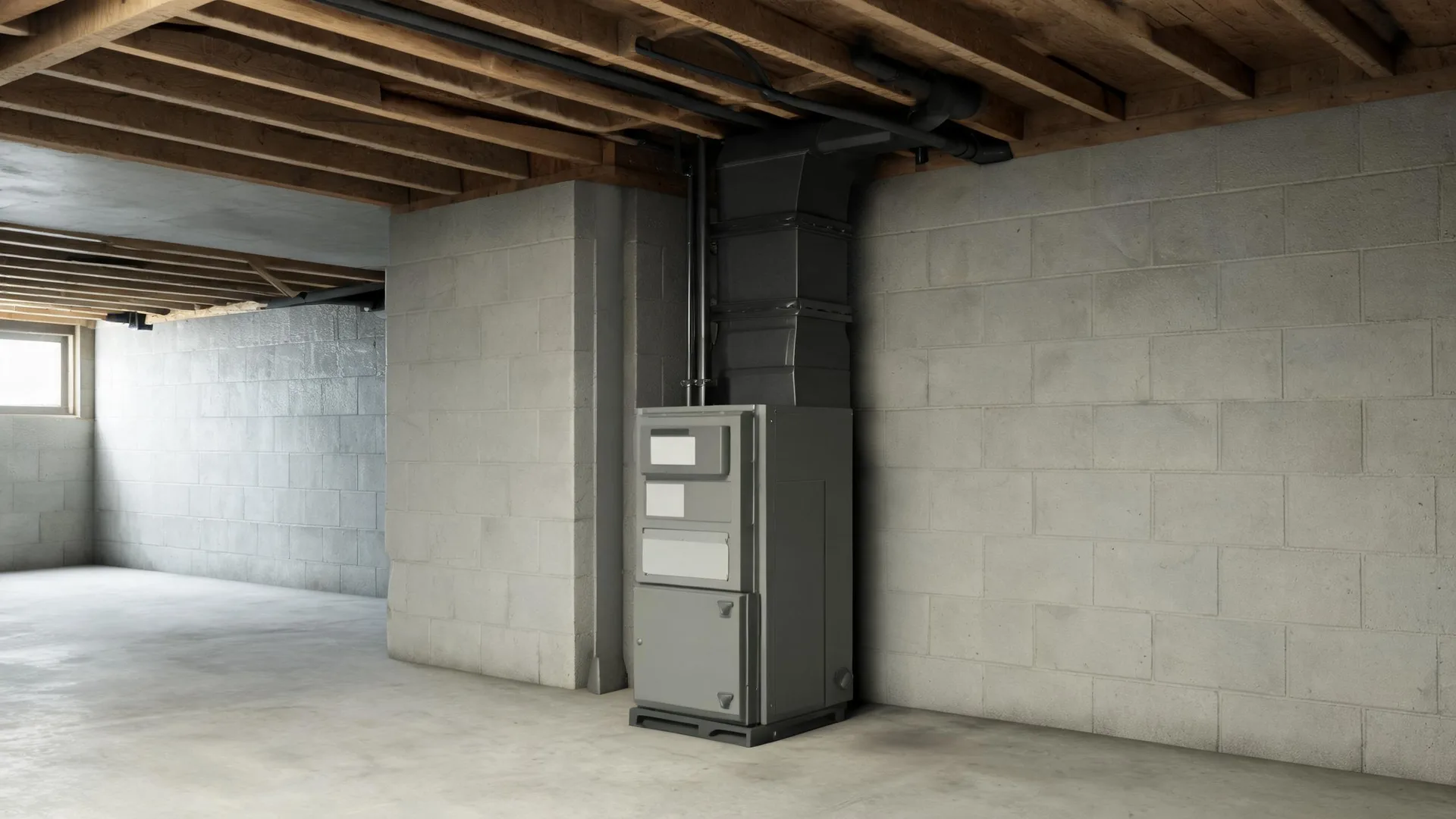
A gray high-efficiency gas furnace installed in an unfinished basement, surrounded by gas lines, a condensate drain, and sheet-metal ductwork.

A long cold season means size it right the first time

Eight months of heat a year, with nights down around 20°F for a good stretch of that, wears on a furnace faster than it would somewhere milder. That's the case for sizing this one right rather than going by what the old one was rated for. A unit too big for your ducts short-cycles and the parts inside wear sooner. A unit too small runs flat out all winter trying to keep up. Either way shows up early, not years down the road. Get the size matched to your ductwork before you settle on a model.

AFUE tells you what's wasted, not what you'll pay

The AFUE number on the label says how much of the gas burned turns into heat for the house, and how much goes out the flue vent. A higher number means less of what you're paying for escapes unused. It doesn't tell you the bill, because that depends on how much the furnace runs and what gas costs where you live. Homes with the same furnace can still see different bills if one has leakier ducts or sits colder more often than the other.

The rating only holds if the furnace is sized right

A high AFUE furnace that's too big for the ductwork still short-cycles, turning on and off before it settles into steady, efficient burning. A furnace that's too small runs long and hard trying to catch up, and the rating on the label doesn't account for that strain. The number only means what it says when the unit matches the ducts it's tied into. Get that match right first, then weigh the rating.

A gas furnace with sheet-metal ductwork and PVC pipes installed in an unfinished basement.

A high-efficiency gas furnace would save about $100 a year to run in St. Joseph County compared with a gas furnace.

  • A high-efficiency gas furnace$480 a year
  • A gas furnace$580 a year

Estimates for a typical St. Joseph County home, from EIA household energy data, Indiana fuel prices and NOAA climate normals. Your home will differ.

Installation day starts before anyone touches the old furnace. The installer should check the gas line, the vent pipe and the return ducts first, because the new unit has to tie into all of them. Expect the old furnace to come out whole, not in pieces, and the area around it cleared and protected before the new one goes in. Setting the furnace is the fast part. Most of the day goes to connecting the gas line, sealing the duct joints, running the vent pipe and wiring the thermostat, then testing the burner and checking the flue draft before anyone calls it done. A good installer runs the system through a full cycle before they leave, not just a quick light-off, and walks you through the thermostat settings and the filter location before they go.