





A quiet residential street at dusk lined with illuminated two-story brick houses and mature trees.

Furnace Installation in Terre Haute, IN

Tell us about the job

Takes about a minute. No obligation.

New system or replacementFurnace or heatingVigo County, IN
Step 1 of 2

What ZIP code is the job in?

Most homes here heat with electricity, and in 2024 that electricity ran $43.28 per million Btu in Indiana. A furnace pulls on that rate every time it runs, and in a cold winter that's a lot of hours. Two furnaces can use the same electricity and turn it into different amounts of heat. The one that wastes less costs less to run, and that difference shows up on every bill for as long as you own it.

7 months
October through April, your furnace is on duty
23°F
the average winter night it heats against
80% AFUE
the federal minimum any new unit must meet
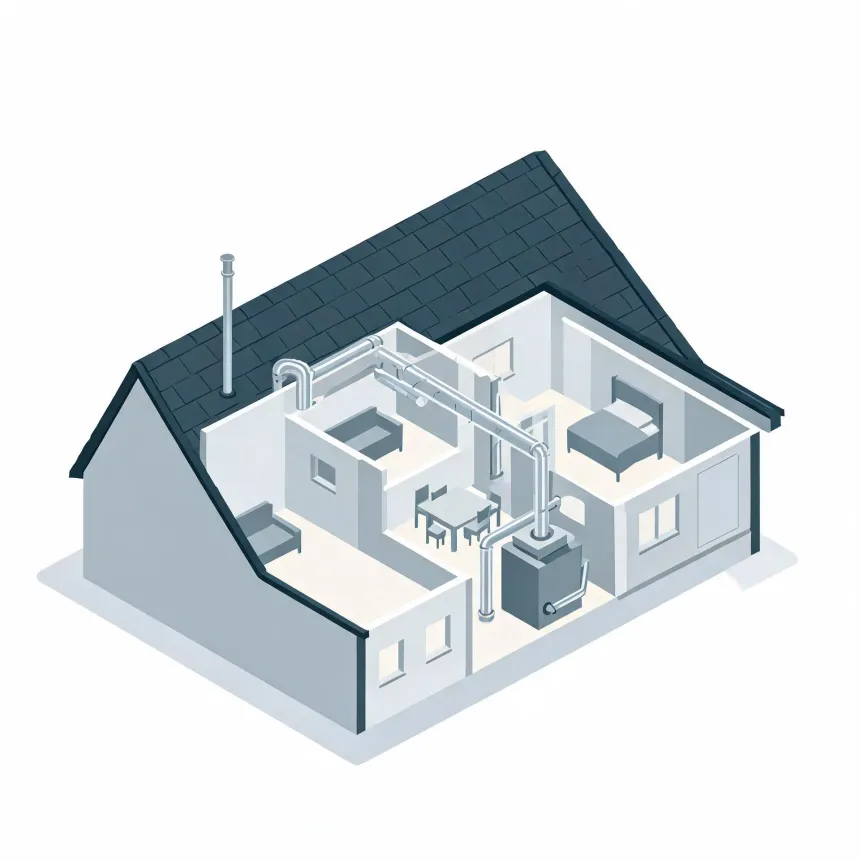
Isometric cutaway illustration of a single-story house with a dark shingled roof, showing interior rooms with furniture and a ducted furnace unit connected to metal ductwork and a roof flue.
Your furnace works hardest from November through March.

NOAA nClimDiv, 1991–2020 normals

Electricity heats 48.1% of homes in Vigo County, more than gas, propane and oil combined.

An electric furnace is the fit most homes here already have, which makes it the simplest swap when it's time to replace one.

Seven months of heat is seven months to feel the difference an efficient furnace makes

Heat runs October through April
Winter nights average 23°F
Climate zone 4A
Half the homes here were built before your furnace's grandparentHalf the homes in Vigo County went up in 1968 or earlier, and a new furnace has to work with the house that's already there.

Vigo County falls in climate zone 4A, which asks real work of both the furnace and the AC over the year. Any gas furnace installed has to clear 80 percent efficiency, turning at least that much of the gas it burns into heat rather than losing it up the flue. That floor rises to 95 percent for furnaces built on or after December 18, 2028, so what counts as the legal minimum is about to change. A furnace bought today only has to meet today's number. Homeowners weighing a unit that beats the current minimum are looking at the same gain the next rule will require anyway.

Pick the furnace by what it costs to run, not just to install

The furnace you pick decides what every winter afterward costs to get through. One that wastes less electricity than another is the one that keeps paying off, bill after bill, for as long as it's running.

Find a contractor
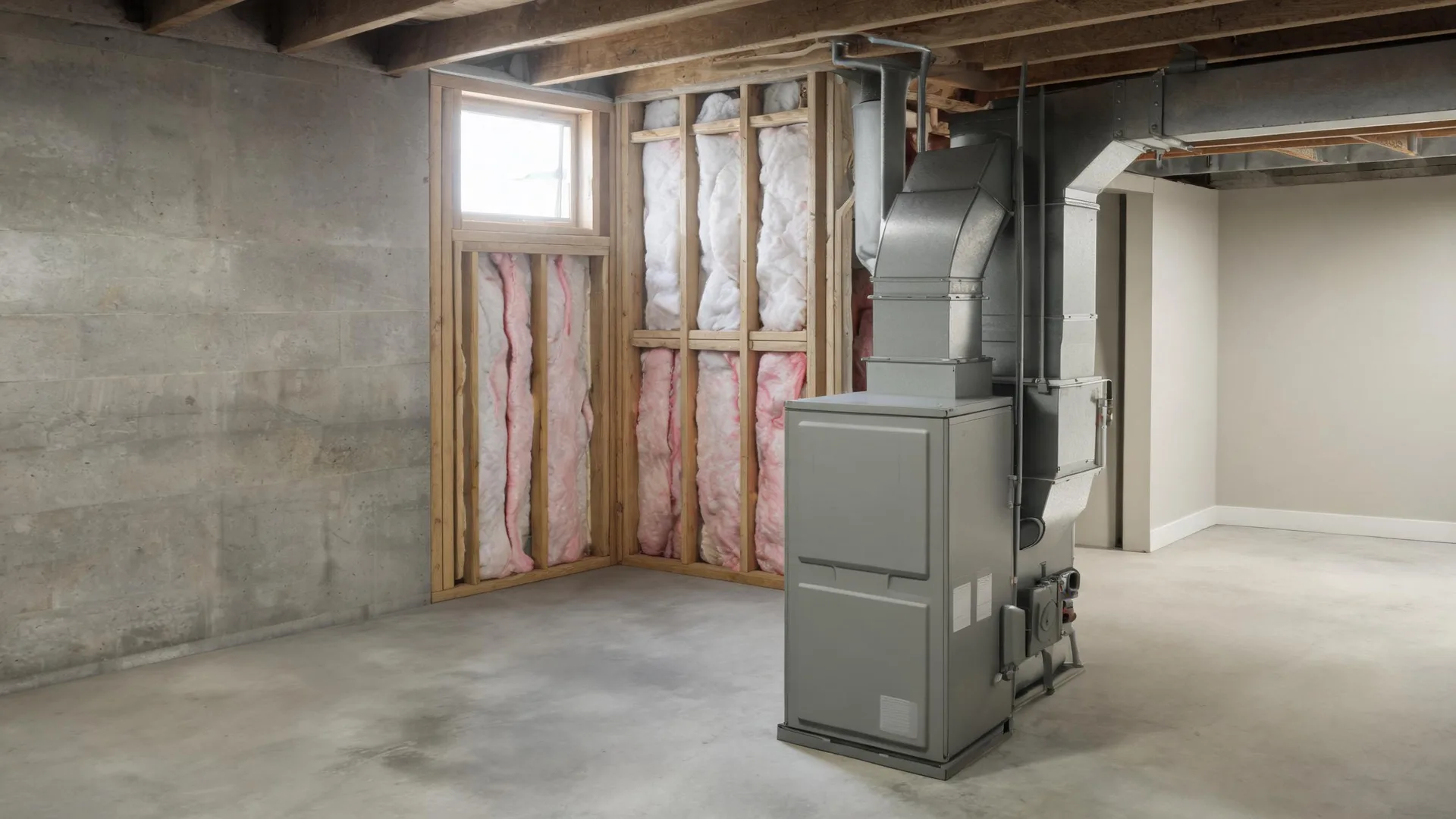
A gray residential gas furnace installed in an unfinished basement, surrounded by ductwork, a metal flue pipe, and a gas supply line.

Size it to the house you have, not the one on the chart

A house built in 1968 or earlier has had decades to settle, add on, get new windows, maybe lose some insulation or gain some. A load calculation accounts for that, and it's worth asking the contractor to run one on your house specifically rather than quote off a chart matched to square footage alone. The ductwork matters too, especially if it's original to the house. A furnace sized for the house on paper but not the one actually standing there ends up working against itself, running too long or cycling too soon, and either way it's spending more electricity to do the same job.

The furnace is one part of the cost

Labor to run gas line or electrical, modify ductwork, set a new thermostat, and haul away the old unit all factor into what an installation runs. A straight swap in the same spot costs less than moving the unit or changing fuel type, because the venting and connections already match what's there.
The install decides how the furnace performs

A furnace rated to run efficiently still needs the ductwork sized to move the air it produces, and the venting set up to match the unit. A contractor who skips the load calculation or reuses ducts that don't fit the new furnace can hand over a unit that never runs the way its rating promises.

The efficiency rating on the label tells you how much of the fuel or electricity going in actually turns into heat, and how much gets lost along the way. For an electric furnace, that waste mostly shows up as heat lost through the cabinet or the ducts rather than up a flue, but the principle is the same: a higher rating means more of what you pay for ends up warming the house. That number is measured in a lab under set conditions, so it describes the furnace, not your house. It won't tell you how the unit was sized or whether the ductwork can move the air it puts out. Two furnaces with the same rating can still perform differently once they're installed, because the rating assumes everything downstream is working the way it should. It's a starting point for comparing units, not a guarantee of what you'll see on a bill.

Installation starts with pulling the old furnace out and checking what it leaves behind. The venting, the gas or electrical connections, the ductwork at the plenum all get inspected before anything new goes in, because the new unit has to match what's actually there, not just drop into the old footprint. If the ductwork needs modifying to suit the new furnace's airflow, that happens before the furnace is set. Once the unit is in place, the contractor connects it, fires it up, and checks the temperature rise across the heat exchanger against what the manufacturer specifies for that model. Airflow gets checked too, since too little air across the heat exchanger makes it run hotter than it should, and too much keeps the house from heating evenly. The last step is setting the thermostat and walking through how the system behaves, because a furnace that's installed right should run quietly, cycle on a predictable schedule, and heat the house evenly from room to room.