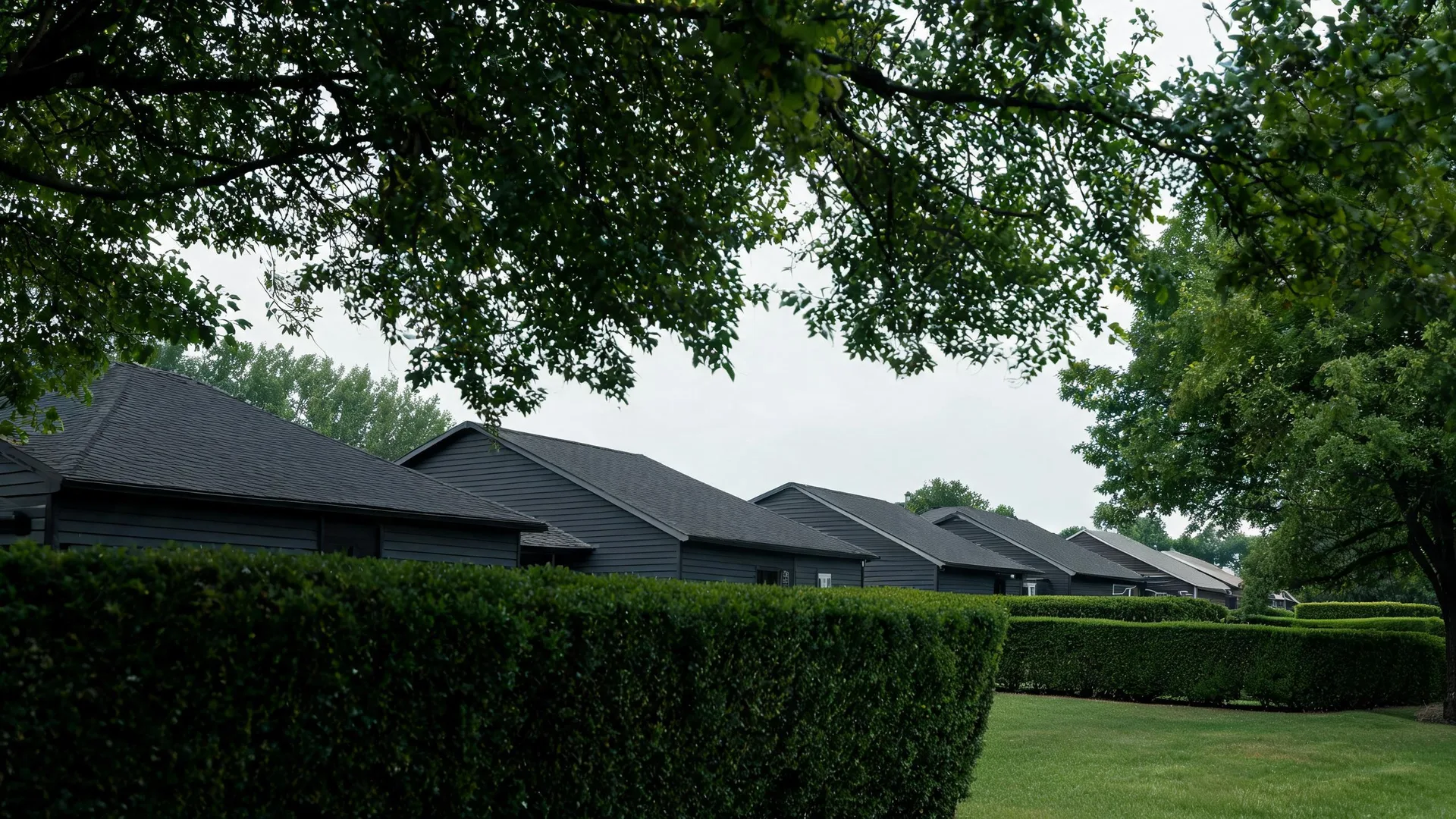
A row of dark-sided single-story buildings with gabled shingle roofs behind a tall trimmed hedge, with lawn, leafy trees and an overcast sky.

Furnace Repair in Anderson, IN

Tell us about the job

Takes about a minute. No obligation.

RepairFurnace or heatingMadison County, IN
Step 1 of 2

What ZIP code is the job in?

Eight months of use adds up

Furnaces in Madison County run from October through May. That's most of the year asking the igniter, the blower motor and the gas valve to cycle on and off, day after day. A furnace that age that quits is usually just worn in the ordinary way, not failing from anything unusual about this area.
Nights near 22°F mean no waiting it out

Overnight lows average 22°F here in December, January and February. A furnace that won't hold heat on a night like that isn't a small thing to put off. Getting the actual cause found and fixed matters more than guessing at it yourself.

8 months
October through May, your furnace is on duty
22°F
the average winter night it heats against
66%
of homes here heat with gas, so most furnaces here burn gas
13 winter storms
in ten years, the nights a failure hurts most
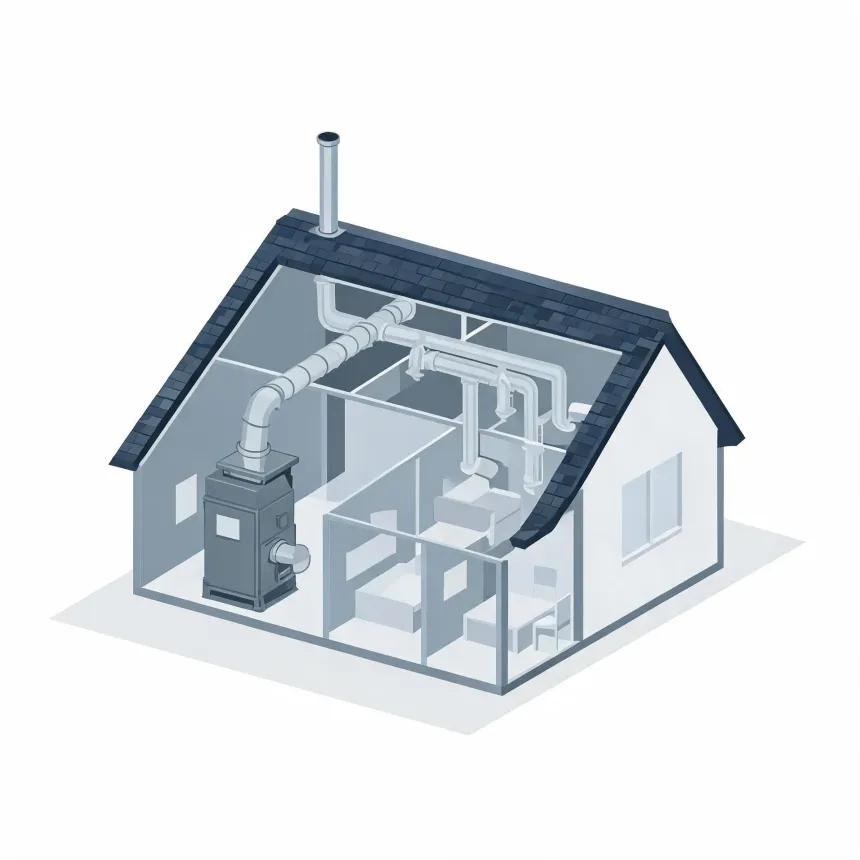
Isometric cutaway illustration of a small house showing a gray furnace unit with a flue pipe through the roof and branching ductwork running to rooms with simple furniture.
Your furnace works hardest from November through March.

NOAA nClimDiv, 1991–2020 normals

Check the thermostat is set to heat and the temperature is actually above room temperature, and check the filter for dirt choking the airflow.

A furnace that short cycles or blows cold often just needs a filter change or a breaker flipped back on, no tech required for that part.

Half the furnaces here are older too

Half the homes here were built by 1965
Heat runs October through May
Winter nights average 22°F
Madison County weather is nothing unusual121 severe weather events recorded in Madison County between 2015 and 2024

If your house is one of the half built in 1965 or earlier, there's no way to tell from that alone whether the furnace is original or was swapped out at some point. The nameplate inside the access panel will give you the install date. If it turns out to be an old furnace, ask the tech straight out how much life is likely left in it before you commit to the repair. That answer matters more than the age of the house does. A repair on a furnace with years left in it is a different decision than one on a furnace near the end.

Get the usual fix

Nothing about this area is especially hard on it. It's most likely the usual problem with the usual fix.

Find a contractor
A man in a cap, navy T-shirt and brown work pants walks up concrete steps toward a blue front door, carrying a worn canvas tool bag with a hammer inside, beside a potted shrub in a blue planter.
A gray residential gas furnace installed in an unfinished basement, surrounded by ductwork, a metal flue pipe, and a gas supply line.

Running on a problem doesn't fix it

A furnace that's struggling still tries to finish every cycle it starts. If the flame sensor is dirty, it'll shut off the burners partway through and try again, over and over, instead of stopping clean the first time. That repeated cycling wears on the igniter faster than normal use would. A cracked heat exchanger is worse. Running it longer than needed just means more time with exhaust where it shouldn't be. A blower motor running on a failing bearing will keep turning right up until it seizes, and it won't give much warning first. None of these get better because the furnace kept working through them. They get caught sooner, or they get caught at the point of failure.

What you'll actually hear or notice

A furnace about to need a repair usually tells you before it quits outright. Banging or popping from the ductwork as it starts up. A burner flame that's yellow or flickering instead of steady blue. Air coming out of the vents that's lukewarm instead of hot. A clicking sound that repeats without the burners ever catching. Short cycles where it runs briefly and shuts off before the room warms up. Each of these points to something specific, not just general wear.

Which of these to treat as urgent

A burner that won't stay lit or a flame that looks wrong means the gas valve or the flame sensor needs a look before you run it again. A furnace blowing cold air constantly, not just during startup, can mean the igniter or the gas valve has failed outright. Banging on startup is usually gas igniting late in the burner chamber, worth having checked before it happens on every cycle. Soft clicking with no ignition at all is often just the igniter itself, a straightforward fix. Knowing which one you're hearing tells you how fast to move.

An unfinished basement interior featuring a large metal furnace unit, exposed ceiling joists, concrete walls, and scattered boxes and cables on the floor.

A new furnace would cut about $100 a year off heating for a typical Madison County home.

  • A new high-efficiency furnace$430 a year
  • An older furnace$530 a year

Estimates for a typical Madison County home, compared with an older unit built to the previous federal minimum, from EIA household energy data, Indiana fuel prices and NOAA climate normals. Your home will differ.

Repair makes sense when one part has failed and the heat exchanger is sound.

Replacement makes sense when the heat exchanger is cracked or the furnace keeps needing parts.

A repair decision comes down to what else is wrong with the furnace besides the part that just failed. A cracked heat exchanger. A draft inducer on its way out. A control board that's already been replaced once. Any of those sitting alongside the current problem changes things. A furnace that's otherwise sound and just needs a sensor or an igniter is worth fixing without much thought. One where the tech finds a second issue while fixing the first is telling you something, even if neither problem alone would be reason to replace it. Ask what else they saw while they had the panel open. That answer is usually more honest than anything the furnace's age alone can tell you.