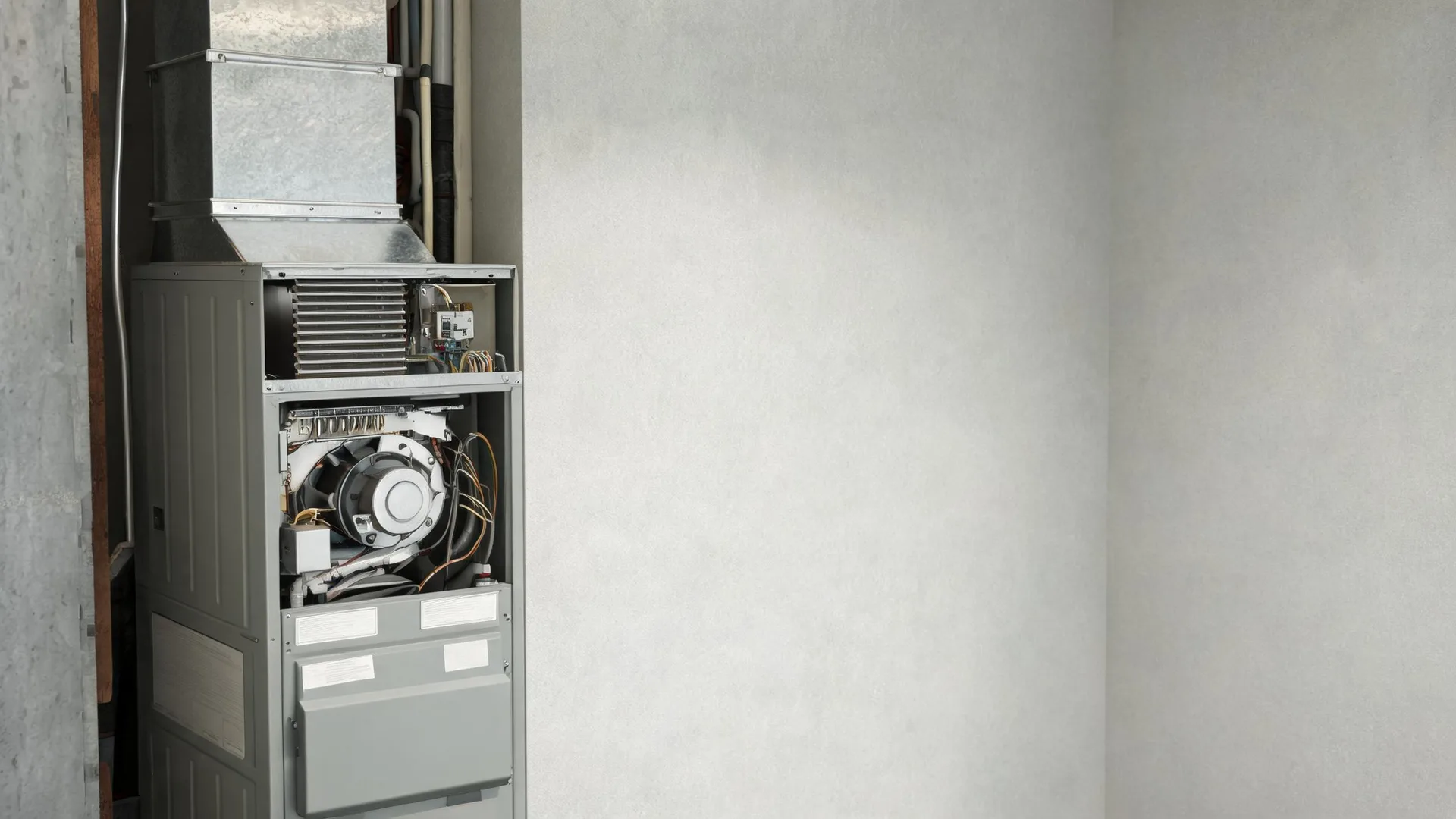
An unfinished basement containing a gray HVAC furnace with ductwork, exposed wooden joists, a concrete floor, and miscellaneous clutter in one corner.

Furnace Repair in Angola, IN

Tell us about the job

Takes about a minute. No obligation.

RepairFurnace or heatingSteuben County, IN
Step 1 of 2

What ZIP code is the job in?

The igniter wears out first

A hot surface igniter cycles on every time the furnace calls for heat, and that repeated heating and cooling takes a toll. Eventually it cracks or just stops glowing hot enough to light the gas. A furnace that won't fire but still runs its blower often points right here.

Worn parts mean a diagnosis, not a guess

A furnace that's short cycling, tripping its limit switch, or blowing cold air could have any of several things going wrong, from a clogged flue to a failing blower motor to a cracked heat exchanger. A tech needs to check the actual part before telling you whether it's a quick fix or time to think about replacement.

8 months
October through May, your furnace is on duty
19°F
the average winter night it heats against
60%
of homes here heat with gas, so most furnaces here burn gas
13 winter storms
in ten years, the nights a failure hurts most
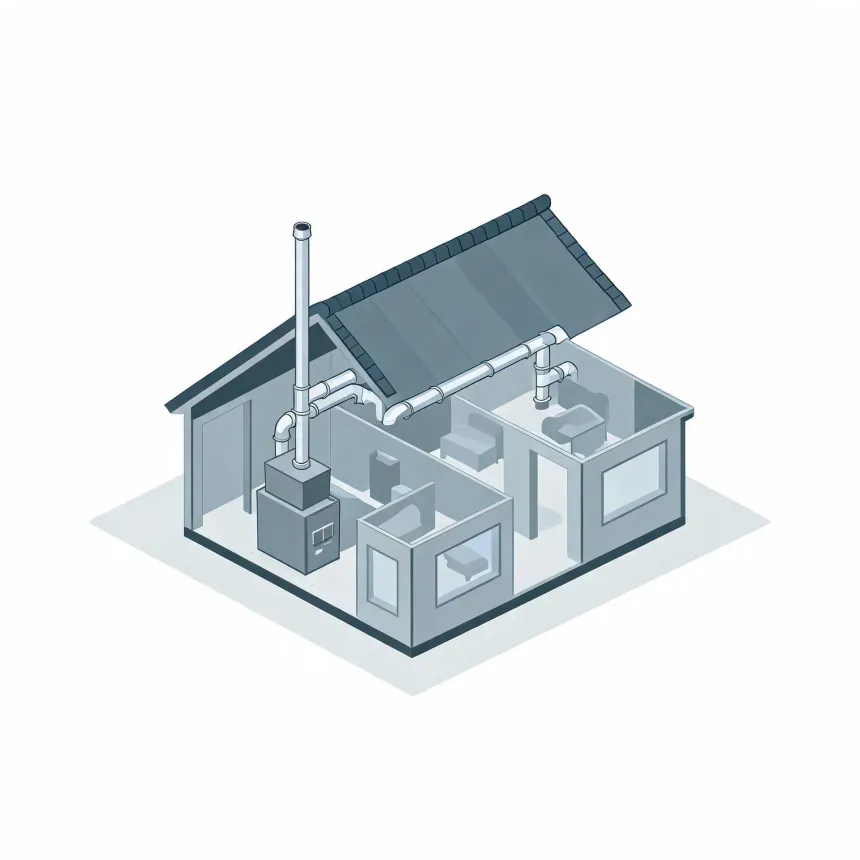
Isometric grayscale illustration of a cutaway house showing an interior furnace with a tall flue pipe and ductwork running to rooms under a partially lifted roof.
Your furnace works hardest from November through March.

NOAA nClimDiv, 1991–2020 normals

A dirty filter chokes airflow before anything else goes wrong.

Check it before the furnace restricts itself trying to breathe through it.

Eight months of heat a year wears a furnace down early

Heat runs October through May
Winter nights average 19°F
Climate zone 5A
October starts eight months of heatFurnace trouble tends to surface in those first cold weeks, right when a weak part finally gets tested.

A tech starts by asking what the furnace is doing, or not doing, before touching anything. Then comes a visual check inside the cabinet, looking for scorch marks, rust, or a cracked heat exchanger before power ever goes back on. With the furnace running, they'll check for a strong igniter glow, confirm the flame is steady and the right color, and listen to the blower for grinding or squealing that points to a failing motor or bearing. A meter comes out to test the gas valve, the flame sensor, and the limit switch, since any of those can shut a furnace down without an obvious reason. Static pressure readings tell them whether the ductwork or a dirty filter is making the blower work harder than it should. By the end, the diagnosis points to one part, not a guess, and that's what decides whether it's a repair or a sign the furnace is on its way out.

Eight months of heat a year means a real diagnosis, not a guess

October through May is a long stretch to run a furnace, and that's most of the year here. A part that's been working hard since fall is more likely to be the reason something's off now. Have a tech trace the problem to the actual part before deciding whether it's a repair or something bigger.

Find a contractor
A gray residential gas furnace installed in an unfinished basement, surrounded by ductwork, a metal flue pipe, and a gas supply line.

A furnace rarely fails without warning

A furnace usually gives some warning before it quits outright. It might take a few tries to light, or the burners catch late with a thump. The blower might run longer than it used to, or kick on and off more often than it should. Some furnaces start blowing air that's barely warm, which usually means the burners aren't staying lit even though the fan keeps going. A rattle at startup or shutdown often means a panel has worked loose or a part inside has started to wear. A burning smell that doesn't fade after the first few minutes isn't normal, and neither is a yellow, flickering flame where it should burn steady and blue. None of these mean the same repair. They mean something changed, and the furnace is telling you before it fails outright instead of after.

A cracked heat exchanger gets worse with every cycle

Heat makes metal expand, and a hairline crack opens a little more each time the burners fire and shut off. Left alone, that crack grows until it either leaks exhaust into the air a furnace is supposed to be heating or splits enough to fail a safety inspection outright. Shutting the furnace down when you first notice a problem stops that crack where it is.

A failing blower motor can take the control board with it

A motor that's grinding or straining is pulling more current than it should, and that extra draw doesn't stay contained to the motor. Run it long enough and the strain can damage the control board that commands it, turning a motor replacement into a bigger repair. A motor caught early is its own job. A motor ignored becomes two.

An unfinished basement containing a gas furnace with ductwork in the foreground and miscellaneous stored items along the far concrete wall.

A new furnace would cut about $120 a year off heating for a typical Steuben County home.

  • A new high-efficiency furnace$490 a year
  • An older furnace$610 a year

Estimates for a typical Steuben County home, compared with an older unit built to the previous federal minimum, from EIA household energy data, Indiana fuel prices and NOAA climate normals. Your home will differ.

Repair makes sense when one part has failed and the heat exchanger is sound.

Replacement makes sense when the heat exchanger is cracked or the furnace keeps needing parts.

A furnace is worth fixing when the problem is one part doing one job badly. An igniter, a flame sensor, a pressure switch, these fail on their own and swapping the part solves the whole problem. It's a different question when the cabinet shows rust through the heat exchanger, or the same repair keeps coming back every season. A furnace that's needed three service calls in two years isn't unlucky, it's wearing out as a whole, not just at one part. The honest version of this talk happens after the tech has the furnace open and knows exactly what failed and why. Before that, repair versus replacement is just a guess.