

A bare concrete basement containing a gray gas furnace with metal ductwork and a vertical flue pipe, lit by a single hanging bulb.

Furnace Repair in Auburn, IN

Tell us about the job

Takes about a minute. No obligation.

RepairFurnace or heatingDeKalb County, IN
Step 1 of 2

What ZIP code is the job in?

Furnaces in DeKalb County run about eight months of the year, October through May. That's most of the calendar spent heating a house, not just a few cold snaps. Overnight lows average 20°F through December, January and February, so the furnace isn't cycling on and off lightly, it's holding against real cold for hours at a stretch. That kind of run time adds up on the igniter, the blower motor, the heat exchanger, all the parts that do the work every time the thermostat calls. Whatever's acting up right now is probably wear that showed up early because the system never really gets a break. Worth having someone look at the actual cause rather than just resetting it and hoping.

8 months
October through May, your furnace is on duty
20°F
the average winter night it heats against
55%
of homes here heat with gas, so most furnaces here burn gas
10 winter storms
in ten years, the nights a failure hurts most
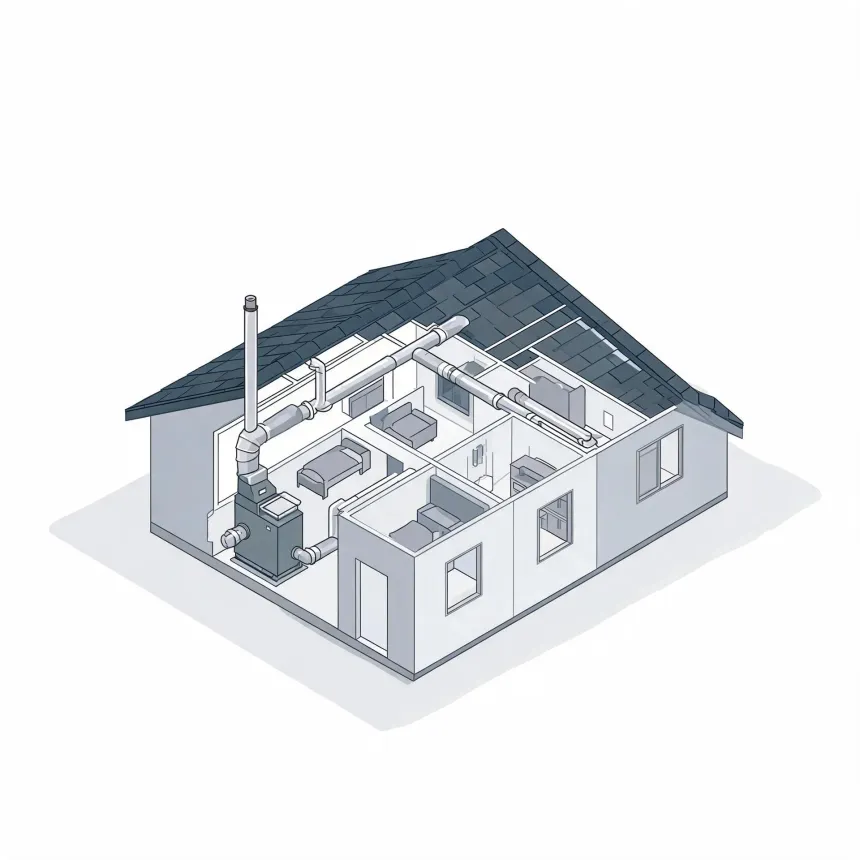
Isometric cutaway illustration of a single-story house showing interior rooms with furniture, ceiling ductwork, a furnace unit with a tall flue pipe, and a dark shingled roof.
Your furnace works hardest from November through March.

NOAA nClimDiv, 1991–2020 normals

Furnaces in DeKalb County start running in October.

A furnace that sat idle since May is the one most likely to show a problem in the first cold week.

A furnace acting up in a house like this is rarely one bad part out of nowhere. Call a contractor and tell them what you're noticing. Short cycling, a smell, cold air from the vents, a noise on startup, any of that points them straight at the igniter or the blower or the exchanger instead of making them start from zero. A quick reset might get heat back for tonight. It won't tell you why the furnace quit in the first place, and with lows at 20°F most nights this winter, you don't want it quitting again next week.

Get it diagnosed properly

Your furnace works hard here, and that's usually what's behind the problem. Have it diagnosed properly so the fix lasts.

Find a contractor
A man in a dark cap, dark shirt and tan work pants walks up wooden steps toward a blue front door, carrying a worn canvas tool bag in his right hand, with a potted shrub beside the entry.
A gray high-efficiency gas furnace installed in an unfinished basement, surrounded by gas lines, a condensate drain, and sheet-metal ductwork.

The parts that wear out first

Most furnace failures trace back to a handful of parts that do the same job over and over until one of them gives out. The igniter is first in line. It heats up every cycle to light the gas, and that repeated heating and cooling is what wears it out, usually with no warning beyond a furnace that won't fire at all. The flame sensor fails a different way. It coats over with a thin film from normal combustion, and once it can't sense the flame it shuts the gas off as a safety measure, so the furnace lights for a second and quits. Blower motors wear out from the hours they log, and before they quit outright they tend to get noisy or slow to start. The heat exchanger matters most. It cracks from the stress of heating and cooling over and over, and once it's cracked it's not something to patch, it gets replaced. Dirty filters don't fail on their own but they cause a lot of what does, because restricted airflow makes everything downstream run harder than it's built for.

Short cycling means something's cutting it off early

A furnace that fires up, runs briefly, then quits before the house warms is shutting itself down on purpose. Something, a flame sensor, a limit switch, a safety circuit, is telling it to stop rather than keep running. It's not a thermostat problem.

Cold air from the vents isn't always a gas problem

If air is moving but it's not warm, the burners may not be lighting at all, or the blower is pushing air before the heat exchanger comes up to temperature. Either way the furnace is running without actually heating, which is worth having looked at before it stops running altogether.

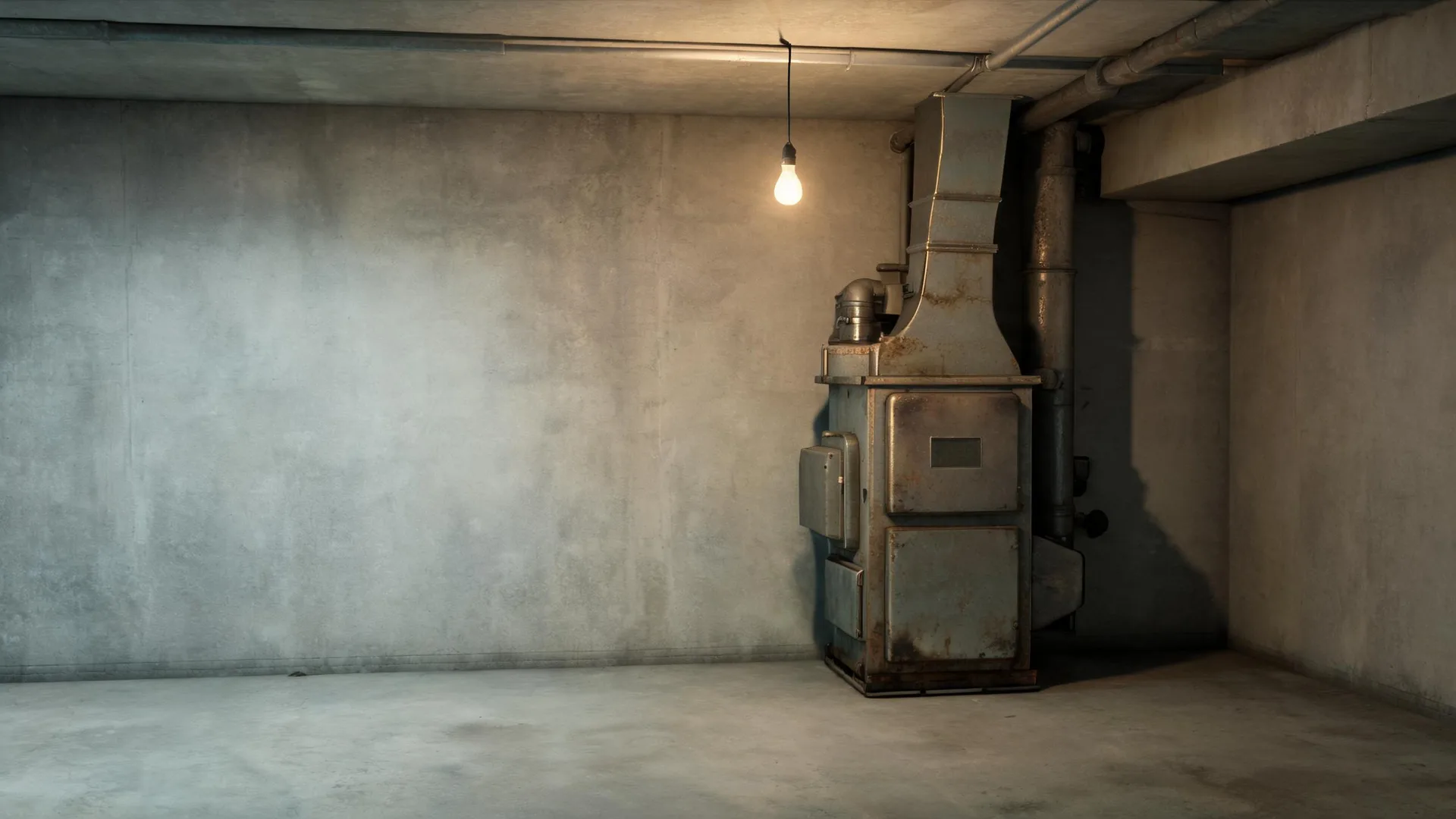
A gray forced-air furnace with metal ductwork stands in an unfinished basement with exposed wooden joists, concrete walls, and a single hanging light bulb.

A new furnace would cut about $110 a year off heating for a typical DeKalb County home.

  • A new high-efficiency furnace$480 a year
  • An older furnace$590 a year

Estimates for a typical DeKalb County home, compared with an older unit built to the previous federal minimum, from EIA household energy data, Indiana fuel prices and NOAA climate normals. Your home will differ.

Repair makes sense when one part has failed and the heat exchanger is sound.

Replacement makes sense when the heat exchanger is cracked or the furnace keeps needing parts.

Repair and replacement come down to what's failed and what it's connected to. A igniter or a flame sensor is a contained fix, that part fails on its own and swapping it brings the furnace back to normal. A cracked heat exchanger is different. At that point you're not fixing a part, you're deciding whether the rest of the furnace is worth carrying forward. Age matters less than how the furnace has been maintained, a furnace that's had regular filter changes and yearly checks tends to fail part by part, which keeps repair on the table longer. One that's been neglected tends to fail in a cluster, you fix the blower motor and the exchanger goes a season later. If a contractor finds one worn part on an otherwise sound furnace, fixing it is usually the right call. If they're finding a second or third issue inside a year, that pattern is telling you something the single repair isn't.