A illuminated two-story red brick house on a quiet residential street at dusk, flanked by mature trees under a deep blue evening sky.

Furnace Repair in Bloomington, IN

Tell us about the job

Takes about a minute. No obligation.

RepairFurnace or heatingMonroe County, IN
Step 1 of 2

What ZIP code is the job in?

Seven months of real work

Furnaces in Monroe County run from October through April. Overnight lows average 24°F in December, January and February. That's a normal winter for this part of Indiana, nothing extreme, but it adds up to a lot of hours on the burner and blower, and ordinary parts wear out over that many hours.
Usual problem, usual fix

A furnace that won't light, blows cold, or short cycles is almost always a known failure. A bad igniter. A dirty flame sensor. A clogged filter choking airflow. A technician can trace the symptom back to the part causing it and fix that part.

7 months
October through April, your furnace is on duty
24°F
the average winter night it heats against
9 winter storms
in ten years, the nights a failure hurts most
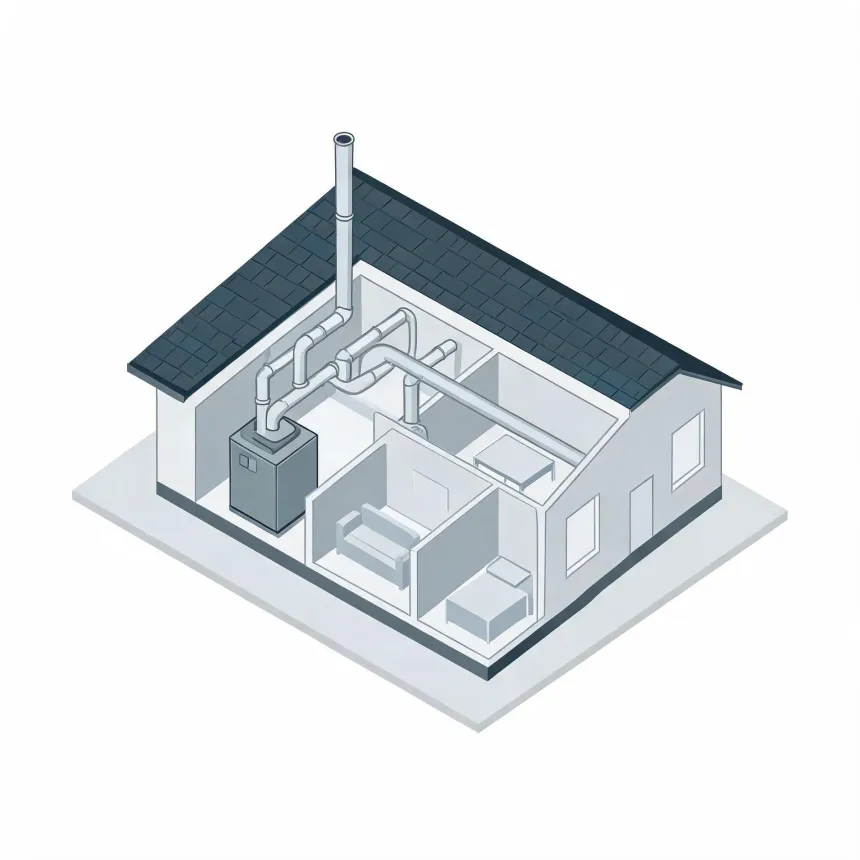
Isometric cutaway illustration of a single-story house showing a gray furnace connected to white ductwork and a flue pipe extending through the shingled roof, with simplified furniture in the interior rooms.
Your furnace works hardest from November through March.

NOAA nClimDiv, 1991–2020 normals

Check the thermostat batteries and the filter before anything else.

A weak battery or a filter packed with dust stops a furnace cold, and you can fix either one yourself.

Indiana power costs $43.28 per million Btu, so a furnace running wrong isn't cheap to ignore

Climate zone 4A
Heat runs October through April
Winter nights average 24°F

Half the homes in Monroe County were built in 1986 or later. If yours is one of them, the furnace inside it hasn't necessarily been through decades of wear. A furnace that won't light or keeps shutting off isn't a sign the unit is done. More often it's one part, and that part can be replaced on a system that still has plenty of years left in it. Worth finding out which part before anyone talks about replacing the whole thing.

A furnace running wrong costs you every month it stays that way

Find the part causing it and get it fixed. The longer a furnace runs on a bad igniter or a clogged filter, the more those hours on the burner and blower cost you at Indiana power prices.

Find a contractor
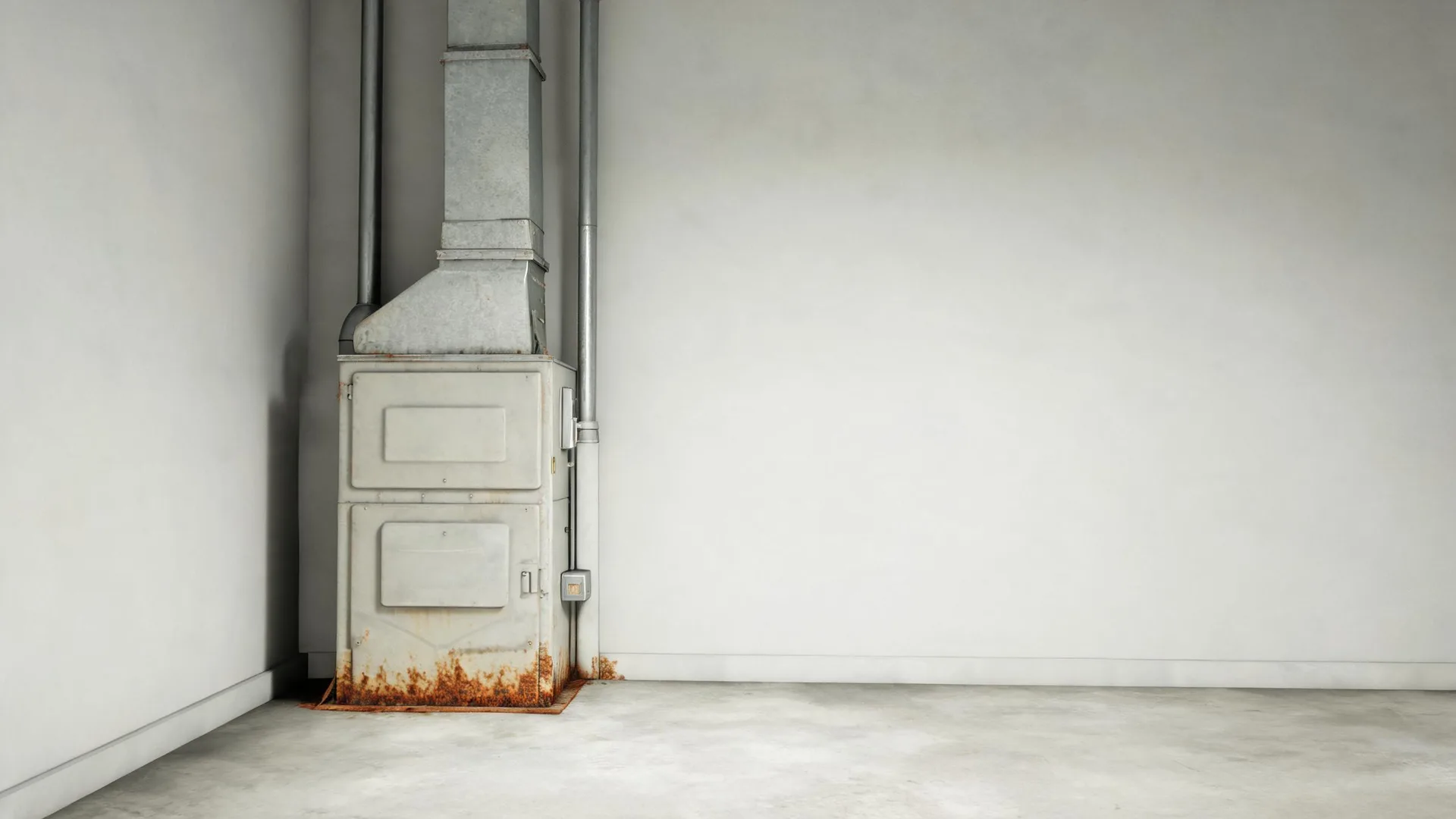
A gray gas furnace with attached ductwork and piping installed in an unfinished concrete basement.

Get the part fixed, not a reason to replace it

A furnace built in 1986 or after still has a service life ahead of it. That's reason enough to get a repair quote before a replacement quote. Ask the technician what part failed and whether it's one this furnace commonly needs, not what a new system would run.

What you'll actually notice first

The furnace runs louder than it used to, or it cycles on and off faster than it should, or air comes out the vents that isn't warm. Sometimes it just won't start at all and the house stays cold. These are the signs that reach the homeowner before anyone knows which part is behind them.

The sound and smell changes matter too

A furnace that bangs, rattles, or squeals on startup is telling you something inside has worked loose or worn down. A burning smell the first time it fires after sitting idle is normal and fades fast. If that smell lingers, or if you smell gas at any point, that's not a wait and see situation.

A furnace that's struggling still tries to do its job, and that's the problem. A cracked heat exchanger can let exhaust mix into the air the blower pushes through the house, and every cycle it runs is another cycle pushing that air. A flame sensor too dirty to detect the flame will let the furnace try to relight over and over, and each failed attempt is wear on the igniter and the gas valve. A clogged filter starves the blower of air, so the heat exchanger runs hotter than it should, and metal that overheats and cools again and again is metal that cracks sooner. None of that gets better by waiting. Shutting it off and calling someone stops the damage where it is.

A diagnostic starts before any panel comes off. The technician asks what the furnace is doing, when it started, and whether it's one failure or several. Then the cover comes off and they watch it try to run. They'll check for a flame and look at its color, test the igniter for resistance, and see whether the flame sensor is reading the flame at all. A pressure switch gets checked, because if it doesn't close the furnace won't fire no matter what else is right. They'll pull the filter and look at the blower wheel behind it, since a choked filter shows up there too. Most of this is testing one part at a time until the reading that should be there isn't.