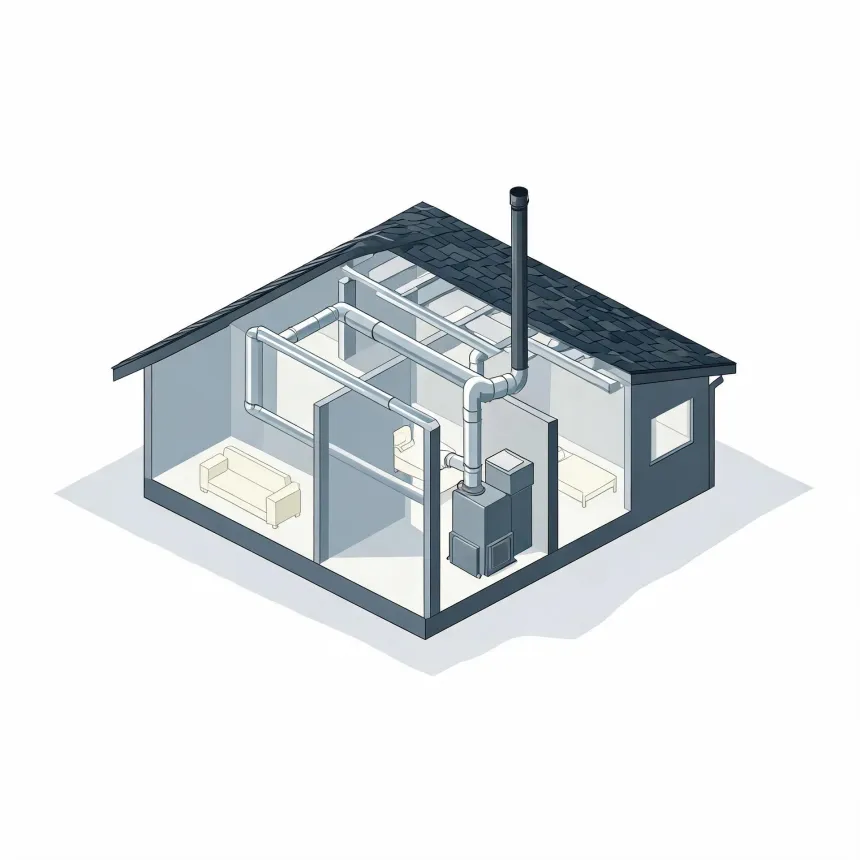





A row of dark-painted single-story houses with gabled shingle roofs behind a trimmed hedge and mown lawn, surrounded by large leafy trees under an overcast sky.

Furnace Repair in Carmel, IN

Tell us about the job

Takes about a minute. No obligation.

RepairFurnace or heatingHamilton County, IN
Step 1 of 2

What ZIP code is the job in?

Carmel runs its furnace from October through May, about eight months of the year. Overnight lows average 22°F in December, January and February. That is normal work for a furnace built to heat a house through winter, nothing about it is hard on the system. When a furnace here starts short cycling, won't ignite, or blows cold air, it's almost always one of the same handful of problems a furnace would have anywhere. A failing igniter. A dirty flame sensor. A clogged filter choking off airflow. A thermostat that has lost its calibration. The job is finding which one it is, not guessing at something specific to this area.

8 months
October through May, your furnace is on duty
22°F
the average winter night it heats against
61%
of homes here heat with gas, so most furnaces here burn gas
11 winter storms
in ten years, the nights a failure hurts most
Isometric cutaway illustration of a small single-story house showing a furnace with a flue pipe through the roof and ducting running to rooms containing a sofa, chair and bed.
Your furnace works hardest from November through March.

NOAA nClimDiv, 1991–2020 normals

Furnaces in Carmel start running in October.

September is the month to get a weak igniter or a cracked heat exchanger caught before the first cold night finds it.

Half the homes in Hamilton County were built in 2001 or later

Half the homes here were built by 2001
Heat runs October through May
Winter nights average 22°F
Carmel's weather doesn't wear out a furnace fasterHamilton County logged 11 winter storms between 2015 and 2024. That's weather, not a reason your furnace is failing now.

If your furnace came with a newer house, it's probably not worn out. More likely it's one bad part rather than a system on its last leg, and that's worth knowing before you decide anything. A failing igniter or a dirty flame sensor doesn't mean the furnace is done, especially on a unit that still has years ahead of it. Worth asking the contractor straight out how old the unit is and whether it came with the house. That tells you whether you're fixing a young system or nursing an old one along.

Get the usual fix

Nothing about this area is especially hard on it. It's most likely the usual problem with the usual fix.

Find a contractor
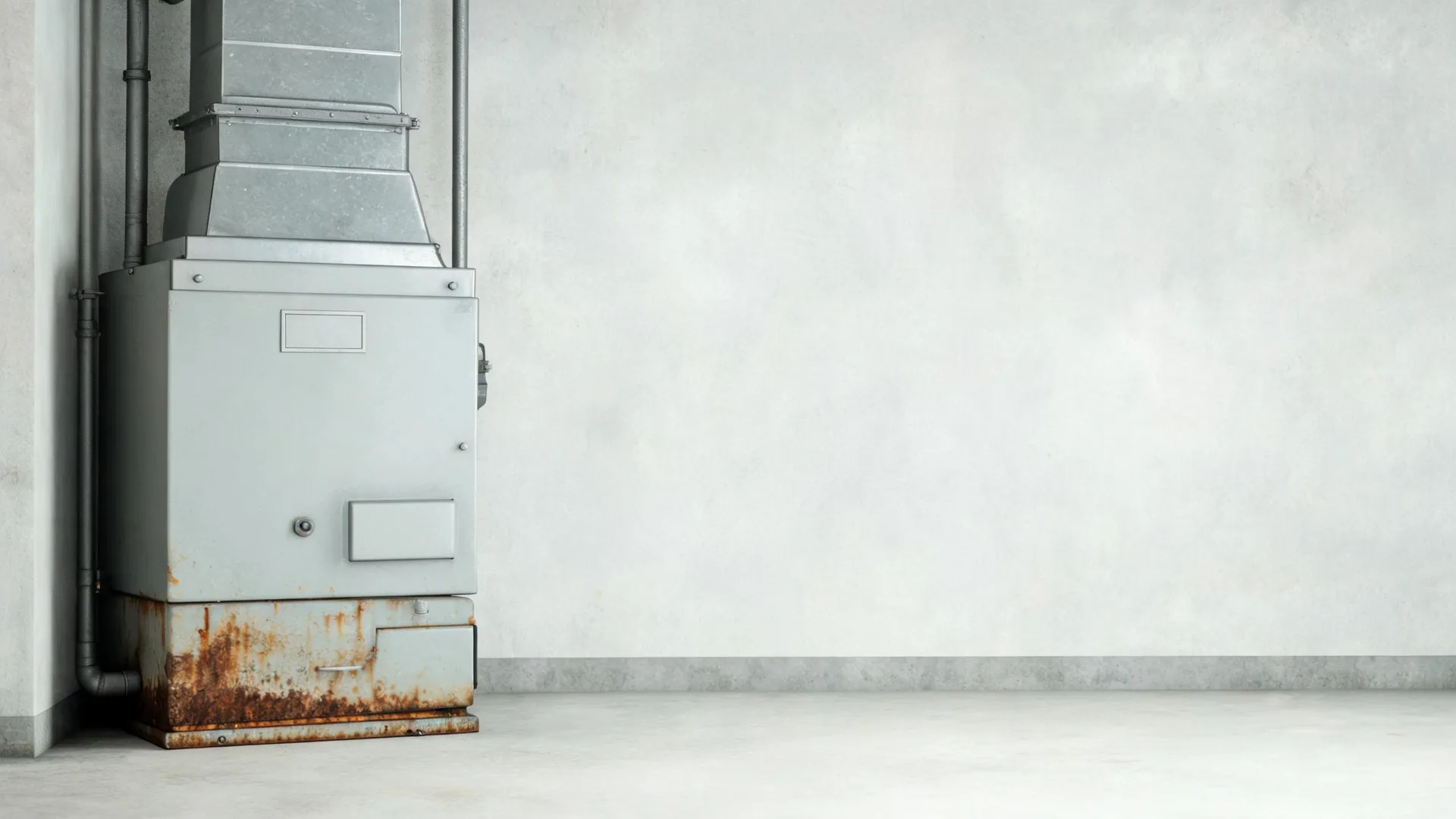
A gray residential gas furnace installed in an unfinished basement, connected to sheet-metal ductwork and PVC pipes.

Every cycle wears the same parts

A furnace cycles on and off thousands of times over a winter. Every start puts the same parts to work. The igniter glows hot every cycle and eventually it just gives out, usually without warning. The flame sensor coats over with a thin film from normal combustion and starts missing the flame it's supposed to detect. The furnace shuts itself off a few seconds after lighting. That's the short cycling you notice long before anything stops working completely. A blower motor bearing wears slowly and announces itself with noise, a squeal or a rattle, months before it quits. None of this means the furnace is failing. It means one of the parts that does the work is reaching the point where it needs attention.

A small problem can turn into a bigger repair

A furnace that's short cycling on a bad flame sensor will keep trying to light, over and over, because the safety control doesn't see a flame and shuts the gas back off each time. That repeated striking wears the igniter faster than normal use would. Keep running it in that state and you can turn a flame sensor cleaning into an igniter replacement too.

Some signs mean stop, not wait

A furnace that smells like gas, trips its flame sensor repeatedly, or trips a limit switch and shuts down on its own is telling you to stop running it until someone looks at it. Those are the furnace protecting itself. Overriding that or resetting it again and again doesn't fix what's wrong, it just asks the same worn part to fail again, sometimes harder.

An unfinished basement featuring a forced-air furnace, exposed wooden ceiling joists, bare concrete walls, and miscellaneous items including cardboard boxes and coiled cables on the floor.

A new furnace would cut about $110 a year off heating for a typical Hamilton County home.

  • A new high-efficiency furnace$430 a year
  • An older furnace$540 a year

Estimates for a typical Hamilton County home, compared with an older unit built to the previous federal minimum, from EIA household energy data, Indiana fuel prices and NOAA climate normals. Your home will differ.

Repair makes sense when one part has failed and the heat exchanger is sound.

Replacement makes sense when the heat exchanger is cracked or the furnace keeps needing parts.

A diagnostic visit starts at the thermostat, not the furnace. A tech checks that the call for heat is actually reaching the unit before opening anything up. Then it's a sequence. Power to the board. The igniter glowing or sparking. Gas reaching the burners. Flame proving to the sensor. The blower kicking on once the heat exchanger is warm. Each step rules something out. A furnace that won't ignite at all points one direction. One that lights and then shuts off points another. Most of the visit is testing parts with a meter rather than guessing by sight. A failing igniter and a dead one can look the same until you check resistance. The furnace usually gets run through a full cycle and watched end to end before anyone calls it one part or another.