Three illuminated two-story brick houses on a tree-lined residential street photographed at twilight, with warm window light and landscape uplighting visible against a deep blue evening sky.

Furnace Repair in Columbus, IN

Tell us about the job

Takes about a minute. No obligation.

RepairFurnace or heatingBartholomew County, IN
Step 1 of 2

What ZIP code is the job in?

Seven months of real use

A furnace in Columbus runs from October through April. Overnight lows average 24°F through December, January and February. That is a normal winter workload, not a harsh one. Most furnace trouble here comes from ordinary wear, not from the cold doing anything extreme.

So look for the usual cause

When a furnace in Bartholomew County stops heating right, the cause is almost always something a tech sees all the time. A failed igniter. A dirty flame sensor. A clogged filter choking off airflow. Worth tracking down and fixing properly rather than guessing at a part.

7 months
October through April, your furnace is on duty
24°F
the average winter night it heats against
51%
of homes here heat with gas, so most furnaces here burn gas
10 winter storms
in ten years, the nights a failure hurts most
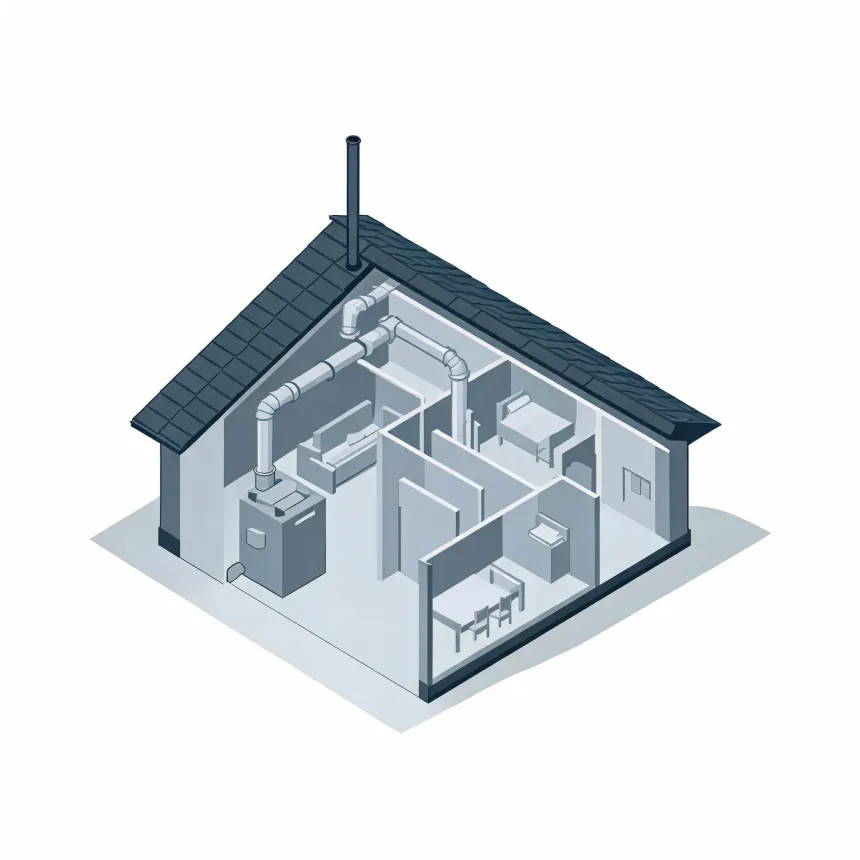
Isometric cutaway illustration of a small single-story house showing interior rooms with furniture, a furnace unit with attached ductwork running to a roof flue, and a dark shingled roof.
Your furnace works hardest from November through March.

NOAA nClimDiv, 1991–2020 normals

Furnaces in Bartholomew County start running in October.

If something was already weak, the first cold snap is when it gives out.

Half the homes in Bartholomew County were built in 1979 or later. If yours is one of them, the furnace itself is probably not old enough to be the problem. A furnace that's seen maybe a decade or two of use has plenty of life in it, and a breakdown at that age usually comes down to one part failing, not the whole unit wearing out. That's worth knowing before you decide whether to repair or replace. Check what came with the house, or what's been swapped in since, before assuming the worst.

Get the usual fix

Nothing about this area is especially hard on it. It's most likely the usual problem with the usual fix.

Find a contractor
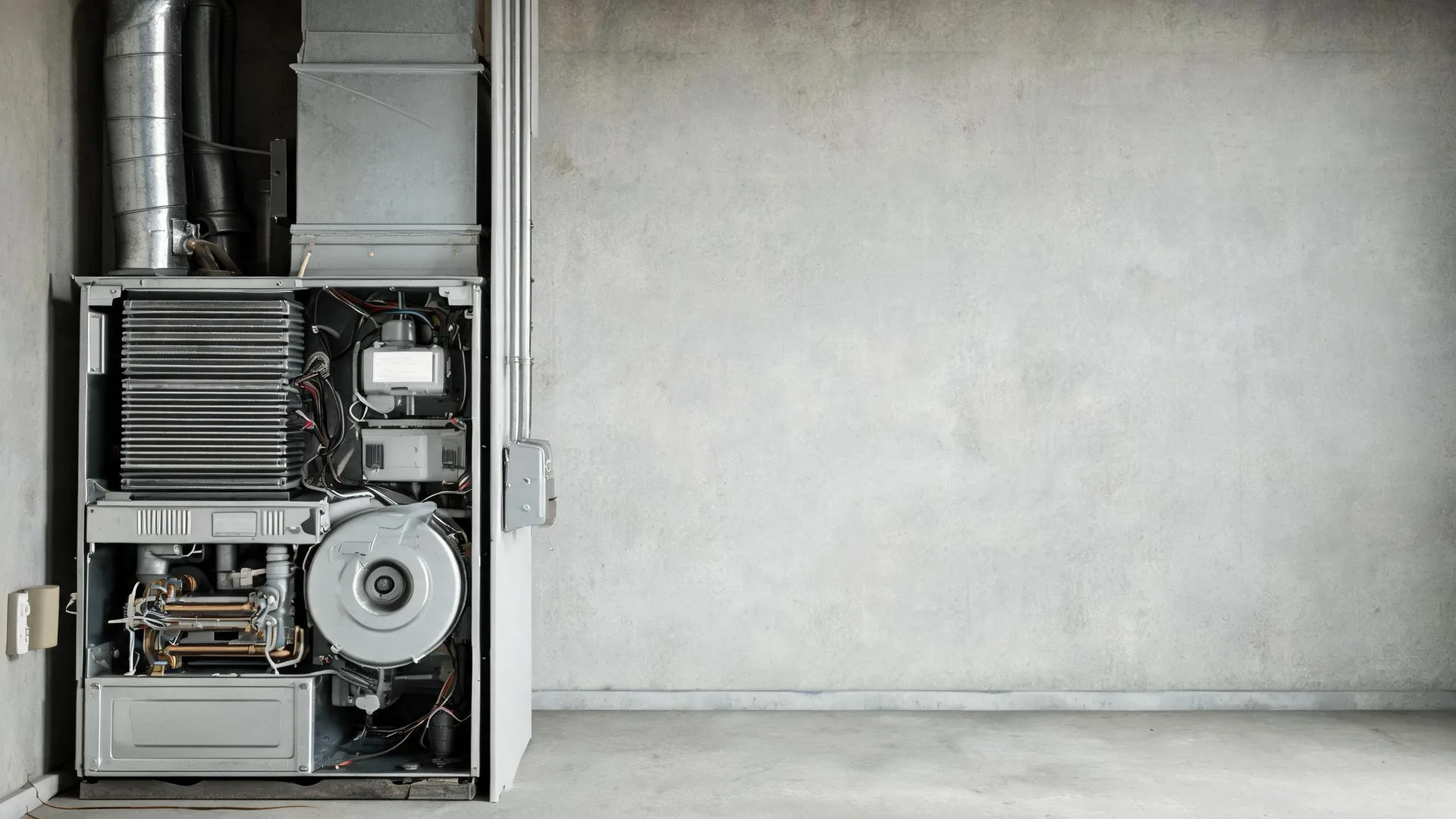
A gray residential gas furnace installed in an unfinished basement, connected to sheet-metal ductwork and PVC pipes.

Running through a problem rarely fixes it

A furnace with a weak part doesn't usually shut itself off. It keeps running, and that's what lets the problem grow. A flame sensor coated with residue still reads a flame, just barely, until the morning it doesn't. An igniter that's cracking still gets hot enough to light the burners, most of the time, right up until it doesn't. Airflow trouble works the same way. A clogged filter makes the blower push harder against the same resistance, cycle after cycle, and the motor runs hotter than it was built to. None of that fixes itself by continuing to run. Some of these stay small if caught early. A dirty sensor is a wipe-down. Left alone, the furnace starts shutting off on its safety switches, trying to relight, failing, trying again, and a sensor that needed cleaning turns into a sensor that needs replacing. Short cycling, a burner flame that looks uneven, a smell that wasn't there last week. Those are the furnace telling you something before it quits outright.

The blower motor works harder than the burners

Burners either light or they don't, but the blower motor runs for as long as the thermostat calls for heat, cycle after cycle, all season. Bearings wear, belts on older units stretch or crack, and a motor pushing air through a dirty filter strains harder than it was built for. Motor trouble tends to show up as noise first, a squeal or a rattle, before it shows up as no heat at all.

The heat exchanger is the one part you don't patch

Everything else on a furnace, a tech can clean, adjust or swap out on the spot. A cracked heat exchanger is different. It's the metal chamber the flame heats and the air passes around, and a crack in it means combustion gases can mix with the air going into the house. A furnace with that problem gets condemned, not repaired, which is why a tech checks it early instead of last.

A gas furnace and sheet-metal air handler unit installed in an unfinished concrete basement.

A new furnace would cut about $90 a year off heating for a typical Bartholomew County home.

  • A new high-efficiency furnace$390 a year
  • An older furnace$480 a year

Estimates for a typical Bartholomew County home, compared with an older unit built to the previous federal minimum, from EIA household energy data, Indiana fuel prices and NOAA climate normals. Your home will differ.

Repair makes sense when one part has failed and the heat exchanger is sound.

Replacement makes sense when the heat exchanger is cracked or the furnace keeps needing parts.

Most furnace calls end in a repair, not a replacement, and there's a reason for that. A furnace fails one part at a time. The igniter goes, or the flame sensor fouls, or the blower motor's bearings wear out, while everything else on the unit is fine. Replacing that one part costs a lot less than replacing the furnace, so a tech fixes what broke and leaves the rest alone. Replacement gets talked about when the failures stop being isolated, when one repair is followed by another a few months later, each one a different part. That pattern means the whole furnace is reaching the end of its life at once, not that any single part is especially bad. Short of that, an aging furnace with one bad part is still an aging furnace with one bad part.