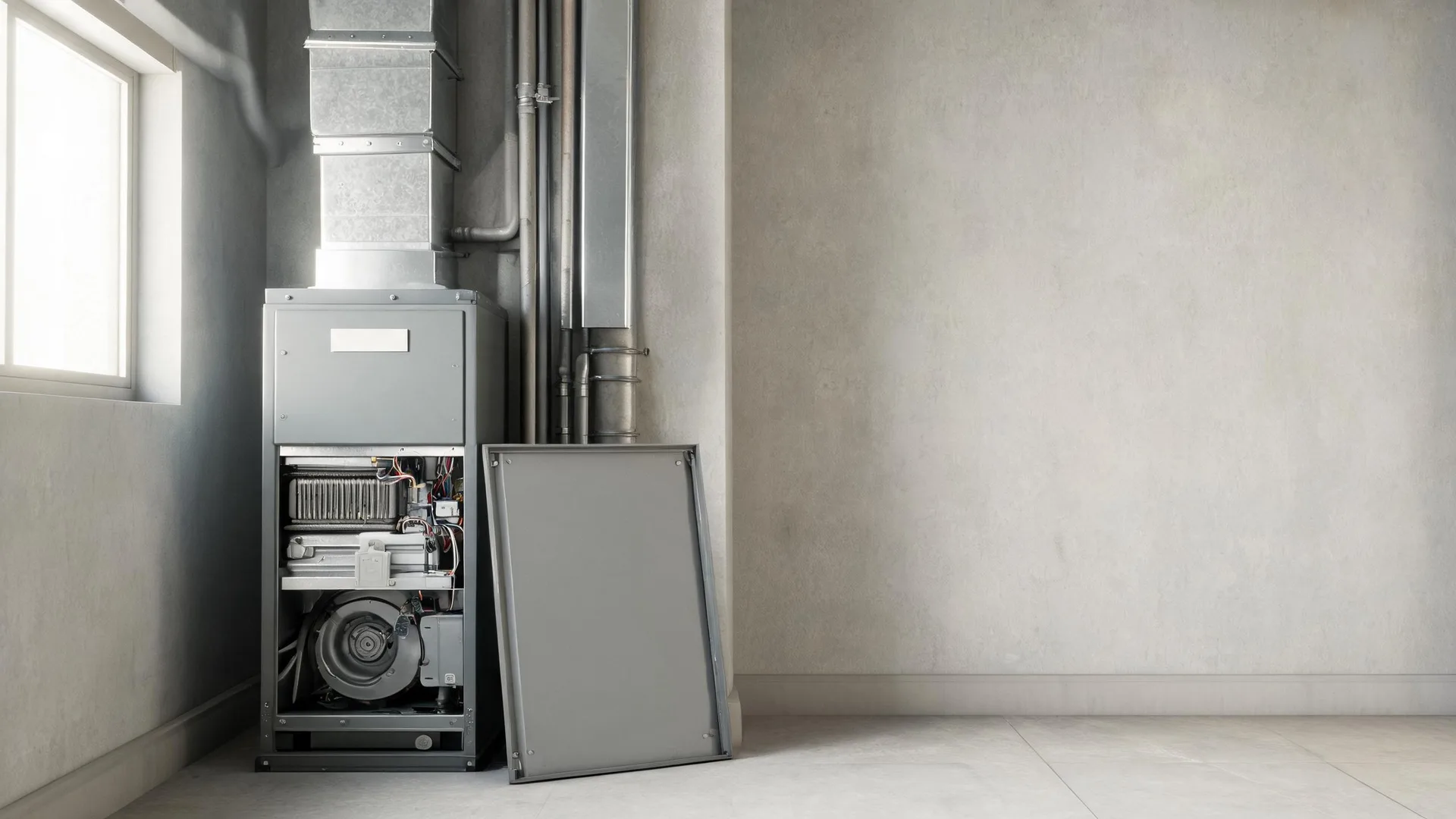
September is the month to get ahead of it
Furnaces here sit idle until October. If a part was already weak at the end of last winter, it's still weak now, and September is the last quiet month before the system has to carry the load again.
Takes about a minute. No obligation.
Furnaces here sit idle until October. If a part was already weak at the end of last winter, it's still weak now, and September is the last quiet month before the system has to carry the load again.
Once the furnace starts running for the season, whatever was already marginal gets found fast. A furnace repair call in the first few weeks of the season is usually that part finally giving out under real load, not a new problem.
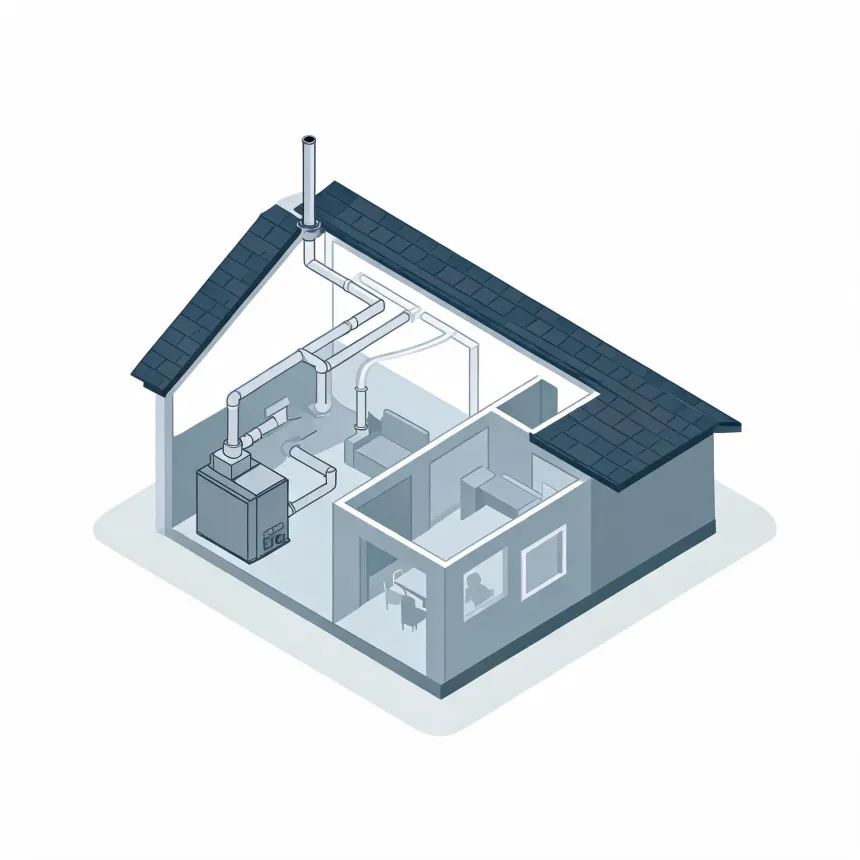
NOAA nClimDiv, 1991–2020 normals
A furnace that short cycles, runs for a few minutes and shuts off, is working against a bad flame sensor or a clogged filter, not a thermostat problem.
Left alone it keeps shutting off earlier each time, and the part that's failing now is the part that quits for good once it gets cold.




Before paying for a repair, it's worth asking how much life the furnace has left. A tech who comes out for the flame sensor or whatever else sent you searching can check the age of the unit and the condition of the heat exchanger while already in there. If nobody in the house knows when the furnace was installed, that question is worth asking straight out. Finding out now, while it's a repair call, is better than finding out next winter when it quits for good.
Problems tend to show up in the first weeks of the season, when the load hits a part that was already weak.
Find a contractor
A furnace that keeps running with a problem doesn't wait patiently for a tech to show up. A cracked heat exchanger gets another cycle of expansion and contraction, and it gets worse. A blower motor straining on worn bearings keeps straining, and heat builds up where it shouldn't. A flame sensor coated with a little carbon gets coated with more, until the furnace won't stay lit at all. The furnace doesn't know it's hurt, so it keeps trying to do the job, and whatever was already wrong gets asked to carry on anyway. The safer move is to shut it down and get it looked at, not run it until it stops on its own.
Look at the thermostat first. Make sure it's set to heat, not just fan, and the set temperature is actually above room temperature. Check the furnace switch, the one that looks like a light switch near the unit, and make sure it's on. Check the breaker. Then look at the filter. Pull it out and hold it to a light. If you can't see light through it, that's likely choking the airflow and making the furnace shut off early or short cycle.
Don't take the front panel off the furnace or reach near the burners or the flame sensor. Don't try to relight a pilot light unless you already know how, and don't keep flipping the switch if it won't stay running. A furnace that shuts off on its own is usually doing that on purpose, a safety control caught something, and forcing it to restart over and over just makes whatever tripped it happen again.
Estimates for a typical Montgomery County home, compared with an older unit built to the previous federal minimum, from EIA household energy data, Indiana fuel prices and NOAA climate normals. Your home will differ.
Repair makes sense when one part has failed and the heat exchanger is sound.
Replacement makes sense when the heat exchanger is cracked or the furnace keeps needing parts.
A diagnostic call starts with questions, not tools. A tech wants to know what the furnace was doing when it quit, whether it ran rough first or just stopped, whether anyone smelled anything odd or heard a bang. Then the cover comes off and the tech watches it run through a full cycle. Ignition, flame, the blower kicking in, the flame holding steady or dropping out. A meter checks the flame sensor's signal and the igniter's resistance rather than guessing from how they look, because a sensor can look clean and still read weak. The pressure switch, the limit switch, and the inducer motor get checked in order, since a furnace shuts itself down for a reason and that reason is usually sitting in one of those. The heat exchanger gets a look too. A crack there isn't something to patch and move on from, and it changes the whole conversation about repair versus replacement.