





A lit brick residential street at dusk showing a row of two-story homes with covered porches and mature trees.

Furnace Repair in Indianapolis, IN

Tell us about the job

Takes about a minute. No obligation.

RepairFurnace or heatingMarion County, IN
Step 1 of 2

What ZIP code is the job in?

Marion County saw 227 severe weather events between 2015 and 2024. That includes 140 damaging wind events and 67 hail storms, the kind of weather that dents a cabinet or bends the fins on an outdoor coil. Four tornadoes touched down in that same stretch, and winter brought its own trouble, with 12 ice storms, blizzards or heavy snow events hitting the county. None of that means your furnace took damage. But a furnace is easy to check and expensive to ignore, and weather like this is exactly why it's worth having someone look.

8 months
October through May, your furnace is on duty
23°F
the average winter night it heats against
56%
of homes here heat with gas, so most furnaces here burn gas
12 winter storms
in ten years, the nights a failure hurts most
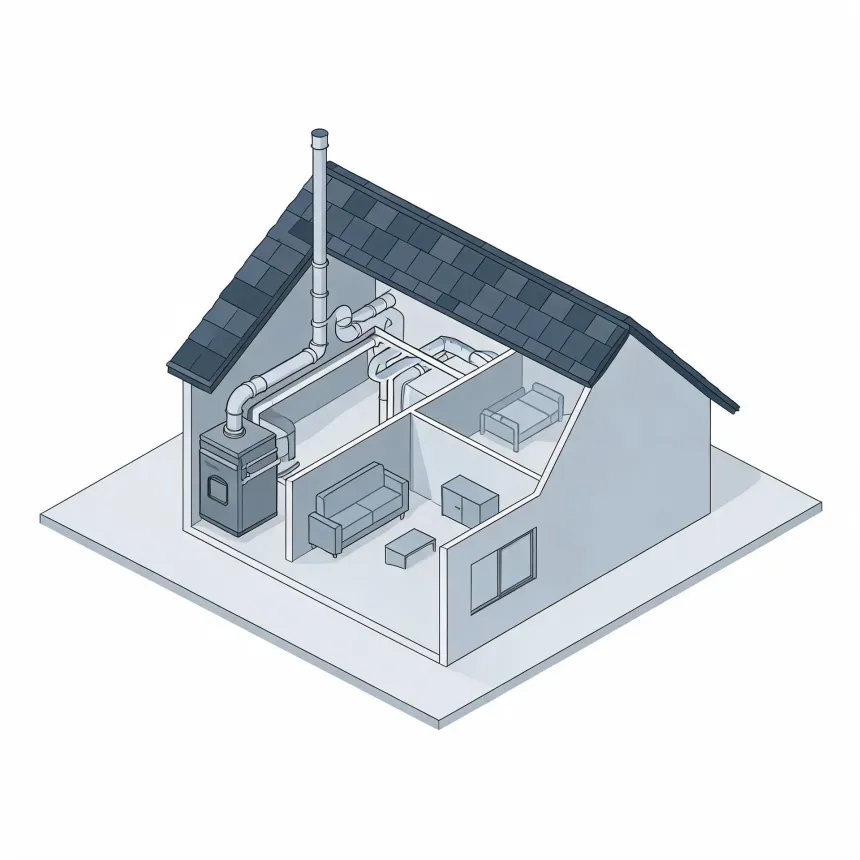
Isometric cutaway illustration of a small gabled house showing a furnace with flue pipe and ductwork connecting to interior rooms containing a sofa, bed, and cabinets.
Your furnace works hardest from November through March.

NOAA nClimDiv, 1991–2020 normals

A cracked heat exchanger gets worse every time the burners fire.

Shut the furnace off and get it looked at before the next cycle, not after.

Half the furnaces here are older than you think

Half the homes here were built by 1973
Climate zone 4A
Heat runs October through May
October is when a weak furnace shows itselfFurnaces here sit idle all summer, then start running in October and keep going through May.

Half the homes in Marion County were built in 1973 or earlier. If your house is one of them and the furnace has never been replaced, it's old enough that a repair bill is the wrong first question. Ask the technician how many years it likely has left before you pay to fix it. A unit with a couple of good years in it is worth repairing. One near the end of its life may just fail again this winter, and you'll have paid twice.

If your furnace has been through a storm, don't wait for it to fail to find out

A furnace that still runs after a wind or hail event isn't automatically fine. If yours took a hit this year, get it checked before it's the only heat you've got on a cold night.

Find a contractor
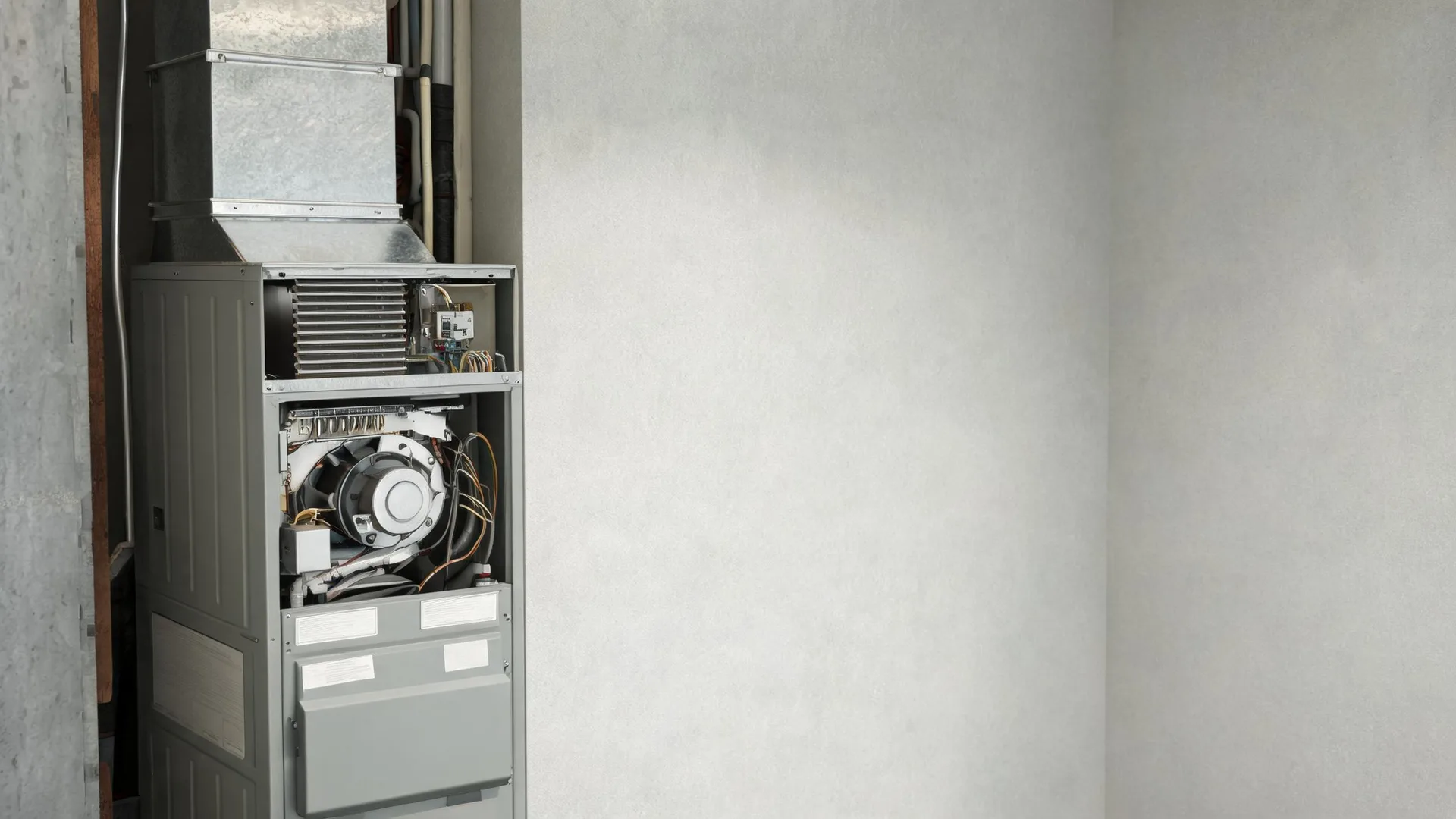
A gray residential gas furnace installed in an unfinished basement, surrounded by ductwork, a metal flue pipe, and a gas supply line.

What to check before you call anyone

Before anyone comes out, there are a few things worth checking yourself. Start with the thermostat. Make sure it's set to heat, not cool, and that the setpoint is actually above room temperature. Check the batteries if it uses them. Next, go look at the filter. A filter clogged with dust chokes off airflow, and a furnace starved for air will often shut itself down as a safety measure. If it's gray and matted, swap it. Then check the breaker box. A furnace that won't start at all sometimes just tripped a breaker, especially after a storm. Reset it once. If it trips again, stop and leave it for a technician. If you have a gas furnace, check that the gas valve on the line running to the unit is turned to open. Some furnaces also have a power switch that looks like a light switch, mounted on or near the unit itself. Make sure nobody bumped it off. Last, look at the vent pipe and intake pipe where they run outside. If either one is blocked by debris, ice, or a nest, clear it if you can reach it safely. A blocked vent can shut the furnace down and is worth checking before anything else. What you shouldn't do is open the cabinet and start pulling parts, or reset anything more than once. If the furnace still won't run after these checks, or if it starts and then shuts off on its own, that's a job for someone who can test it properly.

The signs rarely show up all at once

A furnace that's starting to fail gives small warnings before it quits outright. Short cycling, where it fires up and shuts off again in a few minutes, usually means a clogged filter, a bad flame sensor, or a limit switch tripping from overheating. A burner flame that's flickering or yellow instead of steady and blue points to a combustion problem that needs attention soon. Cold air blowing from the vents when the furnace is running points to an igniter or gas valve that isn't doing its job. A furnace that's noisy in a new way, banging, screeching, or rattling, is telling you a part has worked loose or is about to fail.

Some signs mean stop and call, not wait and see

A few symptoms aren't a maintenance item, they're a safety call. A burner flame that's yellow or orange instead of blue can mean incomplete combustion, which puts carbon monoxide into the air you breathe. Soot around the cabinet, a persistent odd smell when it runs, or a carbon monoxide alarm going off all mean the same thing: shut the furnace down and don't run it again until a technician has checked it. Those aren't signs of wear and tear to live with until the weather forces your hand.

An unfinished basement containing a gas furnace with ductwork in the foreground and miscellaneous stored items along the far concrete wall.

A new furnace would cut about $100 a year off heating for a typical Marion County home.

  • A new high-efficiency furnace$420 a year
  • An older furnace$520 a year

Estimates for a typical Marion County home, compared with an older unit built to the previous federal minimum, from EIA household energy data, Indiana fuel prices and NOAA climate normals. Your home will differ.

Repair makes sense when one part has failed and the heat exchanger is sound.

Replacement makes sense when the heat exchanger is cracked or the furnace keeps needing parts.

A repair is worth it when the furnace has years left and the failure is a single part. A control board, an igniter, a blower motor, these fail on their own and fixing one doesn't tell you anything bad about the rest of the unit. What changes the math is a repair that's really the first of several. If the heat exchanger has cracked, or the same part has already failed once before, you're not fixing the furnace, you're buying it a little more time before the next call. Age matters alongside that. A furnace with plenty of life left is worth repairing almost no matter what broke. One that's already old is a different question, because the next failure is never far off once the first big one shows up. Ask what actually failed and whether it's a part that tends to fail alone or one that tends to bring others down with it.