





A lit brick residential street at dusk showing a row of two-story homes with covered porches and mature trees.

Furnace Repair in Logansport, IN

Tell us about the job

Takes about a minute. No obligation.

RepairFurnace or heatingCass County, IN
Step 1 of 2

What ZIP code is the job in?

Furnaces in Logansport run about eight months a year, October through May. That's a long stretch, but it's not unusual, and it doesn't mean your furnace is wearing out faster than it should. Overnight lows average 21°F through December, January and February, which is normal work for a furnace sized for this area. If something's gone wrong, it's usually one part. An igniter that won't glow. A flame sensor coated with residue. A pressure switch stuck open. A blower motor losing strength. A furnace built for this climate can handle this climate. When it can't, something specific has failed, and that's what a repair finds and fixes.

8 months
October through May, your furnace is on duty
21°F
the average winter night it heats against
64%
of homes here heat with gas, so most furnaces here burn gas
9 winter storms
in ten years, the nights a failure hurts most
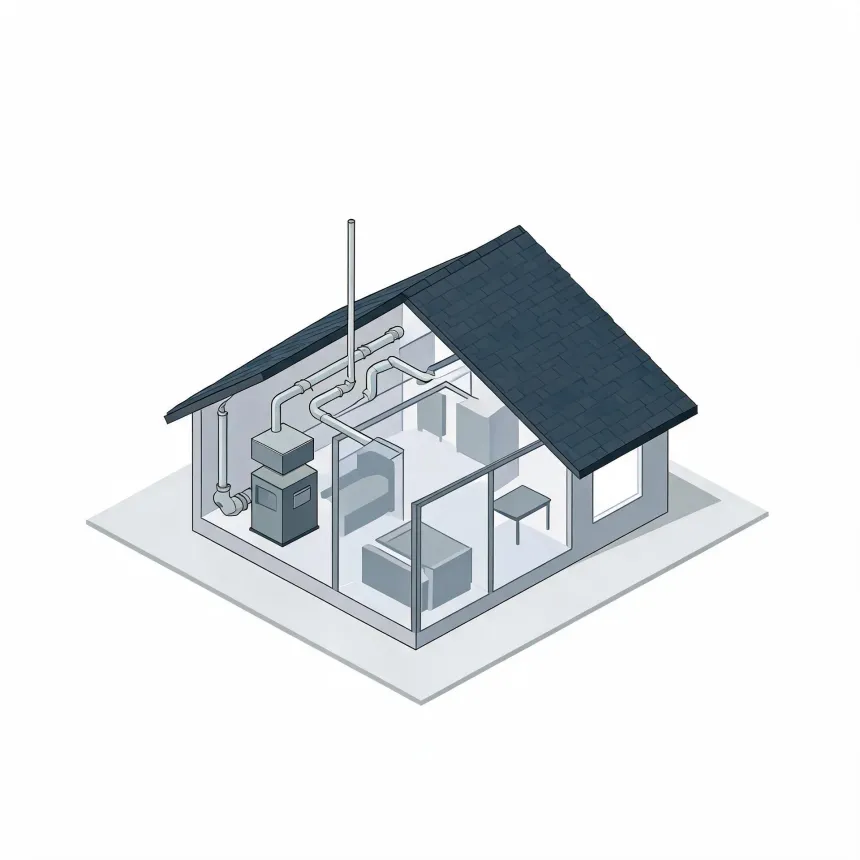
Isometric cutaway illustration of a small house with a dark shingled roof, showing an interior furnace unit, ductwork, and a flue pipe extending through the roof.
Your furnace works hardest from November through March.

NOAA nClimDiv, 1991–2020 normals

Furnaces in Logansport start running in October.

A part that was already weak often fails in that first cold snap.

Half the homes in Logansport were built in 1956 or earlier

Half the homes here were built by 1956
Climate zone 5A
Heat runs October through May

If your furnace came with a house built in 1956 or earlier, it may not be the original unit, and there's no way to know its age just from the house. Before paying for a repair, ask the contractor to check the nameplate and tell you how old it actually is. A furnace with years left is worth fixing. One near the end of its life is worth knowing about before the next part fails. Either way, it's a fair question to ask while someone is already there looking at it.

Get the usual fix

Nothing about this area is especially hard on it. It's most likely the usual problem with the usual fix.

Find a contractor
A man in a cap, dark shirt and tan work pants, seen from behind, carries a canvas tool bag up steps toward a blue front door beside a potted shrub.
A gas furnace with attached ductwork, gas piping, and condensate lines installed in a concrete-block basement.

Running it while it's failing doesn't buy time

A cracked igniter still lights the burners some of the time, so the furnace keeps calling for heat and keeps trying. A dirty flame sensor can still sense flame for a while before it can't, and each failed attempt puts the burners through another ignition cycle. A blower motor with a failing bearing keeps turning because the furnace doesn't know the bearing is going, it just knows the air isn't moving right, so it runs longer to make up for it. None of these fix themselves by staying on. The part that's struggling does more work than it should, the furnace short-cycles or runs longer trying to compensate, and whatever was already weak gets weaker. Left alone, a bad igniter stops lighting at all. A failing blower motor seizes. What starts as a part swap turns into something bigger if the furnace keeps running on it.

Most failures start with ignition

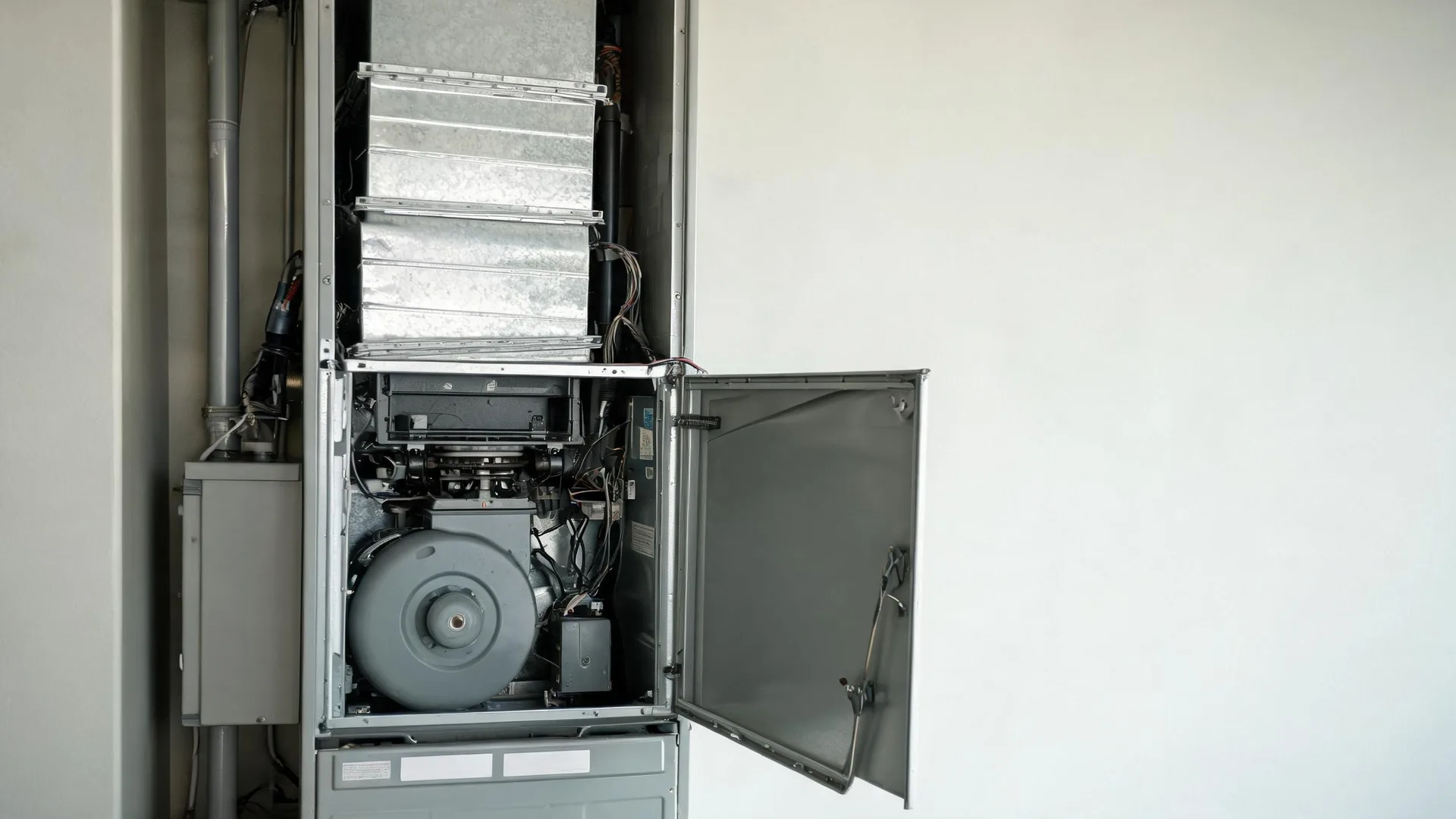
A furnace lights hundreds of times a season. The igniter takes the wear first, and it's built to fail eventually. After that, the flame sensor is the next thing to go, since it sits right in the flame and collects residue every time the burners fire. Both are small parts, and both are common reasons a furnace won't start at all.

Airflow problems wear out other parts

When air can't move through the system the way it should, the blower motor works harder than it was built to, and heat builds up where it shouldn't. A clogged filter or blocked vent won't show up as its own problem. It shows up later as a burned-out motor or a cracked heat exchanger, because something else was restricting the air the whole time.

A gray forced-air furnace with metal ductwork stands in an unfinished basement with exposed wooden joists, concrete walls, and a single hanging light bulb.

A new furnace would cut about $110 a year off heating for a typical Cass County home.

  • A new high-efficiency furnace$450 a year
  • An older furnace$560 a year

Estimates for a typical Cass County home, compared with an older unit built to the previous federal minimum, from EIA household energy data, Indiana fuel prices and NOAA climate normals. Your home will differ.

Repair makes sense when one part has failed and the heat exchanger is sound.

Replacement makes sense when the heat exchanger is cracked or the furnace keeps needing parts.

A repair is worth it when one part failed and everything else still works the way it should. Most furnace calls end up being exactly that. The harder call is a furnace that's needed a few different repairs over a couple of years. That pattern usually means the parts around it are aging together, even if only one is broken today. A cracked heat exchanger changes the math regardless of what else is going on, since that's not a part anyone patches. Ask the contractor what they're seeing beyond the part that failed. A tech who's already inside the cabinet can tell you whether this is one bad part on an otherwise sound furnace, or the first of several.