




A row of dark-sided cottages with brown shingled roofs behind a trimmed hedge, beside a mown lawn and large leafy trees under an overcast sky.

Furnace Repair in Plymouth, IN

Tell us about the job

Takes about a minute. No obligation.

RepairFurnace or heatingMarshall County, IN
Step 1 of 2

What ZIP code is the job in?

Furnaces in Marshall County run about eight months out of the year, October through May. That's most of the calendar spent heating a house, not just a cold snap here and there. Overnight lows average 20°F through December, January and February, so the furnace isn't cycling lightly, it's holding a big temperature difference for hours at a stretch. That kind of steady work wears on an igniter or a blower motor sooner than it would somewhere milder. When something starts acting up, it's usually not bad luck, it's the system catching up to how hard it's been running.

8 months
October through May, your furnace is on duty
20°F
the average winter night it heats against
69%
of homes here heat with gas, so most furnaces here burn gas
12 winter storms
in ten years, the nights a failure hurts most
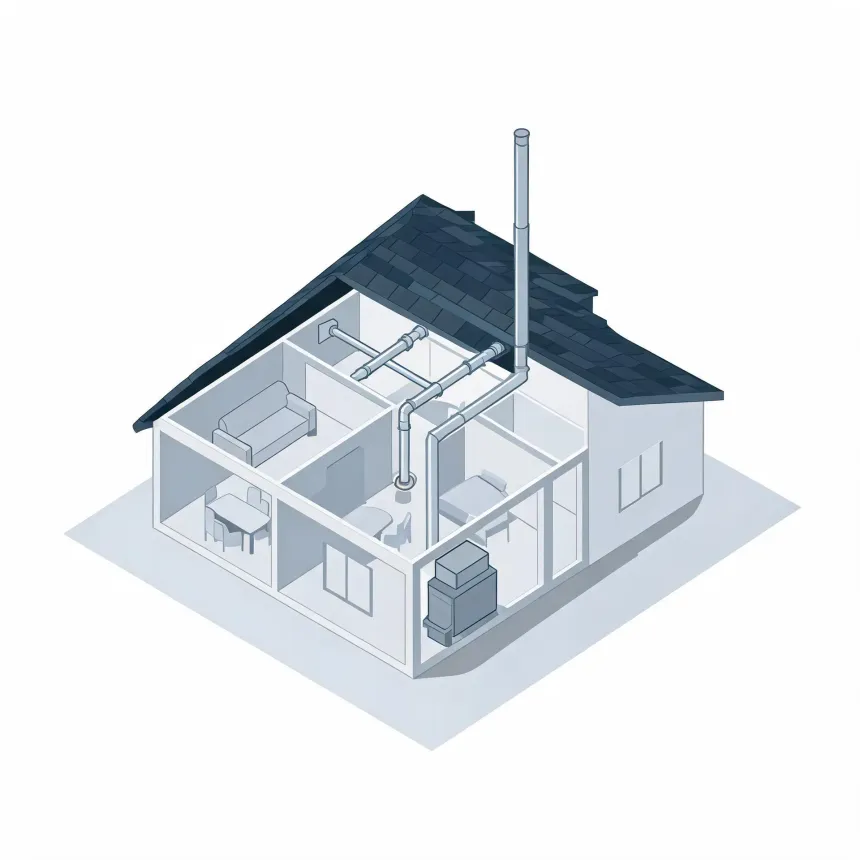
Isometric cutaway illustration of a single-story house showing interior rooms with furniture, ductwork and piping running to a tall vertical flue through the dark shingled roof, and a furnace-like appliance unit on the floor.
Your furnace works hardest from November through March.

NOAA nClimDiv, 1991–2020 normals

Furnaces in Marshall County start their real work in October.

September is the month to get a weak igniter or blower motor looked at, before the first cold week finds it.

Half the homes here were built by 1973, and so was the furnace in a lot of them

Half the homes here were built by 1973
Climate zone 5A
Heat runs October through May

A furnace that's short-cycling or struggling to keep up isn't failing out of nowhere. It's been holding a big temperature swing for hours at a stretch, night after night, since October. That's the kind of running that wears down an igniter or a blower motor faster than a light, occasional load would. So when it starts acting up, the right move is to have someone trace it back to what's actually worn, not just patch the symptom. A part replaced without knowing why it failed tends to fail again under the same load. Get it diagnosed properly and the fix holds for the rest of the season.

Ask how much life the furnace has left before you fix it

If your furnace is original to the house, ask the contractor how much life is left in it before you decide how far to go with the repair. A worn part can be replaced on a system that still has years in it, or on one that's near the end. That's worth knowing first.

Find a contractor
A man in a cap, dark shirt and cargo pants, seen from behind, carries a canvas tool bag up wooden porch steps toward a blue front door.
A gray high-efficiency gas furnace installed in an unfinished basement, surrounded by gas lines, a condensate drain, and sheet-metal ductwork.

The furnace tells you before it quits

A furnace doesn't fail all at once. It gives notice first. A burner that used to light clean starts taking longer to catch, or lights with a soft thump instead of a click, because the igniter is wearing out. A blower that ran quiet starts to hum or rattle, because the bearing has been carrying a load for hours every night instead of minutes. Short cycling, where the furnace fires up and shuts off again before the house warms, usually means a part is struggling to carry a full run. A pilot or igniter that won't hold, a burner flame that looks yellow instead of blue, a blower that won't shut off. None of this starts in the coldest week. It starts earlier, as a sound or a delay you get used to and stop noticing.

Check the simple things first

Look at the thermostat before anything else. Make sure it's set to heat and the set point is above room temperature, and swap the batteries if it uses them. Then check the furnace switch, the one that looks like a light switch near the unit, and make sure it's on. Go to the breaker panel and look for a tripped breaker. None of this takes tools, and it rules out the things that aren't a repair at all.

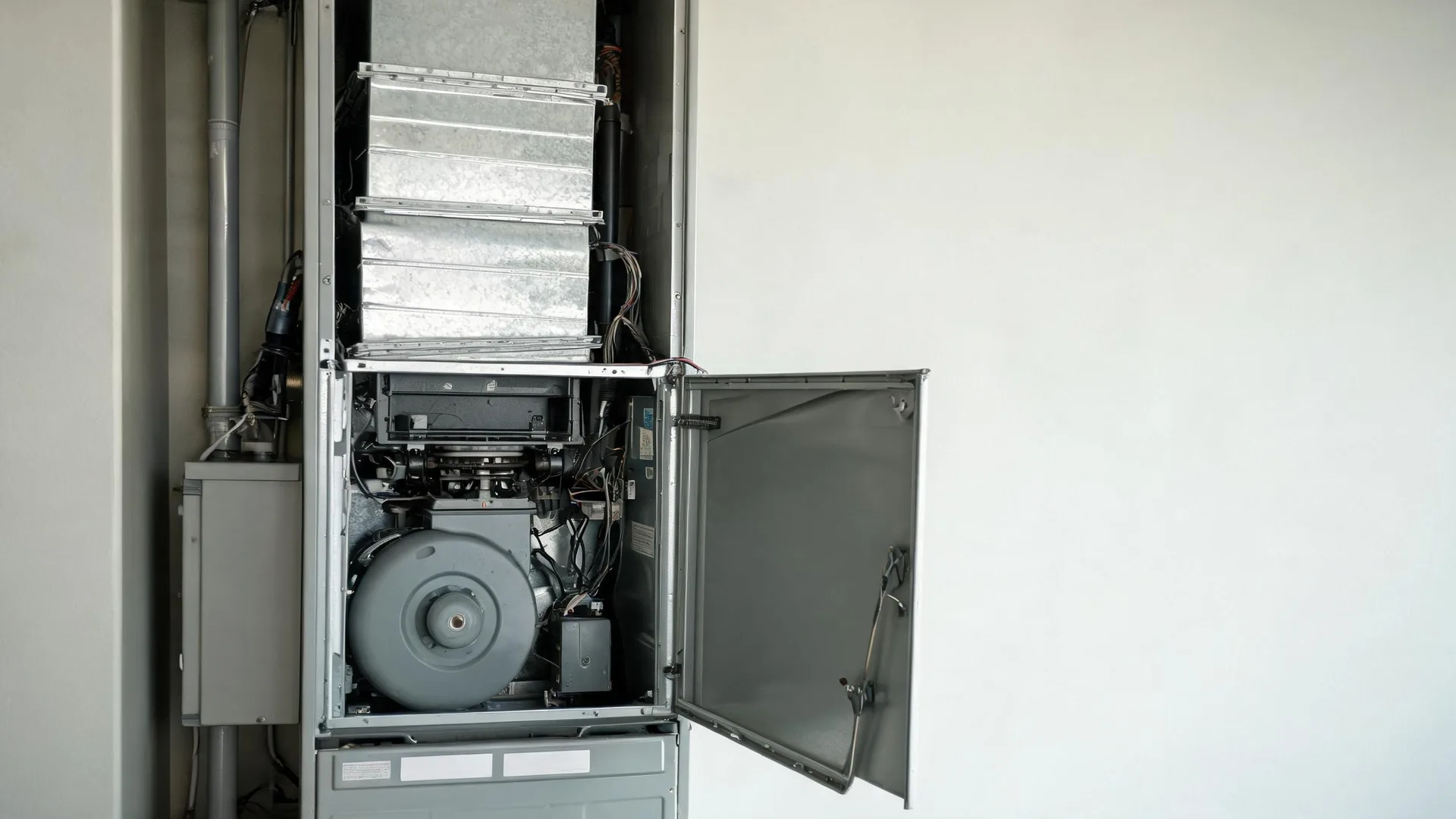
Then look at the filter and the vents

Pull the filter out and hold it up to a light. If you can't see light through it, it's choking off airflow, and that alone can cause short cycling or a furnace that blows cool air. Walk the house and check that no vent is closed or blocked by furniture or a rug. A furnace starved for airflow will trip a safety switch and shut itself down before anything else breaks, which can look like a bigger problem than it is.

A bare concrete basement containing a gray gas furnace with metal ductwork and a vertical flue pipe, lit by a single hanging bulb.

A new furnace would cut about $110 a year off heating for a typical Marshall County home.

  • A new high-efficiency furnace$480 a year
  • An older furnace$590 a year

Estimates for a typical Marshall County home, compared with an older unit built to the previous federal minimum, from EIA household energy data, Indiana fuel prices and NOAA climate normals. Your home will differ.

Repair makes sense when one part has failed and the heat exchanger is sound.

Replacement makes sense when the heat exchanger is cracked or the furnace keeps needing parts.

A repair is worth making when the part that failed is the only thing wrong, the igniter, the blower motor, a flame sensor, and the rest of the furnace is sound. A contractor can usually tell by looking at the heat exchanger and checking how the system has been running, not just the one part that quit. Replacement makes more sense when the cabinet is rusting, the heat exchanger is cracked, or the same part keeps failing because something upstream keeps overloading it. Age alone doesn't decide it. A furnace that's been maintained can outlast one that hasn't, even if they're the same age. Ask what failed and why before agreeing to any fix, because that answer tells you whether you're buying a season or a few more years.