






An unfinished basement containing a gray HVAC furnace with ductwork, exposed wooden joists, a concrete floor, and miscellaneous clutter in one corner.

Furnace Repair in Portage, IN

Tell us about the job

Takes about a minute. No obligation.

RepairFurnace or heatingPorter County, IN
Step 1 of 2

What ZIP code is the job in?

Furnaces in Portage run from October through May. That's eight months a year, not just a few cold snaps. The burner, the igniter, the blower motor, all of it cycling on and off for most of the year. A furnace that runs that long gets less downtime to recover between heavy use, and parts that would last longer with a lighter schedule wear down sooner here. That's usually what's behind a furnace acting up in this area. It's worth having someone look at the actual cause rather than guessing, so whatever gets fixed stays fixed.

8 months
October through May, your furnace is on duty
20°F
the average winter night it heats against
87%
of homes here heat with gas, so most furnaces here burn gas
13 winter storms
in ten years, the nights a failure hurts most
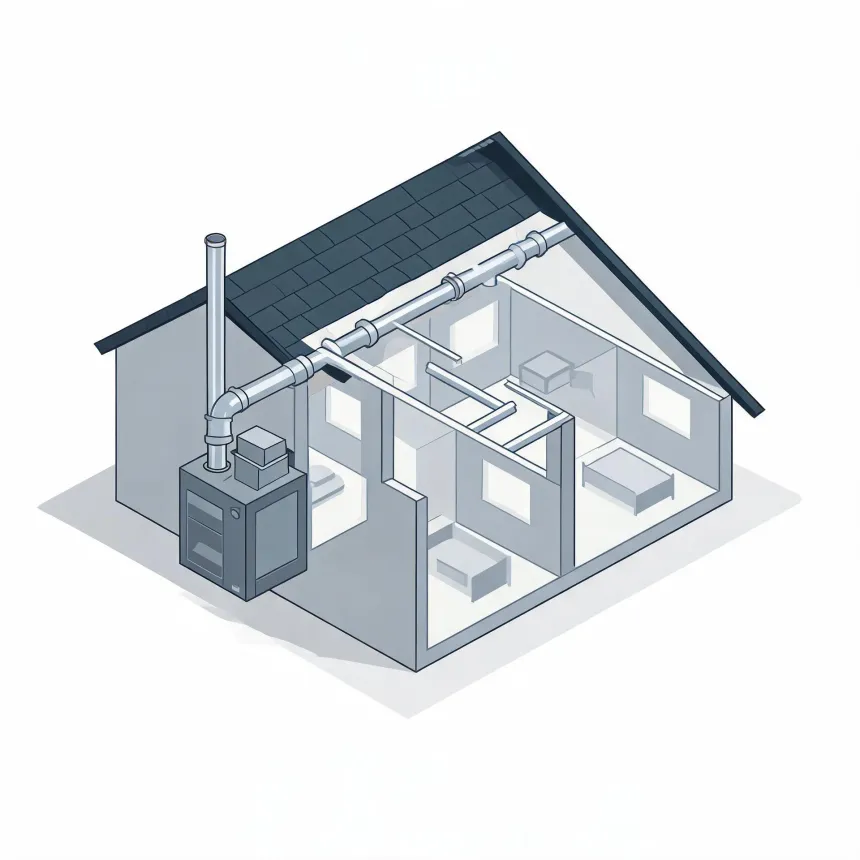
Isometric cutaway illustration of a small house showing interior rooms, ductwork running through the attic, and a furnace unit with a vertical flue pipe on the exterior wall.
Your furnace works hardest from November through March.

NOAA nClimDiv, 1991–2020 normals

A furnace that won't start is often just a thermostat setting or a tripped switch, not a failed part.

Check the thermostat, the power switch and the filter before assuming the worst.

Half the homes in Porter County were built in 1982 or later

Half the homes here were built by 1982
Heat runs October through May
Winter nights average 20°F
October Is When Weak Parts FailFurnaces in Porter County start running in October, and that first load finds whatever was already wearing thin.

If your furnace came with a newer house here, that works in your favor when something goes wrong. A furnace built into a 1982 or later home has likely had less total run time than one in an older place. That matters when you're deciding whether to fix it or replace it. A repair on a system with years of life left is usually the right call, not a stopgap. Worth checking when your furnace was installed, if you don't already know, before anyone tells you it's time to replace rather than repair.

Eight months of runtime finds the weak spot first

If your furnace is acting up now, that long run from October through May is usually why. A proper diagnosis finds what's actually wearing out, so the repair holds instead of just buying a few weeks.

Find a contractor
A man in a cap, gray long-sleeve shirt and tan work pants carries a canvas tool bag up gray porch steps toward a dark blue front door, with a blue ceramic planter and shrub beside it.
A gas furnace with attached ductwork, gas piping, and condensate lines installed in a concrete-block basement.

What the Furnace Tells You Before It Quits

A furnace rarely quits without warning. It talks first, and most of what it says shows up before the no-heat call. Short cycling is one of the first signs, where the burner fires, runs a couple minutes, shuts off, then starts again before the house gets warm. That usually points to a flame sensor losing its ability to detect the flame, or a blocked filter making the furnace overheat and shut itself down as a safety measure. A burner flame that should burn steady blue but instead flickers yellow or orange is telling you combustion isn't clean, and that's not something to wait out. Banging or popping from the ductwork when the furnace kicks on is usually just metal expanding, but a grinding or squealing sound from the blower compartment is a motor bearing giving out. A furnace that runs constantly without ever satisfying the thermostat is often losing the fight against a cracked heat exchanger or a failing limit switch. Rooms that used to heat evenly and now don't, or air coming out of the vents cooler than it used to, both mean something downstream of the burner isn't doing its job anymore. None of these show up all at once. They show up one at a time, and the furnace keeps running through most of them until it can't anymore.

Most Failures Start With Ignition

A furnace that won't light is usually the igniter, not the burner itself. Igniters are thin and they weaken with every cycle until one day they don't glow hot enough to light the gas. Flame sensors fail the same slow way, coated over time until they can no longer tell the control board a flame is present, so the system shuts the gas off as a safety measure. Both are small parts, and both cause the same big symptom: a furnace that tries to start and can't.

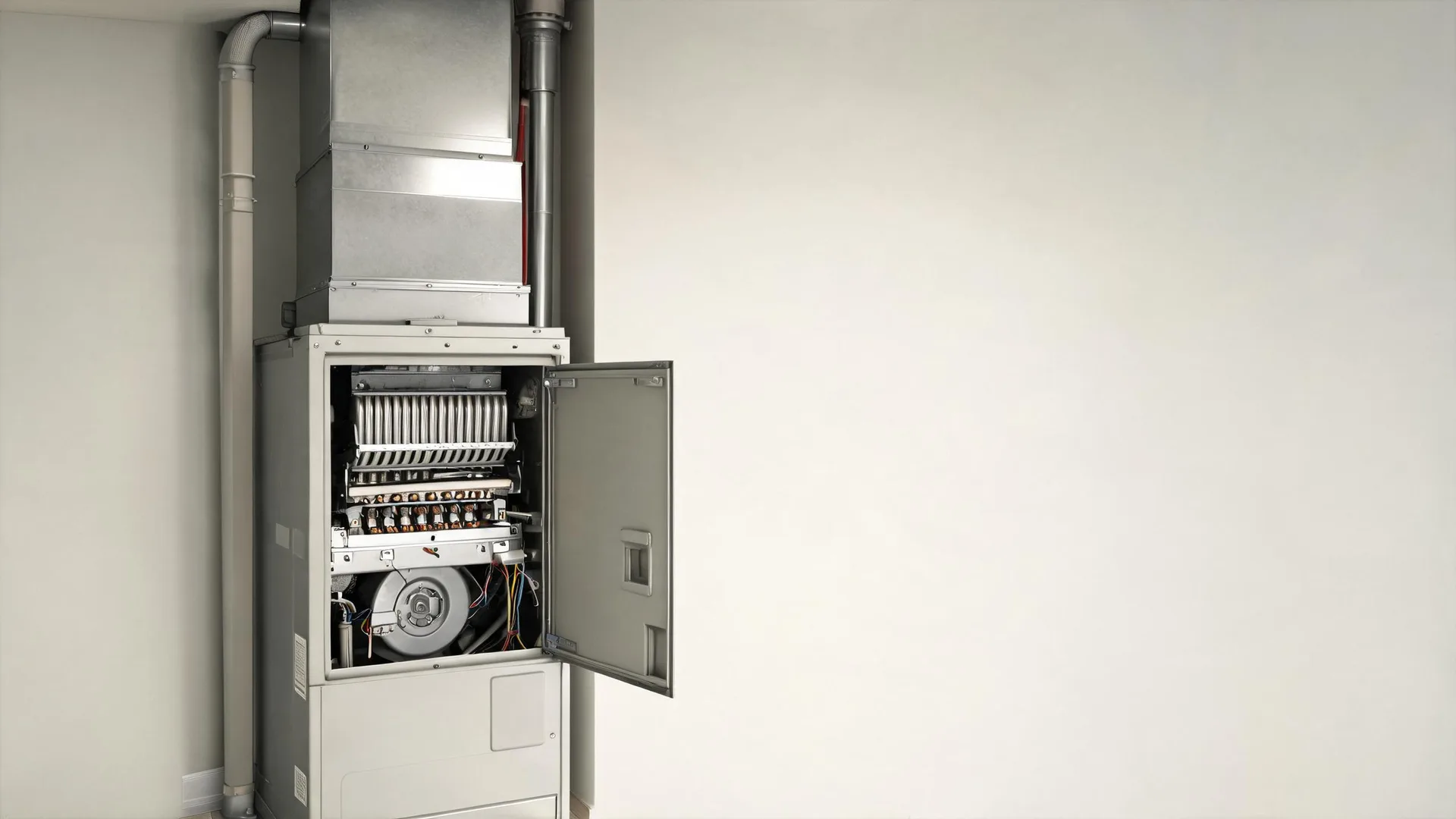
Moving Parts Wear Before Big Parts Fail

The blower motor and its bearings take the most physical wear in the whole system, since that motor runs every time the furnace calls for heat. A motor on its way out usually squeals or grinds before it quits outright. Capacitors that help start the motor weaken gradually too, and a weak capacitor makes the motor strain every time it starts. Catching a worn motor or capacitor early is a repair. Waiting until the motor seizes usually isn't.

An unfinished basement featuring exposed ceiling joists, a metal HVAC unit with round ductwork, a hanging light bulb, and scattered boxes and debris along the left wall.

A new furnace would cut about $120 a year off heating for a typical Porter County home.

  • A new high-efficiency furnace$470 a year
  • An older furnace$590 a year

Estimates for a typical Porter County home, compared with an older unit built to the previous federal minimum, from EIA household energy data, Indiana fuel prices and NOAA climate normals. Your home will differ.

Repair makes sense when one part has failed and the heat exchanger is sound.

Replacement makes sense when the heat exchanger is cracked or the furnace keeps needing parts.

A diagnostic visit starts before any panel comes off. A tech asks what the furnace was doing, when it started, and whether it happens every cycle or just sometimes, because that narrows down whether to look at ignition, airflow or the limit switch first. Then it's a visual check of the burner flame, the filter, and the blower compartment before anything gets tested with a meter. Electrical parts like the igniter, flame sensor and capacitor get checked with actual readings, not guesswork, since a part can look fine and still be failing. If the furnace short cycles or won't stay lit, the tech traces it back to whichever part is actually causing that, rather than swapping parts until something works. The visit ends with the tech telling you what's worn, what's still good, and what it'll take to fix the actual problem.