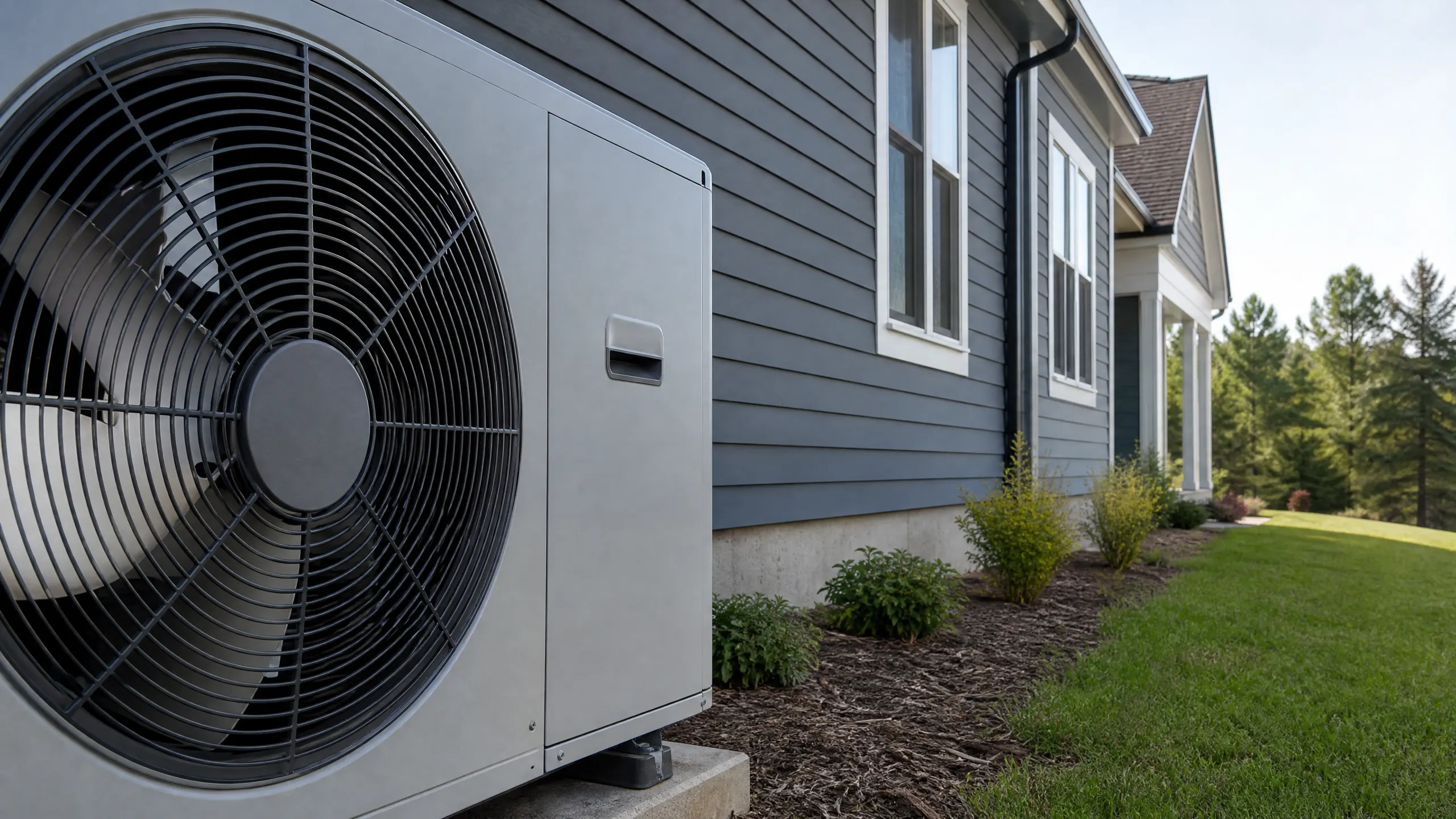





A heat pump outdoor unit mounted on a concrete pad next to the gray-sided exterior wall of a residential house.

Heat Pump Installation in Hammond, IN

Tell us about the job

Takes about a minute. No obligation.

New system or replacementHeat PumpLake County, IN
Step 1 of 2

What ZIP code is the job in?

Electricity in Lake County runs 21.86 cents per kilowatt-hour on average, higher than most of the country pays. A heat pump moves heat instead of burning gas to make it, but it still runs on electricity, and here that electricity isn't cheap. Every degree of lift it has to work for shows up on the meter. Summer adds its own load. The dew point here averages 62°F through June, July and August, and a heat pump has to pull that moisture out of the air, not just drop the temperature. A unit that handles both jobs well costs less to run than one that doesn't, and with power priced the way it is in Lake County, that difference is worth more than it would be somewhere electricity is cheap.

8 months
October through May, your system heats
3 months
June through August, it cools
20°F
the average winter night it heats against
82°F
the average summer afternoon it cools against
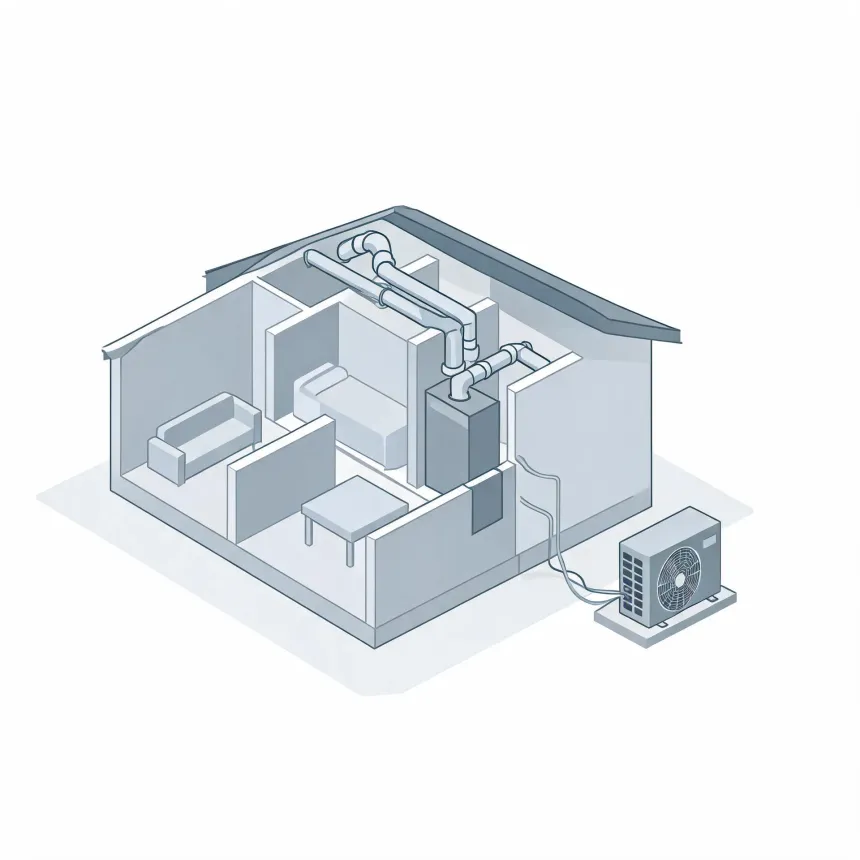
Isometric line illustration of a cutaway house showing interior rooms with furniture, ceiling ductwork connected to an indoor air handler, and a line running outside to an outdoor condenser unit.
Your system heats October through May and cools June through August.

NOAA nClimDiv, 1991–2020 normals

Heat here runs from October through May, eight months out of the year.

Get a heat pump in before September and it's running on your timeline, not scrambling to keep a house warm when the overnight low hits 20°F.

Half these houses were built before anyone here had a heat pump

Half the homes here were built by 1968
Climate zone 5A
Power here costs 21.86 cents per kilowatt-hour

Lake County falls in climate zone 5A, a cool zone where the energy code assumes heating is the bigger job over the course of a year. Any split-system heat pump installed here, if built from 2023 on, has to clear federal minimums to be sold at all: at least 14.3 Btu of heat moved per watt-hour over summer, at least 7.5 over winter. Those numbers set a floor, not a ceiling, and contractors can install well above it. A system sized and matched for this zone is built with the long heating months in mind, not just the cooling load. Buyers here also have a federal tax credit to weigh against the equipment they're comparing, worth checking against the specific system before deciding.

A more efficient heat pump pays you back here more than most places

Ask what efficiency rating a system carries before you settle on it. With power priced the way it is in Lake County, a unit that clears the federal minimum by more costs less to run every month after it's installed, through the long heating season and the muggy summer both. That's the number worth comparing, not just the upfront price.

Find a contractor
A man in a dark shirt, tan pants and a cap carries a canvas tool bag up wooden porch steps toward a blue front door, with a potted shrub beside the entry.
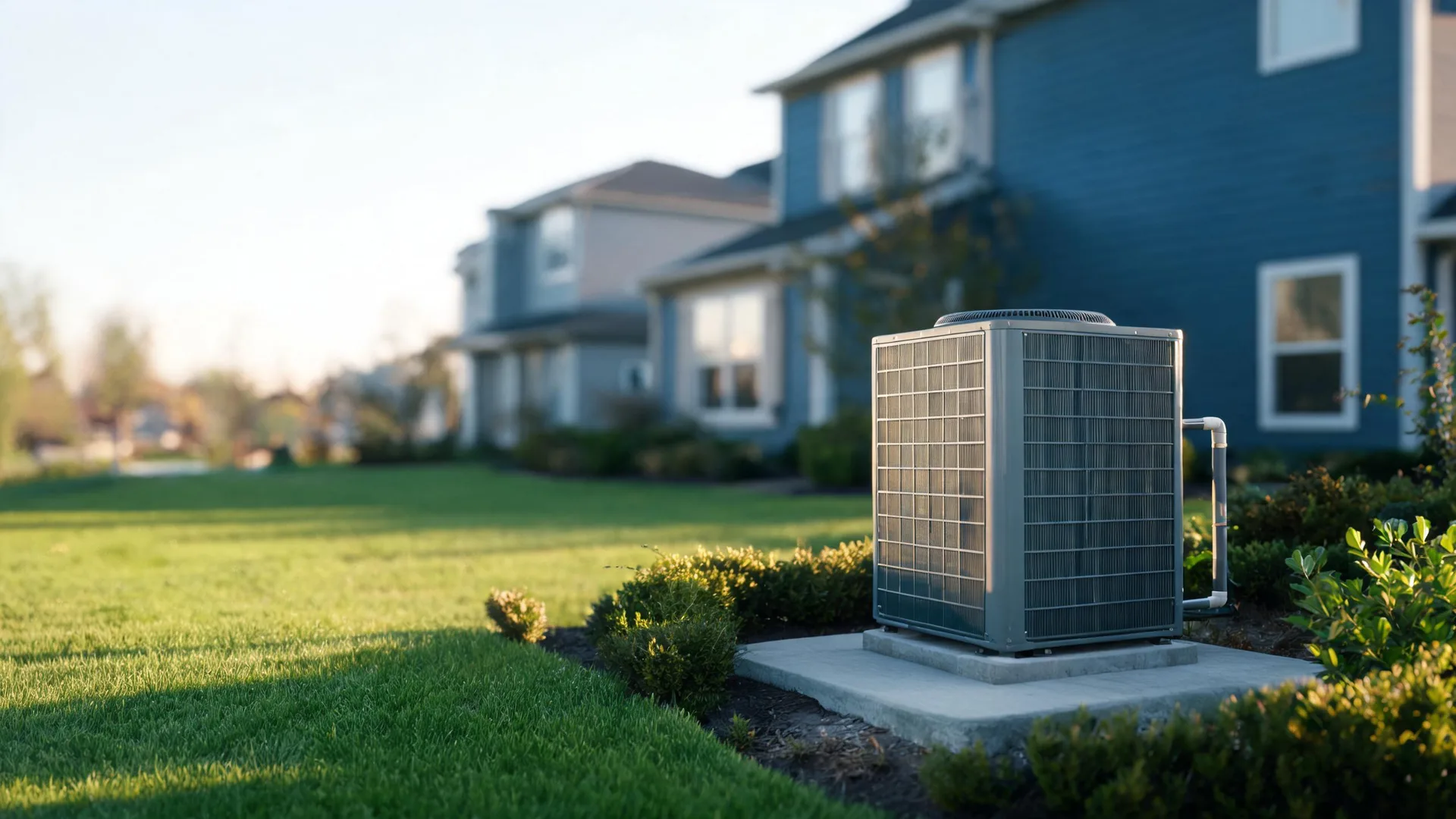
A residential heat pump outdoor unit mounted on a concrete pad next to a house with gray vinyl siding.

Size it for the house you have, not the one on paper

Half the homes in this county were built in 1968 or earlier. If yours is one of them, whoever sizes your heat pump needs to look at what's actually there, the ductwork, the electrical panel, the return vents, before quoting a number. A system sized off a spec sheet instead of your house can run the wrong amount of time, and in a county with power priced like this one, that difference lands on the bill every month, not just once.

Sizing is a calculation, not a guess off square footage

A contractor works out heat pump size with a room by room load calculation, counting windows, insulation, ceiling height and air leakage, not just the floor plan. Two houses the same size can need different equipment because one holds heat better than the other. Skip that work and the number on the quote is just a guess.
Wrong size costs you either way

A heat pump too big for the house cools the air fast and shuts off before it pulls the moisture out, so the house feels clammy even at the right temperature. One too small runs constantly and still struggles to keep up on the coldest or hottest days. Either way the equipment wears faster, cycling on and off more than it should or never getting a break at all.

Two systems can carry the same efficiency rating and still perform differently once they're in a house, so ask what the rated capacity looks like at low outdoor temperatures, not just at the standard test point. Some heat pumps hold most of their heating output as it gets cold outside. Others drop off hard, and lean on backup heat strips to make up the difference, which costs more to run than the compressor doing the work. Ask whether the system is single-stage, two-stage, or variable-speed, since that tells you how well it matches its output to what the house actually needs at the moment rather than just blasting full capacity every cycle. Ask what the sound rating is too, since outdoor units sit right against a wall or a window and some run a good deal quieter than others. And ask what the warranty covers on the compressor versus the rest of the parts, because that gap can be wide, and it tells you what the manufacturer actually expects to hold up over time.

Gas heats 86.3% of homes in Lake County, more than eight out of ten. Electricity heats about one in ten, and the rest run on bottled or LP gas. A heat pump installed in a gas-heated house usually goes in alongside the furnace rather than replacing the ductwork or the gas line, switching on for the shoulder months and letting the furnace take over when it gets cold enough that gas is the cheaper way to make heat. That kind of setup is called a dual fuel system, and a contractor can set the switchover point based on what gas and electricity cost here. Going all-electric means the heat pump and its backup strips carry the whole winter alone, which asks more of the electrical panel and more of the budget given what power costs in this county. Either path is workable. Which one makes sense depends on what's already in the house.