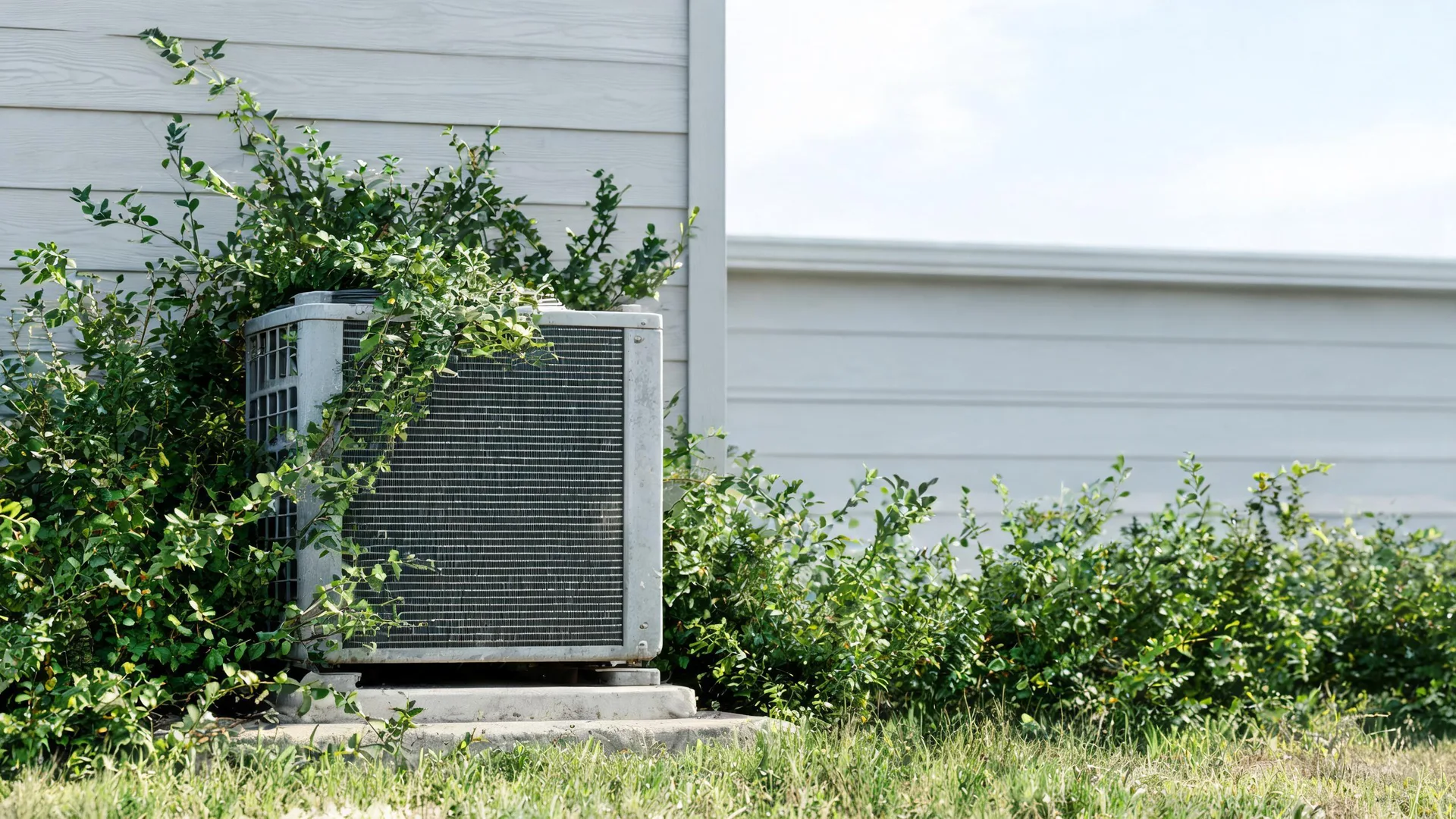
A grey air-source heat pump outdoor unit mounted on a concrete pad next to a modern white-rendered residential house.

Heat Pump Repair in Hammond, IN

Tell us about the job

Takes about a minute. No obligation.

RepairHeat PumpLake County, IN
Step 1 of 2

What ZIP code is the job in?

Winters here work the system hard

Lake County averages 20°F overnight through December, January and February. A heat pump in Hammond leans on its backup heat on nights that cold, and it runs longer cycles to keep up. That is normal wear, not a sign the climate is too much for the equipment.


The cause is usually ordinary

A heat pump that is short cycling, blowing cold air or not keeping up almost always comes down to something a contractor has seen before. Low refrigerant. A failing defrost control. A worn contactor. Checking the right things first finds it without guesswork.

8 months
October through May, your system heats
3 months
June through August, it cools
20°F
the average winter night it heats against
82°F
the average summer afternoon it cools against
Isometric line illustration of a cutaway single-story house showing interior rooms, ceiling ductwork and an indoor air handler, connected by a line to an outdoor condenser unit on a pad beside the building.
Your system heats October through May and cools June through August.

NOAA nClimDiv, 1991–2020 normals

Heat pumps here start earning their keep in October.

A unit that was already weak going into fall usually shows it in the first cold snap, not in the dead of winter.

Nothing about Lake County weather is hard on a heat pump

175 severe weather events from 2015 to 2024
17% of homes statewide lost power a day or more in 2024
121 damaging wind events from 2015 to 2024

A refrigerant leak is the clearest case. A heat pump low on charge keeps running, but the compressor works harder to move less heat, and the outdoor coil can ice over while it does. Keep running it that way and the compressor is what wears out, and that is the part nobody wants to replace. A failing contactor follows the same pattern. It chatters and arcs a little longer each cycle until it stops closing at all, usually on the coldest night it has to work hardest. Even a dirty filter does this. It restricts airflow across the indoor coil, and a coil that runs too cold ices over and stops the system from heating or cooling at all. None of these fix themselves by running longer. They just get to full failure faster.

Electricity here runs 14.77 cents a kilowatt-hour. A heat pump working harder than it should burns through that every day it's not fixed.

A heat pump low on charge or stuck on a bad contactor still runs, it just runs longer to do the same job. In Indiana that extra runtime shows up on the bill fast. Get the actual cause found now, before it costs more to run and more to fix.

Find a contractor
A man in a beanie, dark jacket and tan work pants climbs porch steps toward a blue front door, carrying a canvas tool bag, with a potted shrub in a blue planter beside him.
A gray heat pump condenser unit mounted on a concrete pad against the gray lap-siding exterior wall of a house.

The small signs show up weeks before the system quits

A heat pump doesn't give out all at once. It gives you a few weeks of acting slightly off before the day it actually quits. Longer cycles than it used to run. A faint hum from outside before it kicks on. Air that's warm but not quite as warm as it was last winter. Most people notice the sound before they notice the heat, because the sound changes first and the temperature drop is slower to feel. A unit that's been struggling for a while is also the one most likely to fail on the night it's working hardest, since that's when every weak part gets loaded the most at once.

The reversing valve is a common failure point

The reversing valve is what lets a heat pump switch between heating and cooling, and it is a part straight AC systems don't have at all. When it sticks, the system can get stuck in one mode, or blow air that is barely warm when it should be heating. A valve that hums but doesn't shift is a sign worth telling the contractor about before they even arrive.

Outdoor coil problems show up as ice

The outdoor coil has to pull heat out of the air even in the cold, and it collects frost doing it. A working system runs a defrost cycle to clear that off on a schedule. When the defrost sensor or control board fails, the coil keeps icing over until it's coated solid, and the system can't move enough heat through it to keep up with the house.

Before calling anyone, check the thermostat is set to heat and set a few degrees above room temperature. It sounds obvious, but it gets missed more than people think. Go outside and look at the unit. If the coil is coated in ice or buried in snow, that is worth telling the contractor, but do not chip at it yourself. Go back inside and pull the filter. Hold it up to a light. If you cannot see light through it, that is restricting airflow and it is the one thing on this list you can fix yourself right now. Check that the vents in each room are open and not blocked by furniture or rugs. If the system is running but the air coming out feels barely warm, that detail is worth passing along, since it points at the reversing valve rather than the filter or the thermostat.

A diagnostic visit starts with the contractor asking what the system is actually doing. Short cycling, cold air, ice on the outdoor coil, a breaker that trips. That answer narrows things before a single panel comes off. Next they check refrigerant pressure and the temperature split between the air going in and the air coming out, since both point straight at whether the system is moving enough heat. They test the contactor and capacitor under power rather than just looking at them, because a part can look fine and still fail when it's loaded. If the coil was iced over, they want to know whether the defrost control is cycling on schedule or not kicking in at all. Every reading gets compared against what that model is supposed to run at, not guessed at. By the end you should hear the actual part that's failing, not just a guess at the general area.