





A illuminated two-story red brick house on a quiet residential street at dusk, flanked by mature trees under a deep blue evening sky.

Furnace Installation in Columbus, IN

Tell us about the job

Takes about a minute. No obligation.

New system or replacementFurnace or heatingBartholomew County, IN
Step 1 of 2

What ZIP code is the job in?

Gas furnaces are the common choice in Columbus, since utility gas heats just over half the homes in Bartholomew County. Electricity comes in well behind at 38.7 percent, and a small share run on bottled or LP gas. If your home already has a gas line run to it, installing a new gas furnace in the same spot is usually the straightforward path, since the fuel supply and venting are already there. A switch to electric heat is a bigger job, since it means different wiring and often a different kind of system entirely. Worth checking which fuel your current setup uses before you start comparing quotes.

7 months
October through April, your furnace is on duty
24°F
the average winter night it heats against
51%
of homes here heat with gas, so most furnaces here burn gas
80% AFUE
the federal minimum any new unit must meet
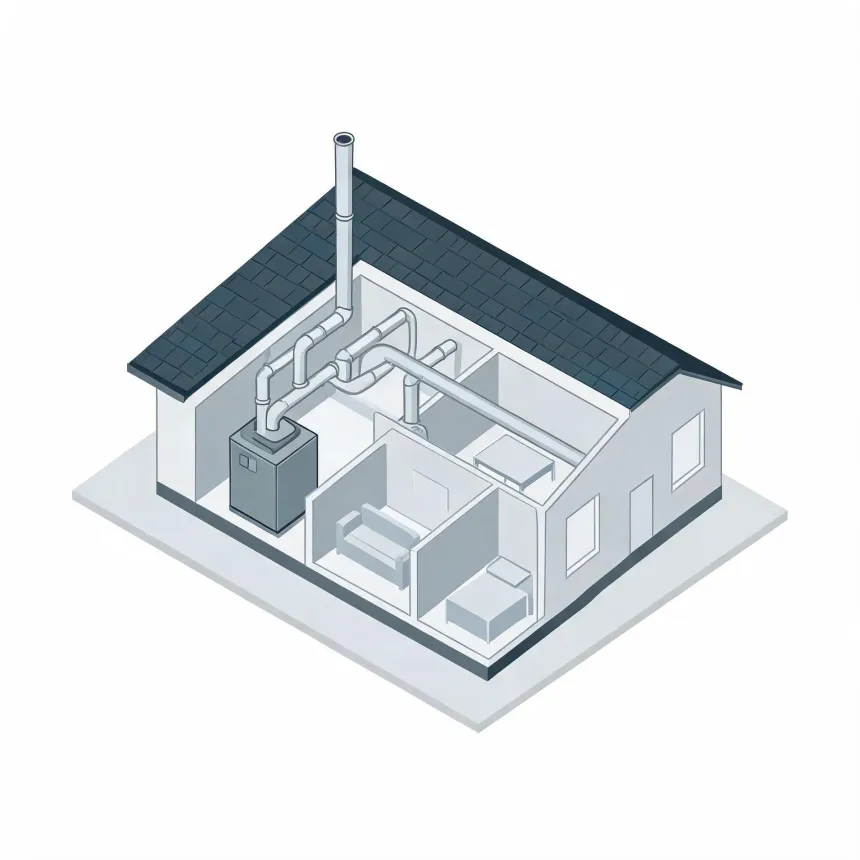
Isometric cutaway illustration of a single-story house showing a gray furnace connected to white ductwork and a flue pipe extending through the shingled roof, with simplified furniture in the interior rooms.
Your furnace works hardest from November through March.

NOAA nClimDiv, 1991–2020 normals

The efficiency number on a furnace tells you how much of the gas it burns turns into heat in the house.

A higher rated furnace loses less heat up the flue, so compare that number alongside the price before you pick one.

Gas runs $8.99 per million Btu in Indiana, cheap enough that a high-efficiency furnace takes longer to pay for itself here

Climate zone 4A
Heat runs October through April
Winter nights average 24°F

A furnace sized for Columbus doesn't need to be oversized to handle the cold here. Overnight lows average 24°F through December, January and February, which is well within what a standard furnace is built to handle. Running from October through April, about seven months of the year, the furnace gets real use, but that's not unusual enough to call for anything beyond a normal size and efficiency rating. A contractor sizing your furnace will look at your home's square footage and layout, not the outdoor temperature alone, to land on the right size. Paying more for a bigger unit than your home needs won't make it heat better, it just cycles on and off more than it should.

Get your furnace in before October

Heat here starts in October and runs through April, about seven months straight. A furnace put in before that first cold week gets installed on your terms, with time to size it right and schedule it when it works for you, instead of after it's already needed.

Find a contractor
A man in a beanie, dark jacket and tan work pants climbs porch steps toward a blue front door, carrying a canvas tool bag, with a potted shrub in a blue planter beside him.
A gray gas furnace with attached ductwork and piping installed in an unfinished concrete basement.

The install, not the furnace, is what the quote is pricing

The unit price is the easy part to compare. What moves the total is what the job takes once someone's actually in the house. A straight swap, same spot, same vent run, same gas line, is the simplest version of this job. Move the furnace to a different closet, and the ductwork has to follow it there. Vent it a different way than the old one, and that's new pipe, sometimes a new hole through the wall or roof. Flue size and type depend on how efficient the new furnace is, so a higher rated unit can call for different venting than what's already in place. The size of the furnace matters too, not because bigger costs more to make, but because a unit that doesn't match the home's heat loss either runs too long or cycles too often, and either one shortens its life. Ductwork condition plays into it as well. If the existing ducts are undersized or leaky, a new furnace won't perform the way its rating says it should until that's addressed. None of this shows up on a price tag until someone's looked at the actual setup.

Ask what happens to the warranty if someone else installs it

Most furnace warranties cover the heat exchanger and other parts for a long stretch, but the paperwork usually requires a licensed contractor to do the install and register it. A cheaper quote that skips registration can leave you paying full price for a part that should have been covered.

Ask what size furnace the quote is based on

A contractor who ran a load calculation on the house will size the furnace to how much heat it actually loses. One who just matched the old unit's size is guessing, and the old one might have been wrong to begin with. A furnace sized to the home cycles the way it should. One sized off a guess either runs too long or shuts off too soon, and either way wears out faster.

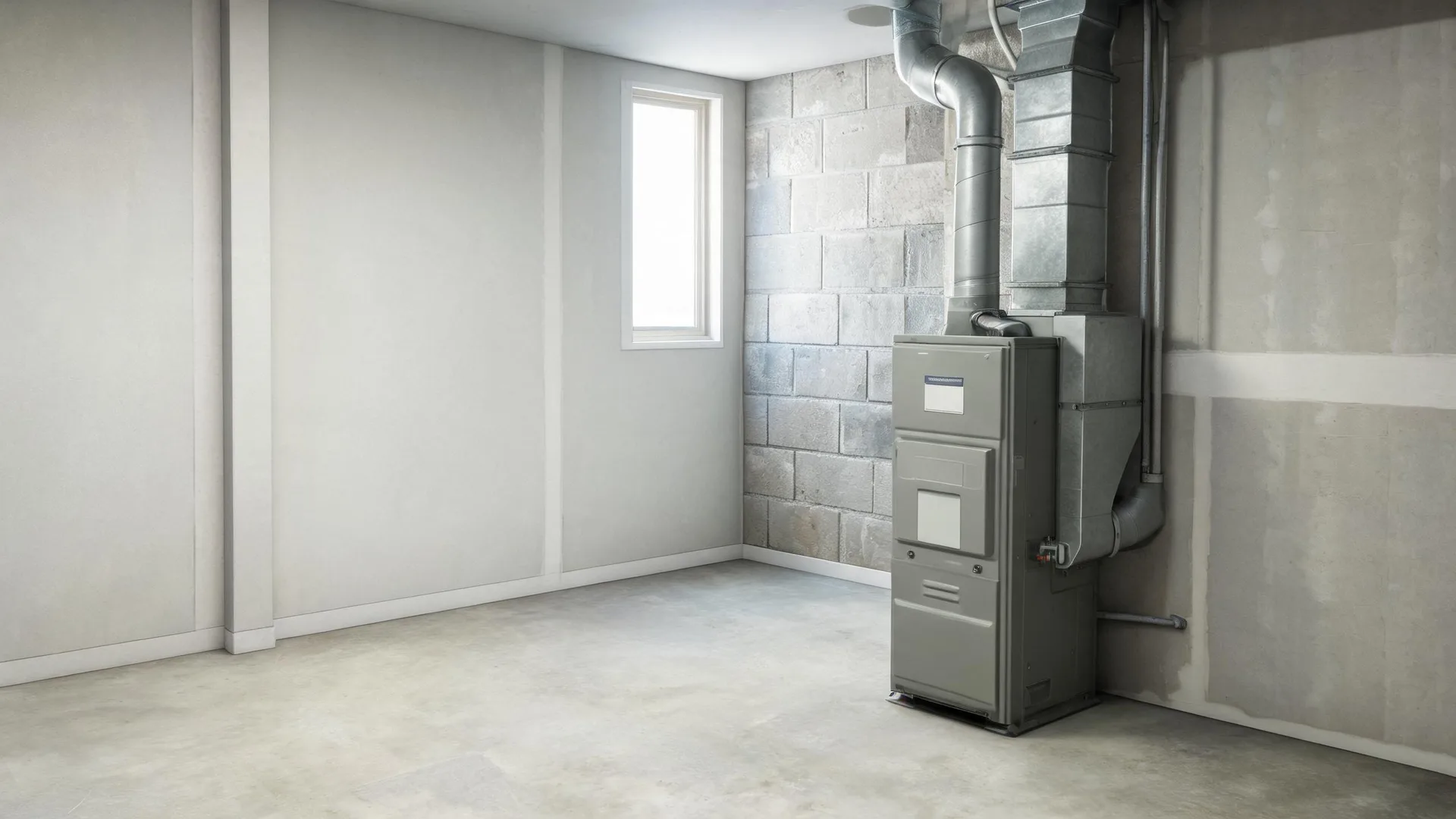
An unfinished basement featuring a grey forced-air furnace with metal ductwork, concrete block walls, exposed wooden joists, and a single hanging bare bulb.

A high-efficiency gas furnace would save about $80 a year to run in Bartholomew County compared with a gas furnace.

  • A high-efficiency gas furnace$390 a year
  • A gas furnace$470 a year

Estimates for a typical Bartholomew County home, from EIA household energy data, Indiana fuel prices and NOAA climate normals. Your home will differ.

Install day starts with the old furnace coming out, and that's when a lot of the real decisions get made. The gas gets shut off and the line checked before anything new goes in. If the vent pipe is being swapped for a different type, that gets cut and run before the new furnace is even set in place. Once it's set, level and secured, the gas line, vent and ductwork all tie back in, and each connection gets tested before the furnace is allowed to fire. The first run isn't just flipping it on. A contractor will check gas pressure, airflow and the temperature rise across the heat exchanger, since a furnace running outside those ranges won't hold up long term. Only once all of that checks out is the job actually done, not when the unit starts blowing warm air.